
Dog Mushing & Sled Dog Experiences Near Anchorage 2026 — Alaska Iditarod Country
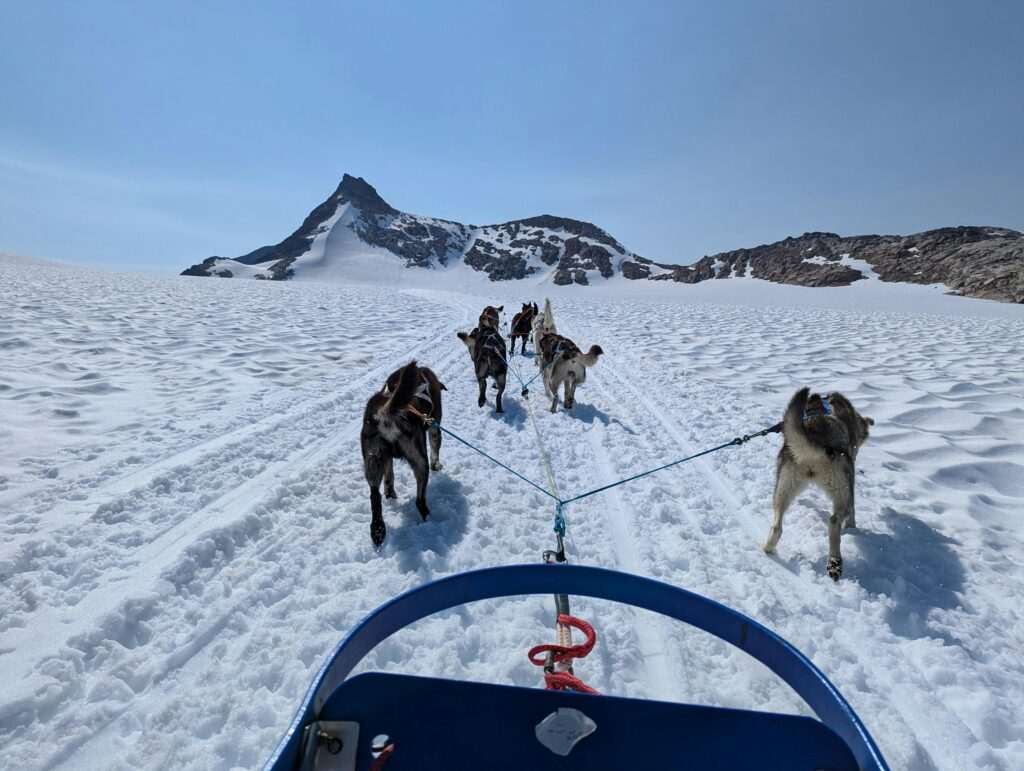
Dog mushing is Alaska’s state sport for good reason. For thousands of years, sled dogs were the primary way people moved across the frozen Interior — not a recreation, but a lifeline. Today, mushing has evolved into one of the most distinctive experiences you can have in Alaska, and Anchorage puts you within reach of some of the best sled dog operations in the world. Whether you visit in the summer to meet a championship kennel’s 50-dog team or in winter to ride a sled through birch forest, here’s what dog mushing near Anchorage looks like in 2026.
Year-Round Experiences: Summer vs. Winter
Most visitors assume dog sledding is strictly a winter activity, but that’s only half the story. Alaska’s kennels operate year-round, and summer actually offers one of the most accessible mushing experiences available: the kennel tour. From late spring through early fall, most kennel operations welcome visitors to meet the dogs, learn about training regimens, and understand the bond between mushers and their teams. Many kennels offer cart mushing in summer — where a wheeled cart replaces the sled on dirt trails — giving visitors the full mushing sensation without snow. Winter brings the real thing: sled runners on packed snow, the silence of a spruce forest, the sound of panting and bells. Both seasons deliver something special.
Summer Kennel Tours and Cart Mushing
Summer kennel tours are typically 1–2 hours long and begin with a walk through the yard, where each dog lives in its own house on a chain or in a pen. You’ll quickly realize these aren’t house pets — they’re athletes. Iditarod-caliber dogs average 50–60 pounds, run up to 100 miles per day during training, and live for the harness. A good musher will introduce you to the team leaders (the brains of the operation), the team dogs (the engine), and the wheel dogs (closest to the sled, handling the heaviest loads). You’ll hear about lineage, training, diet, and what it takes to run a 1,000-mile race across Alaska in the dead of winter.
Cart mushing in summer lets you ride along or even drive a wheeled rig pulled by a small team on grass or gravel trail. The dogs are just as enthusiastic in August as they’re in January — if anything, they’re more eager, since the heat makes them work shorter shifts. Most summer cart sessions run 15–30 minutes per group.
Winter Dog Sledding Near Anchorage
Once snow arrives (typically November through March in the Anchorage area), kennels switch to sled operations. Most guided winter experiences near Anchorage involve riding as a passenger in a sled basket while a musher drives a team of 6–12 dogs through wooded trails. More advanced options let you learn to drive a small team yourself under close supervision. Runs typically last 30–90 minutes depending on the package. The Girdwood area, about 40 miles south of Anchorage, has several winter tour operations; the Matanuska-Susitna Valley north of the city has even more options across a wider terrain.
The Iditarod ceremonial start in downtown Anchorage on the first Saturday of March is one of the most electric sporting events in Alaska. Thousands of spectators line 4th Avenue as over 50 teams launch from the start line on the snow-packed street. Watching 500-plus dogs running flat-out through the middle of a city is a genuinely unforgettable sight, and it’s free to attend. The restart (the official race start) takes place the following day in Willow, about 70 miles north, and is also open to the public.
Top Kennels and Operations Near Anchorage
Iditarod Trail Sled Dog Race Headquarters (Wasilla) — even outside of race season, the Iditarod HQ in Wasilla (about 45 miles north of Anchorage on the Parks Highway) is worth a visit. The museum covers the race’s history from its origins as a supply route to today’s elite sport. During summer months, kennel demonstrations are held on-site. In race years, the headquarters becomes the center of an entire logistical operation that spans 1,049 miles of Alaskan wilderness.
Chugach Express Dog Sled Tours (Girdwood) — one of the most accessible mushing operations from Anchorage, Chugach Express offers summer kennel tours and winter sled rides from their base near Alyeska Resort. Their summer tours are popular for families and cruise passengers; winter packages include sled rides through the forested Girdwood Valley beneath the Chugach peaks. Booking in advance is essential in peak winter season.
Mat-Su Valley Kennels — the Matanuska-Susitna Valley (Palmer and Wasilla) is home to more dog mushers per capita than almost anywhere else on Earth. Several championship-level kennels in the valley offer private tours by appointment, including operations owned by past Iditarod finishers. The Glenn Highway drive to Palmer makes the trip itself a scenic experience — the highway hugs the Chugach Mountains and passes the Matanuska Glacier on the way to the valley. For more on what the Mat-Su Valley offers visitors, our day trips from Anchorage guide covers the full corridor of excursions in the area.
The Iditarod Connection
The Iditarod Trail Sled Dog Race is the defining event of Alaska’s mushing culture. Run every March from Anchorage (ceremonial) to Nome, the race covers roughly 1,049 miles of remote Alaska wilderness — mountain passes, frozen rivers, sea ice on Norton Sound — in 8–16 days depending on conditions. It’s called “The Last Great Race on Earth” and that description isn’t marketing hyperbole. The winning mushers are among the most accomplished endurance athletes in the world, and their dogs are bred, trained, and conditioned over years for this single event.
Visiting a kennel connected to an Iditarod musher gives you insight into what preparation for that race actually looks like — the thousands of training miles, the specific dietary management, the social dynamics of a 14-dog team that has to work as one unit for two weeks straight. Even if you visit in July, those stories and that scale come through clearly when you’re standing in a kennel yard surrounded by dogs that have run across Alaska.
What to Expect on a Tour
Dress for the season. In summer, kennel tours are casual — wear layers and expect some mud. In winter, dress as if you’re going to stand outside for an hour in sub-zero wind chill, because you might be. Most operations provide insulated suits for sled passengers, but good base layers, wool socks, and waterproof boots are your responsibility. Bring a camera — the lighting in a kennel yard with 40 huskies in harness is one of the most photogenic situations you’ll encounter in Alaska. Ask questions freely; mushers are generally passionate about their dogs and happy to explain anything. Don’t pet dogs without asking first — working sled dogs aren’t always socialized for unsolicited petting.
Booking Tips for 2026
Summer kennel tours book out quickly in June and July, particularly for operations near Girdwood that also serve cruise ship passengers. Reserve at least a week in advance during peak season, and further ahead if visiting in early August when both cruise traffic and independent travelers converge. For winter sled rides, book well before Christmas for late-January and February slots. March around the Iditarod start (first Saturday) requires planning months in advance — accommodation in Anchorage fills quickly for Iditarod weekend. Prices vary: summer kennel tours run $40–$80 per person; winter sled rides start around $150–$200 per person for a shared trip and go up from there for private experiences.
Pair a kennel tour with other wildlife encounters to build a full Alaska day. Our bear viewing near Anchorage guide and wildlife viewing near Anchorage guide cover encounters that combine naturally with a Girdwood or Matanuska Valley kennel stop for a memorable double-feature day in the field.
Ready to book a sled dog experience? Go Dog Sled Alaska offers year-round kennel visits and summer dog cart rides, while the Alaska Mushing School in Wasilla provides hands-on instruction for visitors who want to learn the sport firsthand. The Alaska Public Lands Information Center can help with trip logistics and point you toward additional mushing events during your visit.
No comments yet.