
Wildlife Viewing Near Anchorage 2026 — Moose, Eagles, Belugas & More
Anchorage is one of the few cities in the world where you can spot a moose on your morning run, watch bald eagles circle above the commuter highway, and see beluga whales from a roadside pullout — all without leaving the city limits. For wildlife, Alaska’s largest city punches well above its urban weight. Within day-trip range, that list expands to include Dall sheep, black bears, caribou, and more species than most wilderness lodges can promise. Here’s where to find them and how to make the most of wildlife viewing near Anchorage in 2026.
Moose — Anchorage’s Urban Wildlife Stars
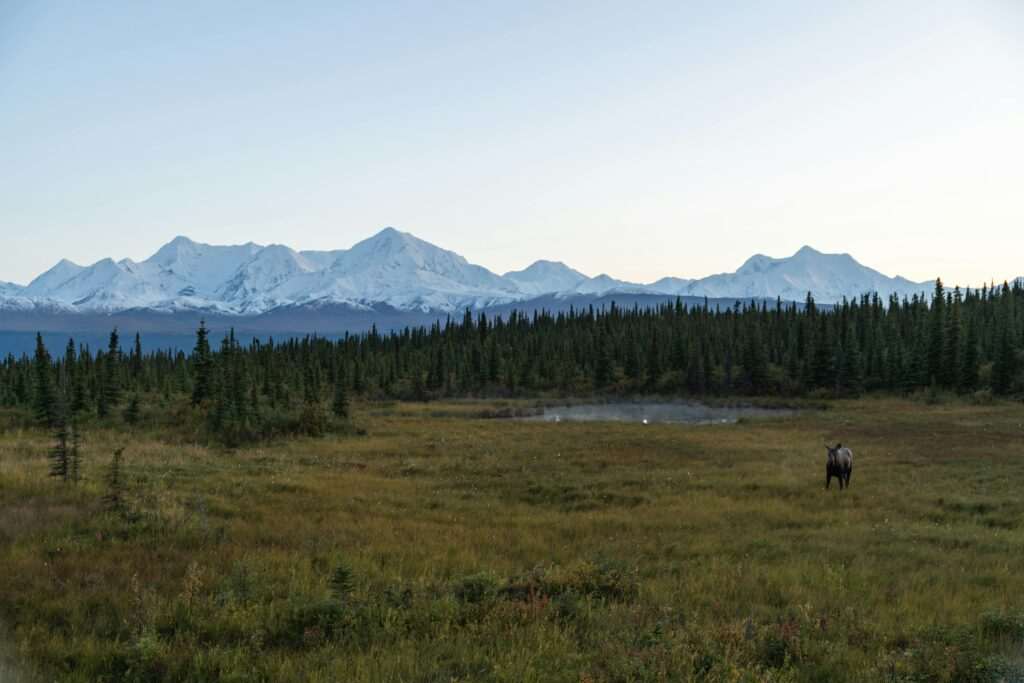
Anchorage has one of the highest moose densities of any city in North America. Moose roam freely through parks, neighborhoods, and greenbelts year-round, and encounters aren’t unusual even on busy streets. The best places to look deliberately:
Kincaid Park — the forested western edge of the city holds moose throughout the year, with trails cutting through classic moose habitat: willow thickets, spruce stands, and wetland margins. Early morning hikes on the park trail system frequently produce sightings, particularly in May and September when calves are new or in rut season.
Campbell Creek Trail — the greenbelt along Campbell Creek runs through Midtown Anchorage and channels wildlife movement through the city. Moose use the creek corridor regularly, and the trail provides accessible viewing from the bike path.
Tony Knowles Coastal Trail — the 11-mile paved trail along Cook Inlet passes through coastal spruce forest and open bluffs. Moose sightings are common year-round, and the open terrain makes them easier to spot than in denser forest.
Always give moose at least 50 feet of space, and more if a cow has a calf. Moose aren’t docile — they’re the most dangerous large mammal in Alaska by sheer volume of human encounters. If a moose pins its ears back, raises the hair on its neck, or starts walking toward you, back away quickly and put a solid object (tree, car) between you and the animal.
Bald Eagles — Everywhere You Look
Bald eagles are genuinely common near Anchorage, not a rarity. They perch on spruce snags along Cook Inlet, follow the salmon runs into Ship Creek and Rabbit Creek, and gather at productive spots in numbers that surprise most first-time visitors from the Lower 48.
Potter Marsh, a bird sanctuary at the south end of Anchorage on the Seward Highway (Mile 117.4), is the best concentrated viewing spot in the area. The boardwalk over the marsh accesses habitat used by shorebirds, waterfowl, Arctic terns, and bald eagles throughout the summer. Arctic terns breed here and aggressively defend their nests — don’t be surprised if one dives at your head.
Ship Creek — during the salmon run (May through September), bald eagles gather at the creek in downtown Anchorage to feed on spawning fish alongside the human anglers. It’s one of the most accessible eagle-watching sites in the state, with good visibility from the walking path above the creek.
Beluga Whales on Turnagain Arm
The Cook Inlet beluga whale is a critically endangered population of fewer than 350 animals. They’re also one of the most accessible whales anywhere in North America — no boat required. Turnagain Arm, the narrow inlet extending southeast from Anchorage, holds belugas on incoming tides when the whales follow salmon runs into shallow water.
Beluga Point (Mile 110.4 on the Seward Highway) is the dedicated pullout for beluga watching, about 40 minutes from downtown. Scan the water surface on an incoming tide for the white humps of surfacing belugas — pods can range from a handful to several dozen animals. June through September offers the best chances. The Turnagain Arm tidal cycle is extreme (up to 35 feet of change), so timing matters: arriving 90 minutes before the predicted high tide as water fills the inlet gives you the best window. Our whale watching near Anchorage guide covers the full range of beluga and humpback viewing options, and our Turnagain Arm bore tide guide covers the tidal dynamics of the inlet in detail, including how to time your visit for maximum wildlife activity.
Dall Sheep on the Seward Highway
Dall sheep are white mountain sheep that live on the rocky cliffs and ridgelines of the Chugach Mountains. Watching them navigate terrain that looks vertical from the road below is one of the more extraordinary wildlife experiences available without leaving your car.
Windy Corner (around Mile 106 on the Seward Highway) is the most reliable spot for close Dall sheep viewing. The cliffs directly above the highway here are heavily used by sheep, and the animals often come down within clear view of the road. Look for white specks on gray rock — a spotting scope helps, but binoculars are usually enough. Spring (May–June) brings ewes with lambs, making it the most photogenic season. The sheep are there year-round, but summer concentrates them on lower elevations near mineral licks before they move to higher ground as autumn approaches.
Black Bears and Brown Bears
Black bears are present in Chugach State Park and use the area between the mountains and the city during salmon season and berry season (late July through September). They’re less commonly seen than moose simply because they’re more secretive, but any extended time on Chugach State Park trails, especially near berry patches in August, carries a real probability of encounter. Bear spray is worth carrying and knowing how to use.
Brown bears (grizzlies) are less common near Anchorage proper but present in the backcountry areas of Chugach State Park. Eklutna Lake and the Crow Pass corridor see occasional brown bear activity. For dedicated brown bear viewing, the Kenai Peninsula and the Katmai area are the gold standard — our bear viewing near Anchorage guide covers the full range of options from city-accessible encounters to full-day guided tours. For a broader itinerary combining wildlife stops with other Southcentral Alaska destinations, our day trips from Anchorage guide covers the best excursions within three hours of the city.
Caribou in Chugach State Park
The Chugach State Park caribou herd uses the high alpine terrain above Anchorage, particularly in the Indian and Bird Creek drainages. They’re most visible in fall (September–October) when they move to lower elevations before winter. Seeing caribou requires some effort — a full-day hike into alpine terrain above treeline rather than a roadside pullout — but the setting (tundra, peaks, wide skies) makes it worth the commitment for serious wildlife watchers.
Photography Tips
Wildlife photography near Anchorage rewards patience and preparation:
- Early morning and evening are best — golden hour lighting and more active animals. Most species are less active mid-day in summer heat.
- Bring a zoom lens — staying at safe viewing distances is non-negotiable, and a 200mm+ lens lets you get usable images without approaching animals.
- Stay in your car when possible — vehicles work as effective blinds for moose and sheep, which often habituate to roadside traffic but react to people on foot.
- Learn the signs of stress — a moose walking toward you, a bear swaying its head, or a sheep that’s stopped feeding and is watching you all signal that you’re too close. Back off before the animal has to make a decision about you.
- Get horizontal — for bears, moose, and other large animals in open terrain, dropping to a low shooting angle dramatically improves images against sky or distant backdrop.
Practical Notes
Most wildlife encounters near Anchorage happen by being in the right habitat at the right time rather than finding a specific guarantee. Moose are most active at dawn and dusk; beluga viewing depends on tidal timing; Dall sheep access Windy Corner unpredictably but are reliably present somewhere on those cliffs throughout the day. Give yourself several hours and multiple stops rather than expecting one-spot success. And always carry binoculars — they transform a distant brown shape into a positive identification.
Two of the most reliable wildlife viewing stops near Anchorage require no guide: the Cook Inlet Beluga Whale Viewing pullouts along the Seward Highway are free and productive during incoming tides, and the Eagle River Bear Viewing Trail offers a short walk to a stream where brown bears congregate during salmon runs. For a deeper look at Alaska wildlife ecology, Alaska Museum Wildlife Education Programs run seasonal programs that complement a day in the field.
Photo by John De Leon on Pexels.
No comments yet.