
Wildlife Photography in Anchorage 2026 — Where to Spot & Photograph Alaska Animals
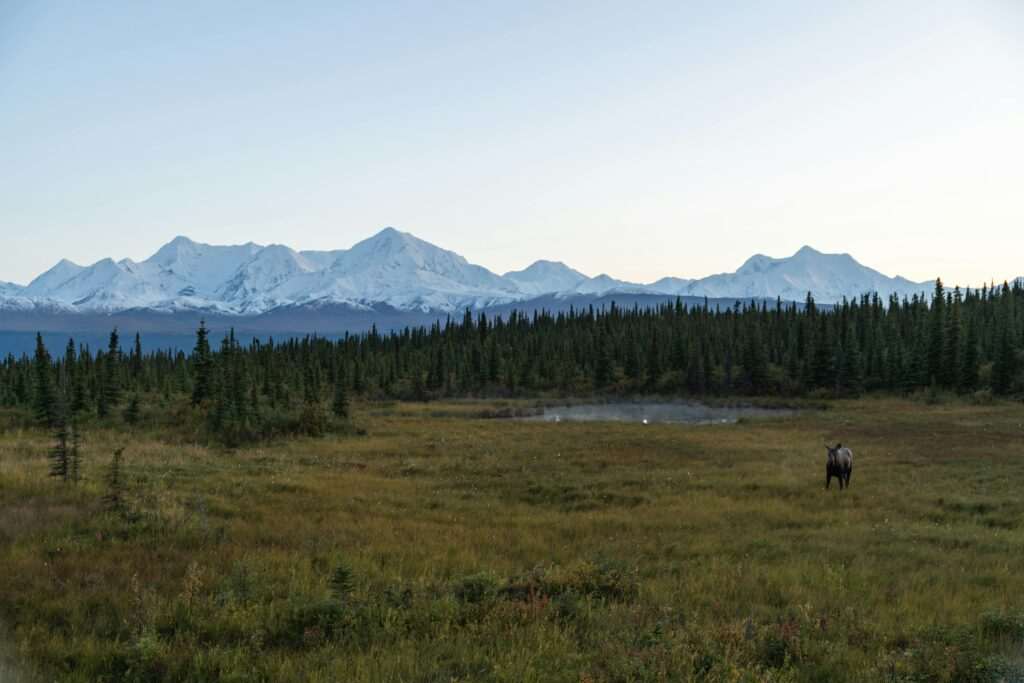
Anchorage holds a distinction that no other city of its size can match: it is one of the few places in the world where moose regularly wander through residential neighborhoods, bald eagles perch on telephone poles, and black bears occasionally appear in suburban backyards. For wildlife photographers, this produces a paradox — extraordinary subjects at distances measured in yards rather than miles, accessible without bush planes or remote camps. But Anchorage also sits at the edge of genuine wilderness, and within an hour of landing you can be photographing Dall sheep on alpine ridges, brown bears fishing salmon runs, and beluga whales feeding in a glacial fjord. This guide covers the best spots, timing, and technique for wildlife photography in and around Anchorage in 2026.
Best Wildlife Photography Locations Near Anchorage
Potter Marsh Bird Sanctuary
Potter Marsh, at mile 117 of the Seward Highway just south of the city, is the most productive single location for bird photography accessible from Anchorage. The 1,500-foot boardwalk extends over a wetland that holds nesting trumpeter swans, red-necked grebes, arctic terns, and a rotating cast of shorebirds and diving ducks through the summer season. The boardwalk positions you directly over the marsh — no long lens required for many subjects — and the elevated angle produces clean backgrounds of open water rather than the tangled shoreline vegetation you’d fight from the bank. Moose also use the marsh regularly, particularly in early morning when they feed in the reed beds. Best light: sunrise, when the marsh has a directional glow and the birds are most active. Bring a 200–400mm lens for birds; a 70–200mm with room to back up handles most moose encounters from the boardwalk.
Westchester Lagoon
Westchester Lagoon, accessible from the Tony Knowles Coastal Trail about a mile west of downtown, is Anchorage’s urban birding hotspot. Trumpeter swans nest here annually — one of the few places in North America where nesting swans can be photographed from a paved path with the city skyline behind you. Bald eagles are consistent year-round presences in the large cottonwoods along the lagoon’s eastern edge; late summer brings juvenile birds learning to fish, which produces dramatic action sequences in good light. The lagoon faces west, making it ideal for late-afternoon and evening shooting sessions when the low-angle light turns the water and birds gold. Arctic terns work the surface through the summer in erratic, unpredictable flight — a challenge to track but rewarding when you nail the image.
Ship Creek Salmon Run
From late June through September, Ship Creek in downtown Anchorage draws one of the most photographically unusual scenes in Alaska: king and sockeye salmon surging through an urban creek while brown bears and bald eagles compete for fish within sight of the Anchorage skyline. The creek runs below the Alaska Railroad depot, and the viewing platforms above the bank provide elevated angles that eliminate the fishing crowd from the background when you pick your timing. Bears appear most reliably in August and September during the sockeye run. Eagles are present from June onward. The light in late afternoon catches the water and the fish, and long shadows from the bluff create dramatic contrast for bear and eagle portraits. Use a 400mm or longer for bear work from the platforms — maintain distance and let the optics do the work.
Earthquake Park and Point Woronzof
The shoreline at Earthquake Park and the adjacent Point Woronzof, on Cook Inlet’s eastern shore northwest of downtown, is Anchorage’s best spot for beluga whale photography. The threatened Cook Inlet beluga population — around 300 animals — feeds the inlet’s salmon runs from June through early September, and the shoaling water near the park’s shoreline concentrates the whales close to the bank on certain tidal stages. Cook Inlet beluga whale viewing is most productive around high tide when whales push into the shallows. Photographically, the challenge is the grey-on-grey palette — white belugas against grey water under grey skies — which rewards early morning visits when warm-toned light picks the animals out of the background. A 500mm or longer is useful; the whales surface unpredictably and briefly. Scan the water constantly and pre-focus on the area where they’ve been surfacing.
Chugach State Park: Bears and Dall Sheep
Chugach State Park begins where Anchorage’s residential streets end and extends east into half a million acres of roadless backcountry. The park supports both black and brown bears, Dall sheep on the upper ridgelines, moose in the valley drainages, and wolves and wolverines in its deeper reaches. For day-trip photographers, the most accessible productive locations are the ridgelines above the Glen Alps Trailhead — where Dall sheep are visible on the grey cliffs from spring through fall — and the creek drainages off the Powerline Trail, where bears move during berry season in August and early September. A 500–600mm lens handles Dall sheep at ridge distance; bear encounters in the park can be much closer than expected, and a 200mm is sometimes too much focal length. Carry bear spray, shoot with a companion, and maintain the 300-foot minimum distance from bears at all times.
Wildlife by Season
Year-round: Moose are Anchorage’s signature urban wildlife and are present 12 months a year. Bald eagles are resident year-round, with populations swelling when salmon are running. Steller’s jays, gray jays, and spruce grouse remain in the boreal forest through winter.
Spring (April–May): Migratory birds return to Potter Marsh and Westchester Lagoon from mid-April. Moose cows with new calves appear in May — beautiful subjects but the most dangerous moose encounters of the year involve protective cows. Dall sheep are visible on south-facing ridges as snow recedes. Bears emerge from dens in late April; early sightings are often near treeline on the Chugach front range.
Summer (June–August): Peak season for nearly everything. Salmon runs begin in June and peak in July–August, bringing bears and eagles to Ship Creek and other urban streams. Beluga whales are in Turnagain Arm through July. The midnight sun creates shooting windows that extend through the night — 11 PM light with the sun still above the horizon is entirely workable for outdoor photography.
Fall (September–October): The best season for bear photography as animals feed aggressively before hibernation. Fall foliage provides warm background color, and aurora borealis returns as nights darken — creating opportunities for combination landscape and wildlife images.
Winter (November–March): Moose in snow is a classic Alaska image Anchorage delivers reliably. Overcast winter light is soft and even — excellent for fur texture and detail. Bears are in hibernation.
Camera Gear for Alaska Wildlife Photography
The minimum useful focal length for Alaska wildlife photography is 300mm; 400–600mm is the practical standard for bears and sheep at safe distances. A 500mm f/4 or 600mm f/5.6 prime handles most situations. For birding at Potter Marsh and Westchester Lagoon, a 400mm f/5.6 with good autofocus tracking covers the range of subjects you’ll encounter.
Weather sealing matters. Anchorage weather is variable in all seasons, and protecting gear against rain, snow, and humidity is not optional. A good camera rain cover costs less than a sensor cleaning service. Batteries discharge faster in cold; carry two spares in an inside pocket.
Silent shutter mode (electronic shutter) is valuable for bird photography where the mechanical shutter click can flush subjects. For bear and moose work, maintaining physical distance matters far more than camera noise.
Guided Wildlife Photography Tours
For photographers wanting expert guidance, several Anchorage-based operators run wildlife-focused outings. The Alaska Wildlife Conservation Center, 50 miles south on the Seward Highway, provides guaranteed close encounters with brown bears, moose, bison, and musk ox in large natural enclosures — the most reliable large-mammal photography in Southcentral Alaska short of a multi-day backcountry trip. The enclosures are large enough to produce natural-looking images, and the access is unmatched for telephoto work. It functions as an excellent orientation to your subjects before heading into the field.
Float plane operators running bear viewing tours to Katmai and Pack Creek from the Anchorage area provide same-day access to brown bears at close range in genuinely wild settings. These are full-day commitments requiring favorable weather but deliver the kind of bear photography that takes most photographers years of backcountry effort to achieve otherwise.
Wildlife Photography Ethics
Alaska wildlife photography operates within non-negotiable ethical and safety standards. The minimums: stay at least 50 feet from moose (300 feet for cows with calves), at least 300 feet from bears at all times, and never approach any animal in a way that alters its behavior. If a moose or bear changes posture, stops feeding, or focuses attention on you, you are already too close — back away calmly.
Carry bear spray and know how to deploy it. On any creek during salmon season and on berry slopes in August, encounters with bears in the Chugach are plausible rather than exceptional. Bear spray has a strong track record of stopping charges at close range. Do not feed wildlife under any circumstances — fed bears are destroyed, and fed moose become dangerously habituated to humans.
The Midnight Sun Advantage
Anchorage’s summer light is the single greatest advantage the city offers wildlife photographers. From mid-May through late July, the sun sets after 11 PM and rises before 5 AM — and at those angles, the light is the warm, directional, low-contrast quality that makes wildlife images extraordinary. A moose in reeds at 10 PM on a clear June evening, lit by horizontal golden light with the Chugach in the background, requires no filters and no processing tricks. The light does the work.
Many Anchorage wildlife photographers work from 9 PM to 1 AM during June and July — the light is better, the animals are more active, and there are fewer people on the trails. Plan your schedule around the light rather than conventional day-trip hours, and Anchorage delivers a photographic opportunity that few places in North America can match.
No comments yet.