
Midnight Sun in Anchorage 2026: Late-Night Hikes, Bike Rides & How to Actually Sleep
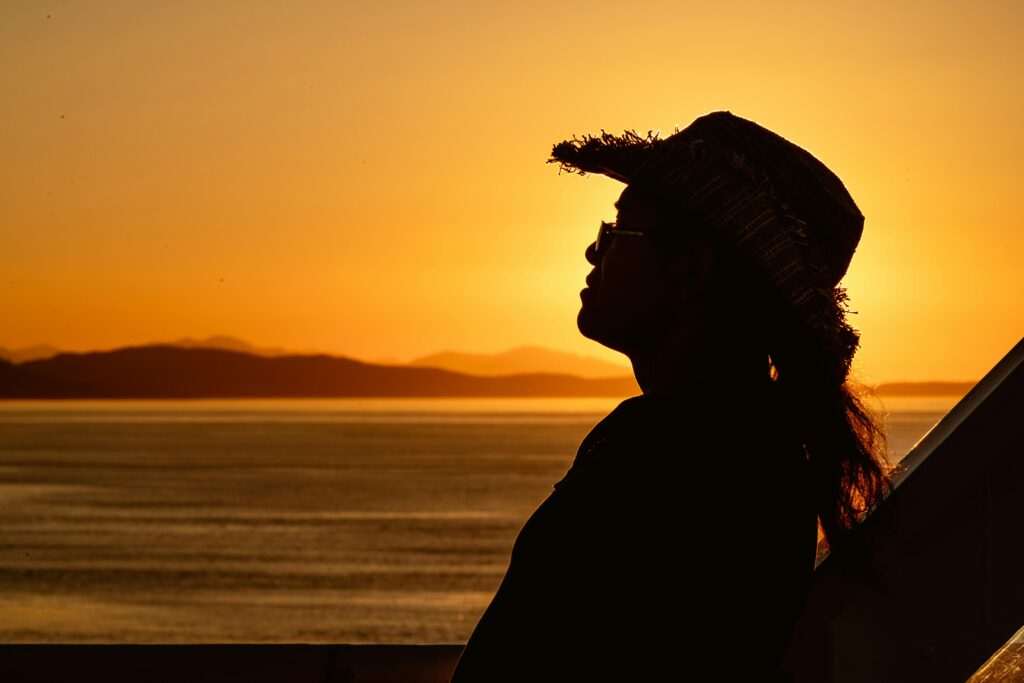
Anchorage in June and July doesn’t get dark. That sentence sounds simple enough until you’re standing outside at 11:30 p.m. in full, bright daylight with a cup of coffee wondering if you forgot something. The midnight sun isn’t a metaphor or a slight exaggeration — it’s a genuine disorientation, and it’s one of the most distinctive things about spending summer in Alaska. Here’s how to use it.
What Is the Midnight Sun, Exactly?
Anchorage sits at 61° north latitude. That’s far enough north that during the weeks surrounding the summer solstice, the sun barely dips below the horizon before climbing back up. On June 21, Anchorage sees about 19.5 hours of daylight, with civil twilight extending the usable light past midnight. The sun sets around 11:30 p.m. and rises around 4:20 a.m. — but even in that window, the sky never fully darkens. It stays a deep blue-orange twilight, lit like a perpetual golden hour.
This extends meaningfully from late May through mid-July. By early August, real darkness starts returning and you’d never know summer was this bright. If you’re visiting specifically for the midnight sun experience, June is your month.
Get Outside After 9 PM
The single best thing about the midnight sun is what it does to outdoor activities. The trails are still warm, the light is extraordinary, and the crowds — which can fill popular trailheads by mid-morning on weekends — have largely gone home to dinner. You have the mountains to yourself at 10 p.m.
The Tony Knowles Coastal Trail is the ideal evening option. The 11-mile paved trail runs along Cook Inlet from downtown, and the light on the water at 10 or 11 p.m. is genuinely breathtaking — the Alaska Range to the west catches the low sun and turns the whole inlet gold. It’s flat, accessible, and you can walk or cycle as much or as little as you want. Point Woronzof, about 4 miles out, is the best sunset viewpoint on the trail.
For something more adventurous, the lower sections of Chugach State Park are accessible and well-maintained for evening use. The Near Point Trail and the lower Flattop approach remain snow-free and passable from June onward, and the alpenglow on the peaks above you at 10 p.m. doesn’t look like anything you’ve seen before. Bring a headlamp anyway — not because you’ll need it for visibility, but because the trip down can run into early-morning chill.
Midnight Bike Rides
One of the more memorable Anchorage experiences is a bike ride that starts at 10 p.m. and ends at 1 a.m. with the sky still bright. The coastal trail is flat and smooth, the air is cool without being cold, and the city has a strange, quiet energy in those hours — most people are inside, so you have the waterfront nearly to yourself.
Downtown Bicycle Rental operates during summer hours and can set you up with a hybrid or mountain bike suitable for the coastal trail. Rent in the evening and head west along the inlet. If you’re comfortable with the distance, Kincaid Park at the trail’s south end has its own network of paths and offers elevated views of the inlet and Sleeping Lady mountain.
Photography in the Midnight Window
The light between 11 p.m. and 1 a.m. in Anchorage during June is unlike anything available at lower latitudes. It’s not golden hour — it’s something softer and stranger, a persistent low-angle light that flatters everything it touches. Mountains, water, even the industrial Ship Creek area downtown look different in this light.
Point Woronzof Park, accessible off the coastal trail, is the best single photography spot in Anchorage for this window. You’re positioned directly over Cook Inlet with an unobstructed view west toward the Alaska Range and the setting sun. On clear nights, Denali is visible on the far horizon. The light changes slowly — you have time to compose, wait, and shoot without rushing.
For shooting the city itself, the parking area at the top of Hillside Drive (before the Glen Alps trailhead) gives you an elevated view over downtown toward the inlet. This is where most of the aerial-style Anchorage photos come from, and it’s worth the drive in either direction.
The Social Scene After Dark
Anchorage bars close at 2 a.m. per Alaska law, and they fill up — the midnight sun tends to keep people out later than they planned, because it never feels like it’s time to go home. The downtown bar district around 4th Avenue and the Spenard neighborhood are both lively on summer nights.
The light outside keeps tricking you. A common experience: glancing at your phone, discovering it’s 12:30 a.m., and looking out the window to see bright daylight. It’s genuinely confusing in a way that feels like jet lag crossed with magic.
How to Actually Sleep
This is the practical section no one includes. The midnight sun is wonderful; sleeping through it is difficult. Most Anchorage hotels have blackout curtains, but quality varies, and the light that comes around the edges of inadequate blinds at 4:30 a.m. will wake you up if you’re a light sleeper.
Bring a sleep mask. Not as a luxury — as a necessity. The kind that fully covers your eyes and fits snugly is worth the five dollars it costs. Many seasoned Anchorage visitors also take melatonin in the early days of their trip to help reset their internal clock. Your body knows it’s light, and it interprets light as “wake up.” A sleep mask tells your body something different.
Some visitors find they adjust naturally within two or three days. Others don’t. Come prepared either way, and don’t plan to feel sharp on the first morning after arriving in June. You won’t be.
Practical Notes
- Exact daylight data: The US Naval Observatory’s sun data calculator gives precise sunrise, sunset, and civil twilight times for Anchorage by date. Worth checking before planning an evening hike or photography session.
- Temperature after midnight: Summer nights in Anchorage drop to the high 40s or low 50s. Bring a layer even if it was 65°F at dinner.
- Trail conditions: Even well-maintained trails have morning dew and occasional mud. Waterproof footwear matters more at midnight than at noon.
- Wildlife: Moose are more active in early morning and late evening. On evening trail runs, make noise. You’re more likely to see one at 11 p.m. than at 2 p.m.
Featured photo by Vlad Vasnetsov on Pexels.

No comments yet.