
Whittier & Prince William Sound Day Trip from Anchorage 2026
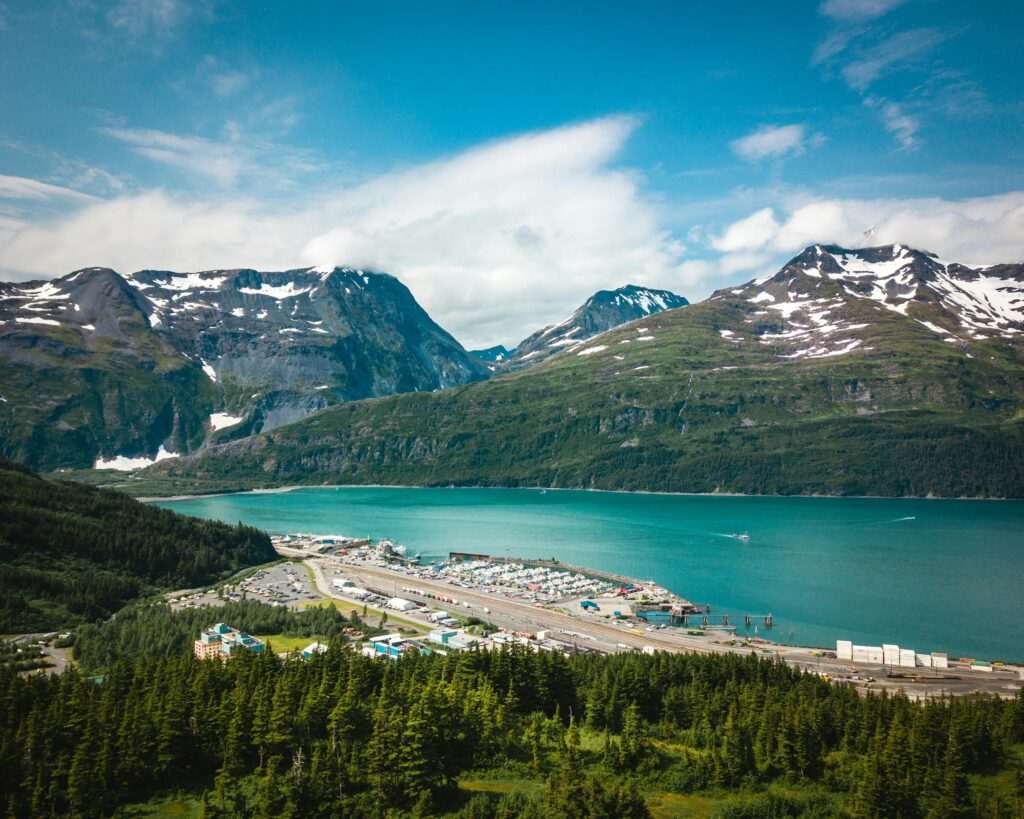
Whittier sits sixty miles southeast of Anchorage at the head of Passage Canal, a fjord carved by glaciers into the Chugach Mountains. The town itself is small — a few hundred full-time residents, a harbor, and a cluster of buildings dominated by one enormous concrete structure left over from the Cold War military presence. What surrounds it is extraordinary: Prince William Sound, one of the most productive marine ecosystems in the world, studded with tidewater glaciers, sea otters, Steller sea lions, humpback whales, and orca pods. Getting to Whittier requires passing through one of the most unusual tunnels in North America. Once you arrive, the glacier cruises and wildlife encounters are among the best accessible day trips on the Alaska road system. This guide covers every practical detail for planning a Whittier day trip from Anchorage in 2026.
Getting to Whittier: The Anton Anderson Memorial Tunnel
The only road into Whittier passes through the Anton Anderson Memorial Tunnel — a 2.5-mile shared rail and vehicle tunnel bored through Maynard Mountain. It is one of the longest combined rail/road tunnels in North America and one of the few places in the country where cars and trains share the same single-bore tunnel. Vehicles drive on the tracks through the tunnel; a flatcar system was used historically, but since 2000 vehicles drive directly on timber decking laid between the rails.
The tunnel operates on an alternating one-way schedule: traffic flows one direction, then reverses for vehicles going the other way. The schedule runs roughly every 30 minutes during peak season (May–September), with specific departure windows published by the Alaska Department of Transportation. Missing your window means waiting 30 minutes for the next one, which can cascade into missing your cruise departure. Check the published schedule before you leave Anchorage and build in a 20-minute buffer for the Whittier end. The toll for a standard passenger vehicle is $13 each way.
Driving from Anchorage to Whittier takes approximately 60 to 75 minutes under normal conditions, depending on tunnel traffic. The route follows the Seward Highway south from Anchorage along Turnagain Arm, then branches onto the Portage Glacier Road at mile 78.9. The road passes the Begich-Boggs Visitor Center and the trailhead for Portage Glacier before reaching the tunnel portal. The drive itself is scenic — the Turnagain Arm section produces frequent wildlife sightings including beluga whales during salmon runs, Dall sheep on the cliffsides, and occasional brown bears on the flats at low tide.
An alternative: Anchorage visitors who prefer not to drive can take the Alaska Railroad to Whittier via its Glacier Discovery service. Trains depart from the Alaska Railroad Depot in downtown Anchorage, and the route includes the tunnel approach — the train passes through the Anton Anderson tunnel on the same tracks that vehicles use, giving passengers a unique perspective. The Glacier Discovery operates seasonally and does not run daily; check the current schedule and book early in July and August when seats sell quickly.
Glacier Cruise Options: Large-Boat vs. Small-Boat Tours
The core Whittier day trip experience is a glacier cruise into Prince William Sound. Two fundamentally different products are available: large-vessel day tours that carry 100–400 passengers on fixed itineraries, and small-boat charters that carry 6–12 passengers on customized routes. Both access the same glaciers and wildlife, but the experience differs significantly.
Large-vessel tours operate on fixed departure times, fixed itineraries, and narrated routes with onboard naturalists. They cover more total distance than most small boats can in a day and often include meals or snacks. Passengers experience the glaciers from the main decks of a substantial vessel with enclosed cabin space, which matters in the rain — and it does rain in Prince William Sound. The tradeoff is the fixed route and the crowd; seeing a humpback whale surrounded by 200 other passengers is different from watching the same whale from a 12-person boat.
Major Marine Tours is the dominant large-vessel operator sailing from Whittier into Prince William Sound. Their flagship offering is the Prince William Sound cruise, which covers multiple glaciers — including College Fjord’s collection of Harvard, Yale, and Amherst glaciers, each named for East Coast universities — and produces consistent wildlife encounters including sea otters, Steller sea lions, harbor seals, Dall’s porpoise, and, frequently, humpback whales. The narration is strong and the onboard meals (salmon or prime rib, typically) are a genuine highlight of the trip. A full-day Prince William Sound cruise with Major Marine Tours runs approximately $160–200 per adult depending on season and options.
For a more intimate experience, Lazy Otter Charters operates small-boat tours and water taxi services from Whittier into Prince William Sound. Small-boat operators can access coves and ice edges that larger vessels can’t reach, and the wildlife encounters at close range feel categorically different when you’re in a vessel that can cut its engine and drift within fifty yards of a feeding humpback. Kayak drop-off service to remote launch points in the Sound is another option through operators like Lazy Otter, allowing paddlers to access protected bays without paddling the exposed open-water crossing from Whittier harbor.
Wildlife in Prince William Sound
Prince William Sound is home to one of the largest concentrations of marine wildlife in Alaska. Sea otters are present year-round in the protected coves and kelp beds of the Sound, and they are reliably visible on any cruise — floating on their backs, prying open sea urchins, nursing pups in the kelp. Steller sea lions haul out on rocky outcroppings throughout the Sound, and the cruise routes typically pass within viewing distance of established haul-out sites. Harbor seals rest on ice floes calved from the tidewater glaciers — you will see them draped on ice chunks while calving glacier walls thunder in the background.
Humpback whales feed in Prince William Sound from May through October. The combination of deep fjords and productive herring populations makes the Sound ideal humpback habitat, and sightings on cruise tours are frequent enough that operators treat them as an expected event rather than a special occurrence. Orca pods — both resident fish-eating orcas and transient mammal-eating pods — are present in the Sound and appear on cruises several times per week during peak season, though a sighting is never guaranteed. Dall’s porpoise routinely ride bow waves of larger vessels. Tufted puffins and horned puffins nest on rocky sea stacks and are visible on most summer cruises between May and August.
Portage Glacier and Begich-Boggs Visitor Center
The approach road to Whittier passes Portage Lake and the terminus of Portage Glacier, one of the most accessible glaciers in Alaska. The Begich-Boggs Visitor Center on the lakeshore provides interpretive exhibits on the Chugach National Forest, glacier dynamics, and the dramatic recession of Portage Glacier over the past century — the glacier has retreated so significantly that it is no longer visible from the visitor center building that was built to view it. The lake itself, however, is filled with icebergs calved from the glacier’s current terminus several miles up the valley, and the walk along the lakeshore among floating ice is worth the time even for visitors headed on to Whittier.
Portage Glacier Tours operates the M/V Ptarmigan cruise across Portage Lake to the glacier face, offering the only way to see the active glacier terminus up close. The boat tour runs approximately one hour and provides a perspective on glacier ice that the lakeshore walk cannot — calving events are most visible from water level, and the blue-green coloration of deep glacial ice reads differently at close range than from the shore. The Portage Glacier boat tour is a natural add-on to a Whittier day trip, either on the outbound drive or on the return.
Kayaking in Prince William Sound
Prince William Sound is world-class sea kayaking territory. The protected fjords, abundant wildlife, and stunning scenery combine with a network of Forest Service cabins and designated camping areas to make the Sound one of the premier multi-day paddling destinations in Alaska. Day kayaking from Whittier is possible for experienced paddlers, but the open water of Passage Canal between the harbor and the protected inner fjords requires caution — conditions can change rapidly and wind-driven chop in the main channel is not beginner terrain.
For visitors without sea kayaking experience, guided tours that launch from calmer put-ins deeper in the Sound — accessed by water taxi — are the practical option. Guides provide the safety context, equipment, and route knowledge that makes the difference between a rewarding experience and a dangerous one. Half-day guided paddles among sea otters and alongside glacier faces are available through Whittier-based operators during the May-September season. Multi-day guided expeditions reach remote sections of the Sound that day-trippers never see.
Best Time to Visit and Practical Planning
May through September is the Whittier season. June, July, and August are the peak months for cruise tours, maximum wildlife activity, and the longest daylight hours — Whittier receives 18–19 hours of daylight at the summer solstice. May offers lower prices, fewer crowds, and the chance to see newborn sea otter pups and the earliest returning humpbacks, but some operators have not yet ramped to full schedule. September brings the coho salmon run, aggressive feeding behavior from humpbacks and orcas, and the beginning of fall color in the alder and willow slopes above the fjords.
Prince William Sound is one of the wettest places in Alaska. Whittier receives more than 175 inches of precipitation annually — more than twice the annual rainfall of Seattle. Expect rain on any given day and plan clothing accordingly. A good rain jacket, waterproof pants, and layered insulation are not optional gear on a glacier cruise; they are the difference between being comfortable in 45°F spray with wind and being miserable. Covered seating on large vessels provides some shelter, but the bow and side rails where wildlife appears are exposed.
Book cruise tours in advance for July and August. Major Marine and the larger operators sell out peak-season departures weeks ahead, and same-day or next-day availability is not reliable in midsummer. The tunnel schedule is published for the current season on the Alaska DOT website — note that the schedule differs between peak and shoulder season, and specific departure windows are enforced. Arrive at the tunnel entrance with enough time to confirm your window and avoid the 30-minute penalty for a missed departure. Whittier has food options — a small diner and harbor-area restaurants — but bringing lunch is practical given the timing of tunnel windows and cruise departures.


No comments yet.