
Mat-Su Valley Day Trip 2026: Palmer, Wasilla & Alaska’s Agricultural Heartland
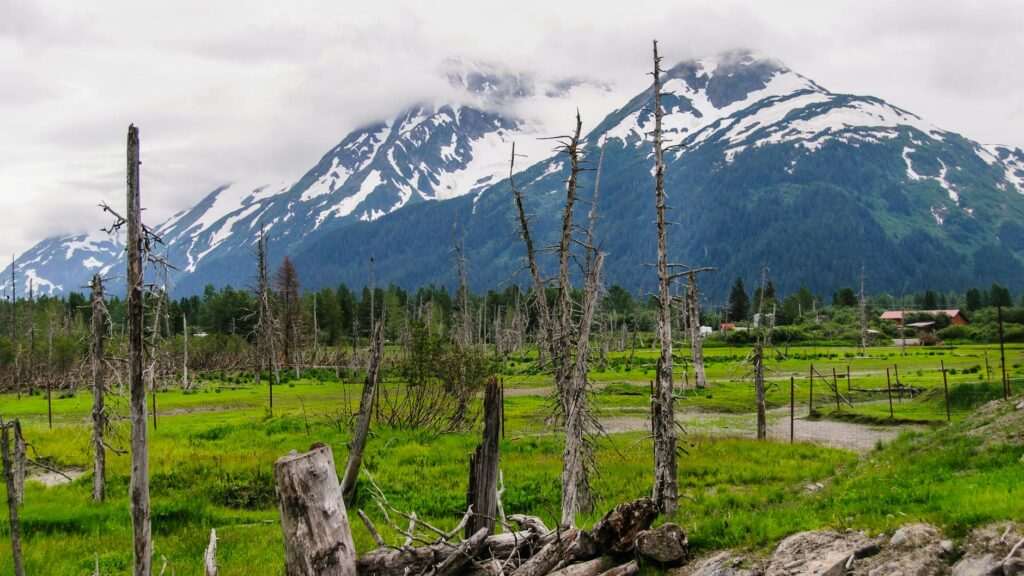
Forty-five minutes north of Anchorage, the Glenn Highway crests a long rise and the Matanuska-Susitna Valley opens wide before you — a patchwork of farms, birch forest, and snow-streaked peaks that feels like Alaska decided to grow something other than wilderness. The Mat-Su Valley is the state’s agricultural heartland, and a day trip here means digging into Depression-era history, sled dog legends, giant vegetables, and some of the most photogenic farmland in the Far North.
Getting There: The Glenn Highway
The drive itself is part of the experience. The Glenn Highway Scenic Drive delivers commanding views of the Chugach Range from the moment you leave Anchorage. Keep an eye out for Matanuska Peak and the broad Knik River flats as the highway descends into the valley. Plan to leave Anchorage by 8:00 AM — it gives you the full day and means you’ll arrive before the farm stands get picked over.
The highway splits at Wasilla and Palmer; most visitors hit Wasilla first (it’s closer) before looping to Palmer for the afternoon. Bring cash for farm stands and markets — not every seller takes cards.
Wasilla: Where the Iditarod Lives
Wasilla gets a lot of headlines for Sarah Palin, but its real claim to fame runs on four paws. The Iditarod Trail Sled Dog Race Headquarters sits just off the Parks Highway and is open year-round. Even in summer, when the 1,000-mile race to Nome is months away, the museum is worth a solid hour. You’ll find historic sleds, race bibs from legendary mushers, footage of blizzard crossings, and — from late summer onward — actual sled dogs in outdoor kennels who are actively training for the next race. Handlers are usually on-site and happy to talk. For anyone who has ever watched Iditarod coverage and wondered what it actually feels like to harness that kind of effort, this is the closest you’ll get without going to Nome in March.
A short drive away, the Dorothy Page Museum gives you the other side of the Wasilla story — the pioneer and gold rush era that predated the borough’s modern growth. It’s small but well-curated, and the adjacent Old Wasilla Townsite Park preserves a handful of original structures from the early 1900s. Combined visit time is about 45 minutes.
Palmer: Colony Town Under the Midnight Sun
Palmer is the Mat-Su’s older, more historically layered sibling. In 1935, the federal government relocated roughly 200 farming families from Depression-ravaged Minnesota, Wisconsin, and Michigan to this valley as part of the Federal Emergency Relief Administration’s colonization experiment. The Matanuska Colony Project was controversial, partially successful, and entirely unlike anything else in New Deal history — an attempt to build an agrarian community from scratch in sub-Arctic Alaska.
The Colony House Museum on Elmwood Avenue preserves one of the original homes built for colonist families. The interpretive materials are thorough; you’ll leave understanding why the valley’s Norwegian and Scandinavian heritage runs deep (many settlers came from Scandinavian-American farming communities already adapted to short-season agriculture). The museum is modest in scale but punches above its weight in context. Budget 30–45 minutes.
Downtown Palmer has a compact historic district with a few good cafes and a walkable main street. It’s the kind of small Alaska town that still feels like a town — hardware stores next to bakeries, locals who nod at strangers. Grab lunch here before heading to the farms.
Giant Vegetables and the Alaska State Fair
The Mat-Su Valley has a legitimate claim to producing some of the largest vegetables on earth. Under Alaska’s summer midnight sun, plants receive 18–20 hours of sunlight daily, and in the valley’s fertile silt-loam soils, that translates into cabbages that can exceed 100 pounds, zucchini the size of small dogs, and sunflowers that tower over adults. Farmers have been competing since the colony days.
The annual showcase is the Alaska State Fair, held in Palmer every August through Labor Day weekend. The giant vegetable competition draws growers from across the state and has become one of the fair’s signature events. Beyond vegetables, the fair is a full-scale agricultural exhibition with livestock shows, carnival rides, live music, and food vendors running the gamut from reindeer dogs to deep-fried everything. If your day trip falls within the fair window, don’t miss it — it’s one of the most genuinely Alaskan events on the calendar.
Outside fair season, the valley’s farm stands operate from mid-July through September. Look for roadside signs along the Palmer-Wasilla Highway and the Old Glenn Highway — strawberries, rhubarb, potatoes, and flowers are all in heavy rotation depending on the week.
The Musk Ox Farm
A few miles east of Palmer on the Archie Road, the Musk Ox Farm is the only domestic musk ox farm in the world — a nonprofit operation that harvests qiviut, the extraordinarily fine underwool of the musk ox, for use in high-end textile production. Tours run daily in summer and take about an hour. You’ll get close to the animals (they’re surprisingly docile at the farm fence), learn about qiviut’s properties (eight times warmer than sheep’s wool, softer than cashmere), and hear about the conservation breeding program that brought these animals back from near-extinction in Alaska. The on-site gift shop sells qiviut yarn and finished garments — prices are high because qiviut genuinely is rare, not because anyone is gouging tourists.
Matanuska River Views and the Valley Floor
Before you loop back to Anchorage, take the Old Glenn Highway south from Palmer along the Matanuska River. The braided glacial river runs a vivid gray-green, and the views back toward the Chugach Range from the riverside pullouts are among the best in the valley. If you want to extend your trip, the Matanuska Glacier is another 90 miles up the Glenn Highway — a worthy full-day extension but too much to tack onto this itinerary without turning it into an overnight.
Practical Day-Trip Notes
Distance from Anchorage: Palmer is 42 miles; Wasilla is 36 miles. Allow 45–60 minutes each way depending on traffic.
Best months: June through September. The State Fair runs the last two weeks of August through Labor Day.
Order of stops: Wasilla (Iditarod HQ + Dorothy Page Museum) → Palmer (Colony House Museum + lunch + downtown) → Musk Ox Farm → farm stands → Old Glenn Highway scenic return.
Budget: Museum entry fees total roughly $20–30 per adult. Musk Ox Farm tours run around $15. Farm stand spending is variable.
Gas: Fill up before leaving Anchorage or in Wasilla — Palmer prices tend to run higher.
The Mat-Su Valley rewards visitors who slow down. It’s not a checklist destination; it’s a place where Alaska’s agricultural experiment took root and kept going, generation after generation, in soil that shouldn’t work but does.
Photo: Fernando Reyes / Pexels

No comments yet.