
Alaska Wildflower Season 2026: Fireweed, Lupine & the Blooming Tundra
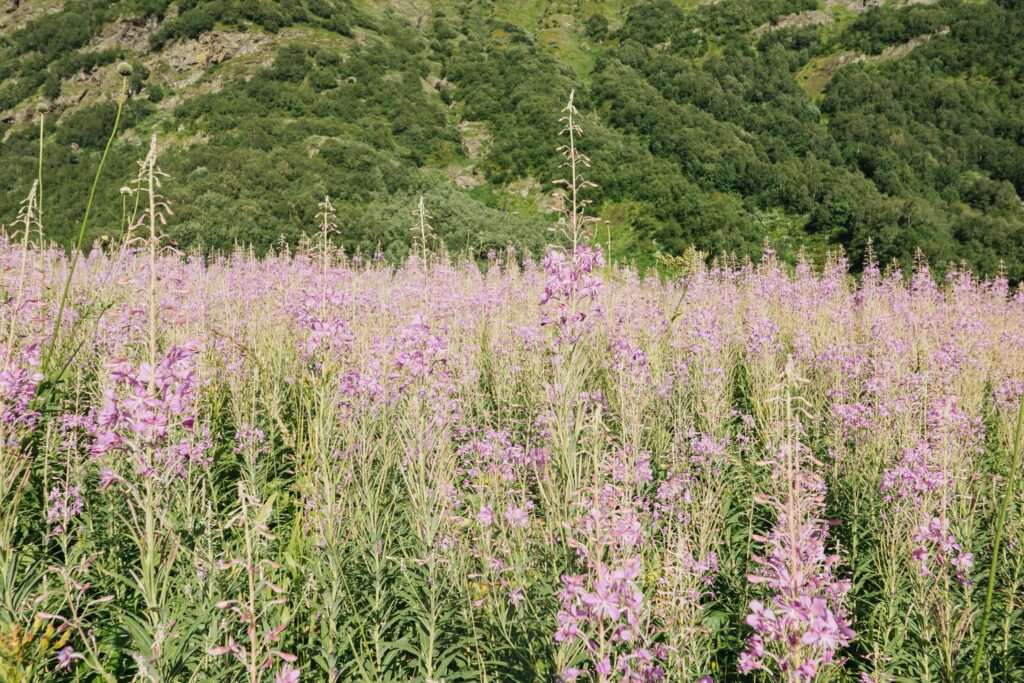
Alaska has an extraordinary secret. While visitors flock here for glaciers, wildlife, and the midnight sun, the summer wildflower season quietly transforms every hillside, meadow, and roadside verge into a living canvas of color. From late May through August, Southcentral Alaska blooms with fireweed, lupine, forget-me-nots, and dozens of native species — and if you time your trip right, you’ll witness something truly unforgettable.
Fireweed: Alaska’s Most Iconic Bloom
No plant defines an Alaskan summer quite like fireweed. This tall, vivid pink-purple flower colonizes roadsides, burned hillsides, and open meadows, creating brilliant swathes of color that locals look forward to each year. Fireweed is among the first plants to return after wildfires, earning its name from this pioneering resilience.
Here’s a piece of local wisdom you’ll want to remember: Alaskans watch fireweed the way others watch the Farmer’s Almanac. When the flowers bloom all the way to the top of the stalk, there are roughly six weeks until the first frost. It’s nature’s own countdown calendar — and a reminder to make the most of every summer day.
Peak fireweed season runs mid-July through mid-August in Anchorage’s surrounding valleys. Drive any highway south of the city — particularly the Seward Highway — and you’ll see these pink towers rising from the roadsides in vivid waves.
Forget-Me-Not: Alaska’s Beloved State Flower
Small but striking, the forget-me-not is Alaska’s official state flower. These delicate blue blooms appear from late May onward, dotting meadows, stream banks, and roadsides throughout the state. They’re easy to overlook at first glance — until a whole meadow of them catches the light and turns the hillside blue.
Near Anchorage, you’ll find forget-me-nots along most trailheads in early summer. The Eagle River Nature Center offers some of the most accessible early-season wildflower viewing in the region, with well-maintained paths through lush riparian habitat where forget-me-nots and cow parsnip bloom side by side in June.
Lupine on the Kenai Peninsula
If fireweed is the queen of Alaska’s wildflower season, lupine is a close second. These tall purple spires line the Sterling Highway south of Anchorage in breathtaking numbers during June and July. The drive through the Kenai Peninsula becomes a purple corridor, with lupine fields stretching as far as the eye can see on both sides of the road.
For the best roadside display, drive the Sterling Highway between Soldotna and Cooper Landing in late June. The timing varies year to year depending on snowpack, but late June typically brings peak lupine to the Kenai lowlands and mid-July brings blooms to higher elevations.
A Word of Caution: Cow Parsnip
You can’t miss cow parsnip — it’s one of Alaska’s most dramatic wildflowers, with enormous white flower heads on hollow stalks that can exceed six feet tall. It grows in dense stands along riverbanks and roadsides throughout Southcentral Alaska, and in summer the valleys fill with their heady scent.
Here’s the essential caveat: cow parsnip sap causes phototoxic burns. If the plant’s juice contacts your skin and you step into sunlight, you can develop severe blisters. Keep children away from the stems, and if you brush against one while hiking, wash the area thoroughly before sun exposure. Admire these giants from the trail.
Best Wildflower Hikes Near Anchorage
Anchorage is surrounded by exceptional wildflower hiking. The high alpine meadows of Chugach State Park come alive with color from late June onward, and several trails offer outstanding access to the blooms.
Powerline Pass is one of the finest wildflower hikes in Southcentral. The Powerline Pass Trail traverses a wide, open valley with views of glaciated peaks, and in July the tundra bordering the trail becomes a tapestry of fireweed, lupine, and smaller alpine species. It’s an easy-to-moderate route accessible from the Glen Alps Trailhead south of town.
Flattop Mountain is Anchorage’s most-climbed peak and an excellent wildflower destination. The Flattop Mountain Trail passes through sub-alpine meadows rich with wildflowers on the lower slopes, transitioning to tundra flora — including dwarf fireweed and moss campion — near the summit. Plan your hike for late June through July for the best color.
Hatcher Pass: Subalpine Wildflower Heaven
For the most spectacular subalpine wildflower meadows in Southcentral Alaska, make the trip to Hatcher Pass in the Talkeetna Mountains north of Wasilla. This high valley sits above 3,500 feet, and when the snow melts in July, the open meadows erupt with color. Fireweed, lupine, harebells, and monkshood bloom across rolling tundra with 360-degree mountain views.
Independence Mine State Historical Park sits at the heart of Hatcher Pass, and the trails around the old gold mine lead through some of the finest wildflower meadows in the region. Peak blooms hit in mid-to-late July, making it a perfect summer day trip from Anchorage — about 90 minutes north on the Glenn Highway.
Tundra Blooms at Denali
If your Alaska itinerary includes Denali National Park, don’t overlook the tundra wildflower display. The low-growing plants of the arctic and subarctic tundra — dwarf fireweed, moss campion, Labrador tea, and alpine azalea — create a ground-level mosaic that rewards those who stop and look closely.
Because tundra plants grow so slowly, even small flowers represent years of patient growth. The best Denali wildflower displays happen in late June along the park road, where the vegetation transitions from spruce forest to open tundra. Bring a macro lens — this is close-up photography country.
Wildflower Photography Tips
Alaska’s long summer days give photographers extraordinary light. Golden hour in June doesn’t arrive until after 10 p.m. and returns before 4 a.m., giving you extended windows of warm, angled light ideal for field photography. If you’re serious about wildflower photography, consider joining the Alaska Wildflower & Nature Photography Workshop Series, which offers guided sessions with expert instruction in field composition and natural light techniques.
For sweeping shots, a wide-angle lens captures the dramatic scale of fireweed hillsides. A 50–100mm macro lens reveals the intricate detail of individual blooms — the fine texture of lupine petals, the delicate structure of forget-me-not flowers. Overcast skies actually work well for wildflower photography, softening shadows and saturating colors beautifully.
Your Alaska Wildflower Season Calendar
- May: Early bloomers appear in Anchorage lowlands — forget-me-nots, wild geranium, chocolate lily. Trails in lower Chugach begin greening up.
- June: Lupine explodes along the Kenai Peninsula. Fireweed starts in Anchorage valleys. Higher trails clear of snow and begin their bloom cycle.
- July: Peak wildflower season statewide. Hatcher Pass, Denali tundra, and upper Chugach trails reach maximum color. Fireweed covers every burn scar and roadside.
- August: Fireweed finishes its bloom from the bottom up — when it reaches the top, autumn’s arrival is weeks away. Bearberry turns red, signaling the season’s slow close.
Plan Your Wildflower Adventure
Alaska’s wildflower season is fleeting, weather-dependent, and extraordinarily beautiful. The best approach is to stay flexible: check trail conditions at Chugach State Park before heading out, and be willing to adjust your plans based on current blooms rather than a fixed calendar.
Whether you’re hiking Powerline Pass, driving the Kenai Peninsula, or simply pulling over on the Seward Highway to photograph a fireweed field, Alaska’s summer wildflowers reward curiosity and patience. This is one of the state’s great, underrated spectacles — and if you’re here between June and August, you’d be doing yourself a disservice to miss it.
No comments yet.