Alaska Telemark Skiing 2026
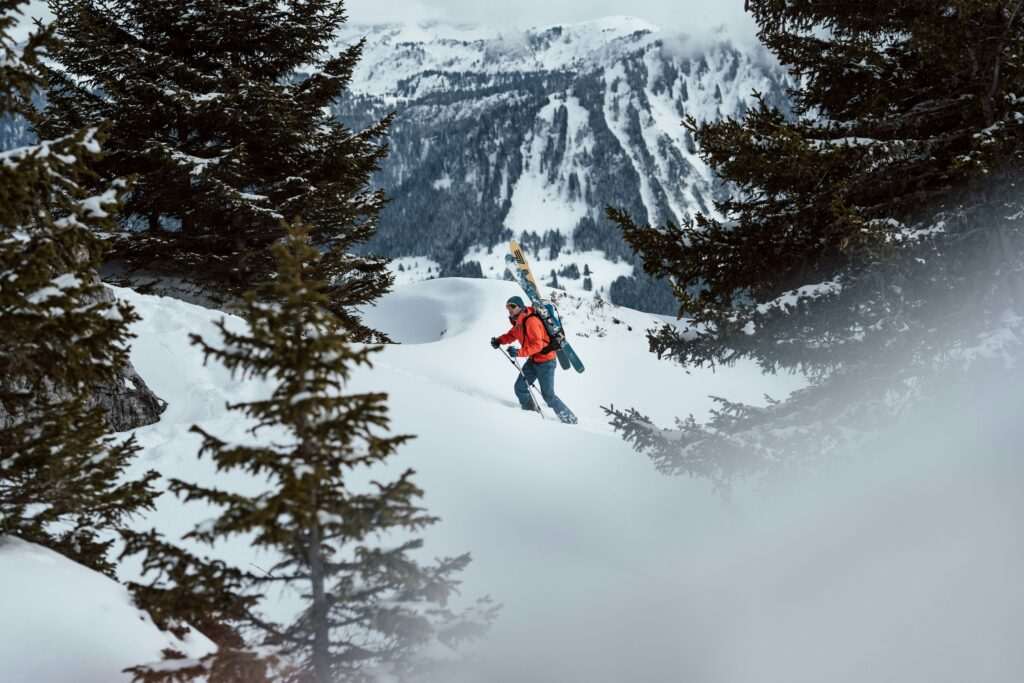
Telemark skiing — the free-heel discipline that predates alpine skiing by centuries — sits in an interesting position in Alaska’s winter sports culture. The technique’s roots in Norwegian mountain travel make it philosophically aligned with Southcentral Alaska’s terrain: vast backcountry, ungroomed powder, and mountain approaches that demand adaptability rather than resort infrastructure. Alyeska Resort in Girdwood offers groomed-trail telemark for practitioners who want controlled terrain; Hatcher Pass and Turnagain Pass provide the backcountry context that originally shaped the discipline. This guide covers where to ski telemark near Anchorage in 2026, what conditions to expect at each location, and what makes Alaska’s terrain a particularly rewarding arena for free-heel skiing.
What Makes Telemark Skiing Different
Alpine (downhill) skiing locks the heel to the ski binding, transferring power through the entire foot for edge control. Telemark binding allows the heel to lift during the stride — the same principle that enables cross-country skiing. On descents, telemark technique involves dropping into a lunge position (the “telemark turn”) that distributes weight between the forward ski and the trailing ski in a movement that’s biomechanically demanding but produces smooth, flowing descents once mastered. The free-heel design lets telemark skiers travel on ungroomed terrain in ways that alpine equipment doesn’t support as well, making it a natural fit for backcountry Alaska approaches where the resort boundary appears only at the very end of a long day.
Telemark gear has evolved substantially from the wooden-ski, cable-binding era. Modern telemark equipment uses performance plastic boots, NTN (New Telemark Norm) bindings, and shaped skis that allow skiing at alpine speeds with the free-heel option intact. The discipline remains a niche within a niche — smaller than alpine, larger than pure Nordic — but its community tends to be deeply committed and technically precise.
Alyeska Resort, Girdwood
Alyeska Resort, 45 minutes south of Anchorage in the Girdwood valley, provides the most accessible lift-served terrain for telemark skiers near Anchorage. The resort’s 2,500-foot vertical drop, varied terrain across six lifts, and reliable snowpack make it the starting point for most Anchorage-area telemark practitioners who want groomed or light-powder descents rather than backcountry approaches. Telemark skiing on Alyeska’s groomed runs requires no additional fees or registration — telemark skiers purchase lift tickets like any other skier and are welcome on all open terrain. The upper mountain, typically accessed by the Glacier Bowl Express and Headwall Chair, provides the steeper and more technical runs that benefit most from telemark technique.
Alyeska doesn’t run dedicated telemark instruction as a regular offering, but private instruction through the Alyeska Ski School can be arranged with instructors who have free-heel experience. Beginner telemark learning works better on dedicated groomed terrain — the resort’s lower mountain beginner runs provide gradual slopes where technique development happens efficiently. Our Anchorage winter activities guide covers Alyeska’s full range of programs and the Girdwood base-area logistics for visitors day-tripping from Anchorage.
Hatcher Pass
Hatcher Pass, approximately 70 miles north of Anchorage near Palmer and Willow, provides some of the best backcountry skiing terrain accessible from Anchorage — and it’s a natural telemark environment. The open alpine bowl terrain above Independence Mine State Historical Park, the terrain accessible from the Summit Lake parking area, and the broader Talkeetna Mountains topography all suit free-heel technique. The approach involves a skin or snowshoe up from road-accessible trailheads, with the reward of untracked powder on descents when conditions are right.
Hatcher Pass backcountry requires avalanche awareness and appropriate safety equipment (beacon, probe, shovel). The terrain sits firmly in avalanche country; the Alaska Avalanche Center (alaskasnow.org) provides current advisory information for the Hatcher Pass zone. Most backcountry skiers at Hatcher Pass travel with at least one partner and make conservative terrain choices on high-hazard days. Reaching a 3,500-foot ridgeline under your own power and skiing 1,500+ vertical feet back down on free-heel equipment in untracked snow is the experience that defines backcountry telemark at its best.
Turnagain Pass
Turnagain Pass, 57 miles south of Anchorage on the Seward Highway, provides the most popular backcountry skiing corridor in Southcentral Alaska. The pass sits at 988 feet elevation with accessible high terrain rising to over 3,500 feet on both the north and south sides. The Placer River drainage, the south-side ridgelines, and various chutes and bowls above the highway all see regular backcountry ski traffic throughout the season. Telemark skiers share this terrain with splitboarders and alpine touring skiers — the free-heel approach fits naturally into the Turnagain community, which values uphill efficiency as much as downhill performance.
The Alaska Avalanche Center covers the Turnagain Pass area with daily advisories. Turnagain produces some of the highest-consequence avalanche terrain in the region — the popularity of the area has historically been accompanied by significant avalanche accidents, and conservative terrain selection matters especially here. Beginner backcountry practitioners shouldn’t use Turnagain Pass as a learning environment; experienced backcountry travelers treat it appropriately as serious terrain.
Gear and Rental Considerations
Telemark-specific rental equipment isn’t widely available in Anchorage — most ski rental shops carry alpine and cross-country equipment, with telemark offerings limited to specialty shops. Visitors planning dedicated telemark skiing near Anchorage are better served bringing their own equipment, particularly boots and bindings where fit is critical. Alaska Mountaineering & Hiking in Anchorage and REI carry telemark-relevant gear for repair, replacement parts, and accessories. Alyeska Resort’s ski shop doesn’t typically stock telemark rentals; confirm current rental availability directly with the resort before planning a trip around loaner gear.
For guided backcountry telemark experiences, Chugach Powder Guides offers ski mountaineering instruction and off-piste guiding in the Chugach terrain accessed from Girdwood.
Season and Conditions
Alyeska typically opens in late November and runs through April, with peak conditions in February and March when accumulated snowpack reaches maximum depth. Hatcher Pass and Turnagain Pass backcountry skiing extends into May in strong snow years — spring corn conditions in April and May provide stable, predictable snowpack on sun-exposed aspects that reduces the worst winter avalanche risk while maintaining substantial ski terrain. Our snowshoeing near Anchorage guide covers the winter terrain at Hatcher Pass and Turnagain Pass with access details relevant to any snowpack-dependent activity in these zones.
Photo by Roman Biernacki on Pexels.



No comments yet.