
Snowshoeing Near Anchorage 2026: Trails, Rentals & Winter Conditions Guide
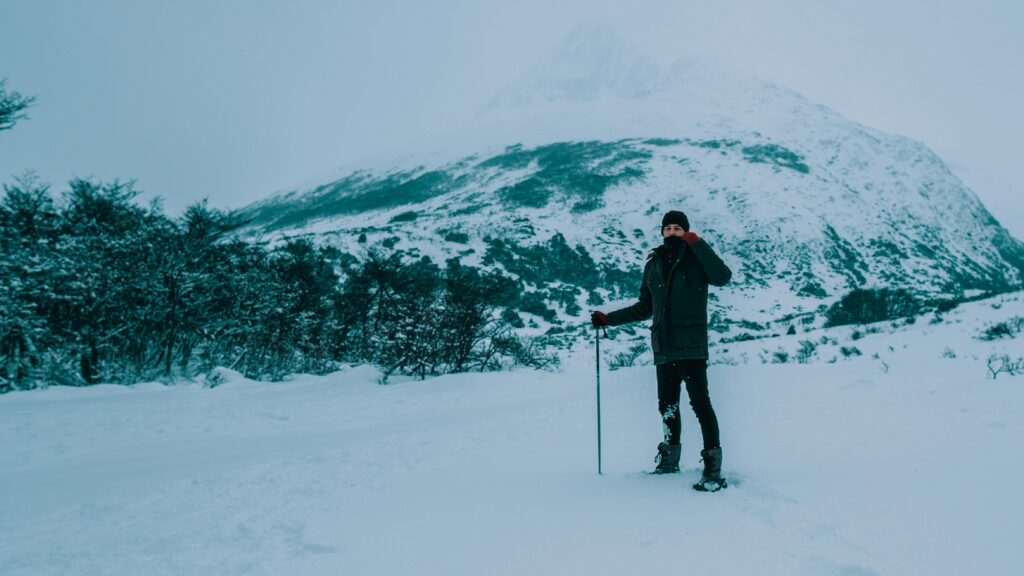
Snowshoeing around Anchorage doesn’t require a lift ticket, a shuttle, or a guided booking. You strap on a pair of snowshoes, walk out into the Chugach, and the terrain does the rest. In a city bordered by one of the largest urban wilderness areas in the United States, that’s a remarkable thing to be able to say.
The season runs roughly November through March, with the best conditions typically in December through February when snowpack is deepest and most stable. Trails in Chugach State Park are free to access on foot — there’s a parking fee at some trailheads but no trail use fee — and the range of terrain suits everyone from families taking a first-time beginner out for an hour to experienced winter hikers looking for a full-day ridge traverse.
Trail Guide: Snowshoeing by Difficulty
Beginner & Family-Friendly
Tony Knowles Coastal Trail (flat, urban, 11 miles one way)
In summer this is Anchorage’s most popular paved trail. In winter — when the pavement disappears under snow and the city quiets — it becomes one of the best beginner snowshoeing routes in Southcentral Alaska. The trail runs from downtown Anchorage to Kincaid Park along the Cook Inlet shoreline, and in deep winter the frozen inlet and the Sleeping Lady mountain (Susitna) across the water make for dramatic scenery at essentially zero effort. Dogs are welcome. No avalanche terrain. Good for all ages and fitness levels.
Hillside Park Network (rolling, forested, multiple distances)
The Hillside trail system — accessed from the Upper Huffman and Prospect Heights trailheads — offers a network of groomed and ungroomed trails through birch and spruce forest. In winter, the forest canopy keeps the snow conditions sheltered and relatively stable. The terrain is rolling rather than steep at lower elevations, making it ideal for families and first-time snowshoers building confidence. Many locals bring their dogs. The Prospect Heights trailhead has a small parking area and provides quick access to several looping options in the 2–5 mile range.
Intermediate
Rover’s Run (wooded, 3 miles round-trip)
Accessed from the Campbell Tract area near Tudor Road, Rover’s Run is a forested trail popular with dog walkers and trail runners that transitions well into snowshoeing terrain in winter. The trail moves through spruce forest with occasional open areas and gentle elevation changes. It’s sheltered from wind and not exposed to avalanche terrain, making it a reliable option even on days when the Chugach foothills are socked in. The 3-mile loop keeps the outing manageable without feeling short.
Near Point via Prospect Heights (open meadows and ridge views, 5-6 miles round-trip)
Near Point (elevation 3,000 ft) is one of the most rewarding intermediate snowshoe destinations accessible from the Anchorage road system. From the Prospect Heights trailhead, the route climbs through forest and into open terrain with expansive views of the Anchorage bowl and Cook Inlet. The upper section has some exposed wind-scoured areas; check conditions before heading above treeline. Total round-trip is typically 5–6 miles with 1,800 feet of elevation gain. This is a full half-day outing for most parties. Part of the Chugach State Park trail network.
Advanced
Flattop Mountain Approach (exposed upper mountain, 3.5 miles round-trip)
The Glen Alps trailhead in Chugach State Park is the most popular trailhead in Alaska by visitation. In summer, Flattop Mountain’s summit is a scramble. In winter, conditions vary dramatically: the lower approach trail is a comfortable snowshoe at any level, but above the treeline the mountain becomes exposed to wind and cold, and the upper slopes can be icy enough to require microspikes or crampons rather than snowshoes. Most winter visitors snowshoe to the broad meadow below the summit and turn back — the views of Anchorage and the Inlet are excellent without committing to the exposed summit push. Check CNFAIC (Chugach National Forest Avalanche Information Center) forecasts before heading above treeline.
Renting Snowshoes in Anchorage
You don’t need to own snowshoes to go snowshoeing near Anchorage — several local shops offer rentals.
REI Anchorage (Northern Lights Blvd) rents snowshoes by the day with pricing that includes poles. REI members receive discounts. The staff can advise on current trail conditions and gear choices for the temperature range you’ll encounter.
Alaska Mountaineering and Hiking (AMH) in Spenard is a local specialist with deep knowledge of Chugach conditions and a strong rental inventory for winter gear including snowshoes. This is the shop to visit if you have specific questions about backcountry terrain, avalanche gear, or winter travel in the Chugach.
Salmon Berry Travels and several outdoor activity outfitters in Anchorage also offer snowshoe rentals, sometimes bundled with guided snowshoe tours — a good option for visitors who want structured introduction to the terrain. Guided winter experiences in the Chugach can be arranged through adventure operators like Adventures by True North.
Rental rates typically run $15–$30 per day for recreational snowshoes. Book ahead in peak winter weekends when availability tightens.
What to Wear: Dressing for -20°F to +30°F
Anchorage winter temperatures swing widely — a January day can be a sunny +30°F at the trailhead or a brutal -20°F with wind chill on an exposed ridge. Layering is non-negotiable.
Base layer: Merino wool or synthetic moisture-wicking fabric. Never cotton — it absorbs sweat, stays wet, and accelerates heat loss. This applies to socks as well as top and bottom layers.
Mid layer: A fleece or down insulating layer. Down is warmer for its weight in dry cold; synthetic insulation performs better if there’s any moisture. On very cold days (-10°F and below), two mid-layers are appropriate.
Outer shell: Wind and waterproof jacket and pants. Even when it’s not snowing, tree branches drop snow, wind picks up spindrift, and you’ll generate enough body heat that ventilation zips matter. Bring the shell even if you don’t plan to wear it — conditions change.
Extremities: This is where most people underestimate Alaska cold. Insulated waterproof gloves or mittens are essential. Carry a second pair — wet gloves in -20°F can become an emergency. Wool or fleece hat, balaclava or neck gaiter for exposed days, and goggles for high-wind conditions. Boot gaiters to keep snow out of your footwear are highly recommended.
Footwear: Insulated waterproof boots rated to -20°F or lower. Most snowshoe bindings fit over standard winter boots.
Avalanche Awareness for the Chugach Foothills
The trails at lower elevations — Rover’s Run, Hillside Park, the Coastal Trail — are in terrain with negligible avalanche risk. As you gain elevation into open slopes above treeline (Near Point upper section, Flattop above the meadow, and any Chugach backcountry), avalanche awareness becomes essential.
Check the Chugach National Forest Avalanche Information Center (CNFAIC) forecast at avalanche.org before any outing above treeline. The forecast updates daily and uses a five-tier danger scale. In winter, Considerable (Level 3) or higher means the upper Chugach slopes are actively risky and the majority of Anchorage-area snowshoers should stay below treeline.
Basic avalanche safety practice for Chugach foothills outings: travel one at a time on exposed slopes, avoid convex rolls (where terrain steepens over a crest), and watch for recent avalanche debris or cracking/whoumpfing sounds in the snowpack — both indicate unstable conditions. If you’re venturing into terrain where a slide is possible, carry a beacon, probe, and shovel, and know how to use them.
Free vs. Paid Access
Most Chugach State Park trails are free on foot — you pay only for parking at developed trailheads. Glen Alps (Flattop) charges a day-use vehicle fee of $5; Prospect Heights and Campbell Tract are currently free. The Tony Knowles Coastal Trail is entirely free including parking along its downtown access points. If you’re being dropped off at a trailhead, you avoid the parking fee entirely.
The parking lot at Glen Alps fills on sunny winter weekends — arrive before 9 a.m. or be prepared for a short walk from overflow parking along Upper Huffman Road.
Reading Trail Conditions and When to Turn Back
Anchorage winter weather changes fast. A clear forecast can become a whiteout within an hour as storms roll off the Chugach. Before any outing, check the National Weather Service Anchorage forecast and look at the Chugach-specific mountain weather forecast if you’re heading above 2,000 feet.
Turn back when: visibility drops below 50 feet; wind increases to the point that forward travel is difficult; any member of your party is showing signs of cold injury (numbness that doesn’t resolve with warming, confusion, shivering that has stopped); or you’re running short on daylight. Anchorage winter days are short — by December, civil twilight ends around 4:30 p.m. Carry a headlamp regardless of your planned return time.
Trail-breaking in deep unbroken snow is exhausting at a ratio of roughly 3:1 versus packed trails — a mile of fresh powder snowshoeing can take as long as three miles on a packed surface. Adjust your distance plans accordingly, particularly after new snowfall.
Getting Started
The most accessible introduction to Anchorage snowshoeing is the Hillside trail network or the Coastal Trail with rented snowshoes from a local shop. Neither requires prior experience, both are near the city, and both give you a genuine sense of what an Anchorage winter looks and feels like from inside it — not through a car window, but under open sky with snow underfoot.
For visitors who want a more structured first experience with local knowledge included, guided winter snowshoe tours in Chugach State Park are available through several Anchorage adventure operators. A guide removes the navigation and condition-reading learning curve and can show you terrain you’d be unlikely to find on your own.
No comments yet.