
Alaska Berry Picking Guide 2026: Blueberries, Salmonberries & Where to Forage Near Anchorage
In late July, something shifts across the Anchorage hillsides. The brush fills with color — orange salmonberries, ink-dark crowberries, pale cloudberries at higher elevations, and everywhere the blue-gray haze of blueberries ripening by the billions. Wild berry picking is one of Alaska’s most democratic outdoor activities: free, accessible, family-friendly, and tied to a foraging tradition that goes back thousands of years across every culture that has called this land home. Visitors can participate fully, with no permit, no special equipment, and no experience required beyond an ability to identify what you’re eating.
Alaska’s Edible Wild Berries: A Field Guide
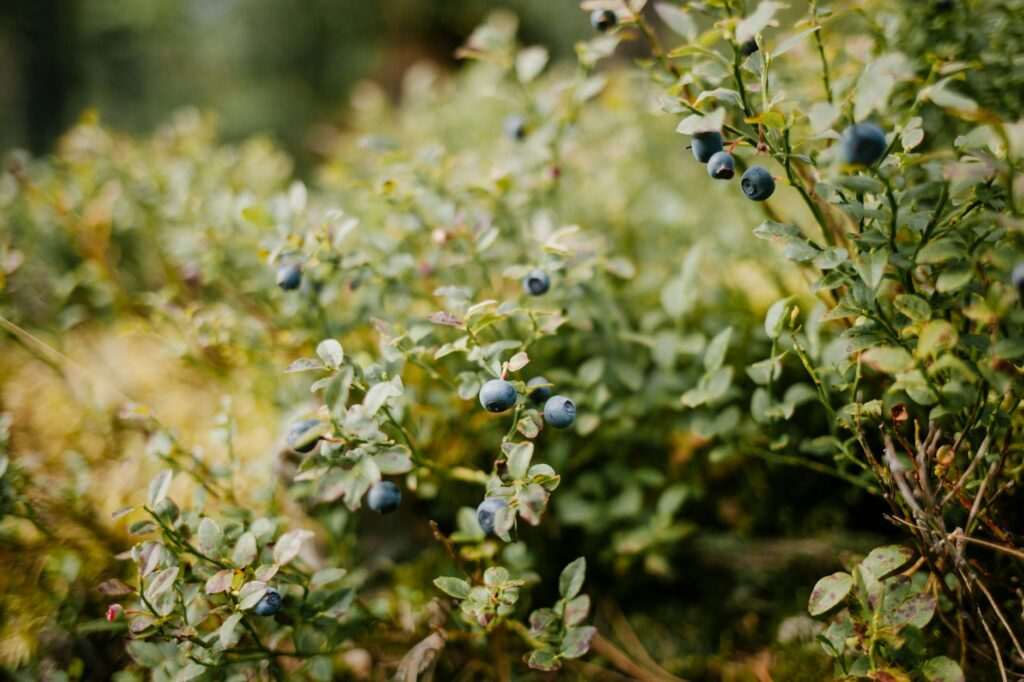
Bog blueberries (Vaccinium uliginosum) are the most abundant berry in Southcentral Alaska and the one most visitors encounter first. Low-growing plants rarely taller than knee height, they thrive in open tundra, wet meadows, and the edges of spruce forest. The berries are round, blue-black with a powdery bloom, and sweeter than anything you’ll find in a grocery store. Peak season near Anchorage: late July through August.
High-bush blueberries grow taller — up to six feet — and are common in forest edges at lower elevations. The berries are larger and more tart than their low-bush relatives. You’ll find them in abundance along Eagle River drainages and in the Chugach foothills.
Salmonberries (Rubus spectabilis) are the first berries of the season, ripening in mid-July when most other species are still weeks from ready. They resemble raspberries in structure but range in color from pale yellow to deep orange-red, with the sweetest flavor coming from the darkest fruit. They’re common along streams and in coastal thickets — look for them along the Tony Knowles Coastal Trail and in the Turnagain Arm area.
Cloudberries (aqpik) are amber-colored, single-fruit berries that grow low on the tundra and are among the most prized wild foods in Alaska. Yup’ik and Inupiat communities have harvested them for centuries, and in Alaska Native tradition they’re the key ingredient in akutaq — the whipped fat and berry dish sometimes called Eskimo ice cream. Finding them near Anchorage requires getting to higher elevation or boggy tundra; Hatcher Pass and the higher Chugach terrain are your best bets.
High-bush cranberries (Viburnum edule) aren’t true cranberries but taste remarkably similar — tart, bright red, and at their best after the first frost softens them. They ripen in September and persist on the bush well into fall, making them the last berry of the season. They’re common in shrubby forest edges throughout Southcentral Alaska.
Crowberries (Empetrum nigrum) are small, black, and easy to overlook — but prolific. They grow in mats on alpine tundra and ripen from mid-August into September. The flavor is mild, slightly acidic, and they’re excellent for jams and syrups.
Watermelon berries (Streptopus amplexifolius) are a forest floor berry with a name that earns itself: oval, red-striped fruit that smells faintly of watermelon when crushed. They grow in shaded understory and ripen in late summer. Safe to eat but often overlooked by foragers who don’t know to look for them.
When to Pick: The Alaska Berry Calendar
The season runs roughly July through October, with the window varying by elevation and species. Salmonberries open July; low-bush blueberries peak in August and remain through early September at lower elevations; cloudberries and crowberries come in August at higher ground; cranberries peak in September and improve after frost. As a rule, higher elevation means a later and shorter window — Hatcher Pass blueberries might peak two weeks after the same species at sea level on the Coastal Trail.
Best Picking Spots Near Anchorage
Hatcher Pass (about 70 miles north of Anchorage via Palmer) is the gold standard for blueberry picking in Southcentral Alaska. The open alpine terrain above the treeline produces enormous quantities of low-bush blueberries in August, and the picking can be extraordinary — a single hour of focused picking can fill a gallon container. The pass is popular, so plan for company on weekends. Take the Hatcher Pass Road to the Independence Mine area and head off-trail into the low brush.
Chugach foothills — accessible from multiple south and east Anchorage trailheads — produce consistent blueberry crops along trails that skirt the edge of the treeline. The Dew Mound Trail and similar routes through the Chugach State Park hillsides put you in productive berry habitat within 30 minutes of downtown. Focus your picking in the open tundra patches above 1,500 feet elevation.
Eagle River area is productive across multiple species. The South Fork Eagle River Trail corridor runs through mixed forest and open slopes where blueberries and high-bush cranberries thrive side by side. The elevation gain along the trail means you’ll encounter different berry species at different points — lower stretches for salmonberries, upper sections for blueberries and crowberries.
Eklutna Flats and the river delta north of Anchorage produce salmonberries in July in particularly large quantities. The low scrubby vegetation along the flats is ideal salmonberry habitat, and access is straightforward from the Eklutna area.
Tony Knowles Coastal Trail (Anchorage’s urban trail network) has salmonberry patches that can be surprisingly productive in late July, particularly in the sections near Kincaid Park where the trail passes through dense thickets. It won’t fill a bucket, but it’s the most convenient option for visitors staying downtown who want a taste of the foraging experience without driving an hour.
Rules and Regulations
Recreational berry picking on public land in Alaska requires no permit for personal-use amounts. State parks, national forests, and BLM land all permit it. Commercial harvesting (selling what you pick) has different rules and requires checking with the relevant land management agency. As a practical matter, picking berries for personal consumption anywhere in Chugach State Park, the Matanuska-Susitna area, or along public trail corridors is entirely legal and welcomed.
Bear Country Protocol
Bears pick berries too — often the same patches you’re eyeing. This is not a reason to stay home; it’s a reason to be a deliberate and alert picker. Make noise constantly while you’re in berry patches, especially in dense brush where visibility is low. Talk, clap, or wear a bell. Don’t use headphones. Go in groups when possible. Carry bear spray and know how to use it. The Eagle River Bear Viewing Trail gives a useful orientation to how bears behave in the same terrain where berry picking happens — understanding bear behavior makes the activity significantly safer.
If you see a bear at a distance, speak calmly, group together, and back away slowly without running. Bears in berry patches are usually focused on eating and not interested in you, but a surprised bear is a different story.
What to Do With Your Berries
Fresh Alaska blueberries freeze exceptionally well — spread them on a sheet pan to freeze individually, then transfer to bags. A freezer full of August blueberries will carry you through winter pancakes, muffins, and sauces until the following summer.
Alaska blueberry jam is straightforward to make and requires no added pectin — the berries have enough natural pectin to set on their own with just sugar and lemon juice. High-bush cranberry jelly is a Southcentral Alaska tradition that pairs particularly well with moose, caribou, and roasted poultry. Salmonberries are best eaten fresh or incorporated into akutaq if you can source the traditional fat base; they break down quickly and don’t freeze as well as blueberries.
Whatever you pick, eat some fresh on the hillside. That’s the whole point.
Photo: Julia Volk / Pexels
No comments yet.