
Hang Gliding Near Anchorage 2026: Launch Sites, Soaring Alaska & What to Know
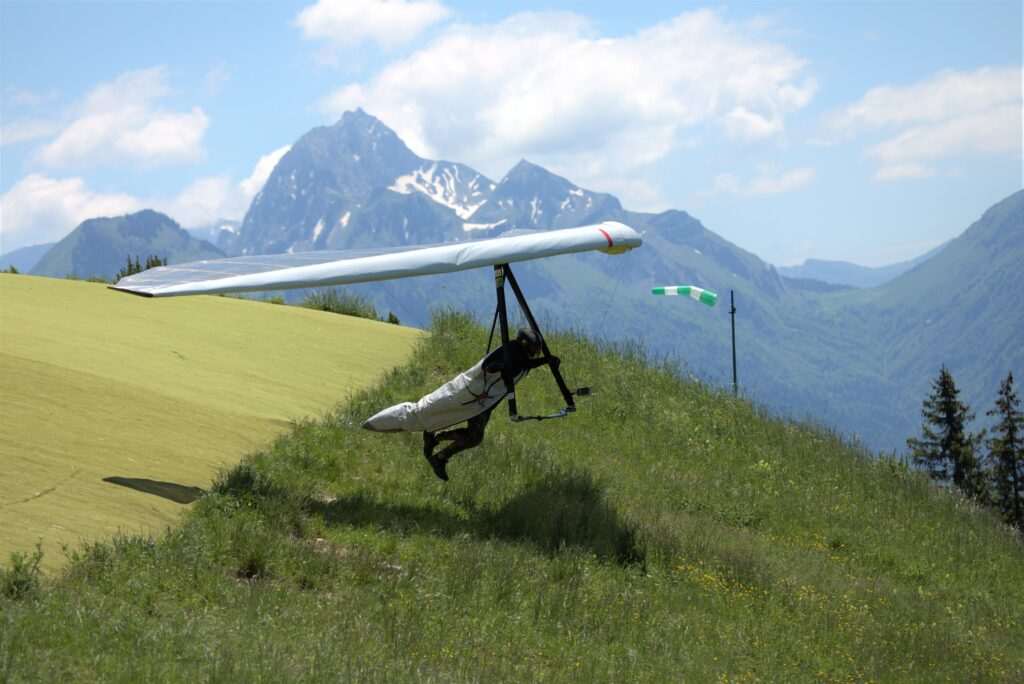
Alaska’s ridgelines offer hang gliding conditions that are genuinely hard to find anywhere else: sustained ridge lift along coastal ranges, panoramic views stretching from the Alaska Range to Cook Inlet, and launch sites that sit above treeline with minimal obstacles below. It’s not a mainstream tourism activity near Anchorage the way rafting or fishing is — but for pilots chasing dramatic terrain, the area delivers. Here’s what to know for 2026.
Hang Gliding vs. Paragliding: What’s the Difference?
Both sports launch from ridges and use rising air to stay aloft, but the equipment and flying feel are quite different. Hang gliders use a rigid aluminum-and-sailcloth delta wing, with the pilot in a prone harness below the frame — it’s faster, has a better glide ratio, and requires significant training to fly safely. Paragliders use a flexible inflatable wing above the pilot in a seated harness — more packable, easier to train on, and more widely available for tandem flights.
Near Anchorage, both sports share some of the same ridge-lift sites, but paragliding has a more established local scene with commercial tandem operations. Hang gliding is primarily practiced by rated solo pilots, though tandem hang gliding is sometimes offered through visiting instructors.
Top Launch Sites Near Anchorage
Flattop Mountain
Flattop Mountain in Chugach State Park sits at 3,510 feet above sea level and is accessible via a well-maintained trail just 12 miles from downtown Anchorage. For experienced pilots, the broad summit plateau and consistent southeast winds make it a popular soaring site with views of Anchorage, Cook Inlet, and the Alaska Range on clear days. The approach trail is short enough to hike with hang gliding gear, though it requires physical conditioning. Flattop isn’t suitable for beginners — the terrain below the launch is unforgiving, and Alaska’s rapidly shifting mountain weather demands experienced decision-making.
Hatcher Pass (Mat-Su Valley)
Hatcher Pass, about 60 miles north of Anchorage in the Talkeetna Mountains, is one of the premier soaring locations in Southcentral Alaska. The high alpine terrain, bowl-shaped ridges, and reliable summer thermals attract both hang gliders and paragliders. Elevation sits around 3,500 feet at the pass itself, with launch sites on surrounding ridges pushing higher. Access requires a drive through Palmer and the Hatcher Pass Road — plan for the full day when flying here. Views on good days extend to Denali and the Alaska Range to the north.
Bird Ridge Area
The Bird Ridge area along Turnagain Arm, about 25 miles south of Anchorage, offers excellent coastal ridge soaring. The Chugach Mountains here drop steeply toward the Arm, creating reliable ridge lift when southerly winds push up the mountain face. The Bird Ridge Trail climbs directly to launch-viable ridgelines with views straight down Turnagain Arm’s dramatic glacially carved valley. This is a technically demanding site requiring solid skills — but the coastal soaring potential when conditions align is exceptional.
Tandem Hang Gliding for Visitors
Tandem hang gliding (flying with a certified instructor as a passenger) is less common near Anchorage than tandem paragliding. There are no permanent commercial tandem hang gliding operations listed locally — if you’re specifically set on a tandem hang gliding experience, contact the Alaska Free Flight Association (Alaska’s USHPA chapter) well in advance of your trip. Some certified tandem hang gliding instructors do operate in the region seasonally, but it requires advance coordination rather than a walk-up booking.
For visitors wanting an aerial perspective with less advance planning, tandem paragliding is more accessible locally, or consider flightseeing options like Rust’s Flying Service — floatplane tours that provide comparable glacier and mountain views without the physical demands of a ridge launch.
Solo Hang Gliding: Licensing and Local Clubs
Solo hang gliding in the US operates under the USHPA (United States Hang Gliding and Paragliding Association) rating system:
- Hang 1 (Beginner): Supervised instruction only, no unsupervised flight
- Hang 2 (Novice): Solo flight at suitable beginner sites, no high-performance maneuvers
- Hang 3 (Intermediate): Thermaling flight in non-turbulent conditions — the rating required for most Anchorage-area sites
- Hang 4 (Advanced): Complex, turbulent, or high-performance sites
The Alaska Free Flight Association is the local USHPA chapter and the primary resource for hang gliding and paragliding in the state. They maintain site information, connect visiting pilots with local conditions expertise, and can direct you to certified instructors for rating progression. Reach them through the USHPA directory or local outdoor forums before your trip.
Best Conditions and Weather Windows
Alaska’s hang gliding season runs roughly May through September, with the best flying windows in June, July, and August when days are longest and thermal activity is most predictable. Key conditions to understand:
- Ridge lift: Available whenever wind blows perpendicular to a ridgeline at 10–25 mph — reliable along Turnagain Arm with southerly flow
- Thermals: Develop mid-morning to early afternoon on sunny summer days, strongest inland at Hatcher Pass and around the Mat-Su Valley
- Weather variability: Alaska’s coastal mountain weather changes fast. A flyable morning can turn into rain and gusty crosswinds by afternoon — pilots here check multiple forecasts (Aviation Weather Center, Windy.com) and are conservative about launch decisions
- Morning windows: Pre-thermal, early morning ridge lift is often the smoothest and most predictable flying of the day along coastal sites
What You’ll See from Above
The Anchorage area’s hang gliding sites offer extraordinary views when weather cooperates:
- Cook Inlet’s vast tidal mudflats and the Susitna Flats from Flattop and the Chugach ridges
- Turnagain Arm’s glacially carved valley stretching to the southwest from Bird Ridge
- Denali and the Alaska Range visible on clear days from Hatcher Pass, roughly 100 miles to the north
- The city of Anchorage laid out against the mountains — its grid visible between the Chugach foothills and the Inlet
- Glaciers feeding the river drainages visible in multiple directions from high alpine launches
For aerial views without the licensing requirement, Trail Ridge Air operates scenic flight tours that cover many of the same landscapes from a small aircraft.
Safety Considerations
Hang gliding in Alaska carries terrain-specific risks beyond standard free flight hazards:
- Rotor turbulence: Alaska’s jagged ridgelines create turbulent rotor zones in the lee of terrain features — site knowledge is essential
- Rapid weather changes: A site that’s flyable at launch can become dangerous within 20 minutes in coastal mountain terrain — always have a conservative abort plan
- Remote landing zones: Unlike more populated regions, some Alaska sites have limited landing zone options; scouting LZs in advance is critical
- Wildlife below: Bears are present on Chugach State Park and Mat-Su ridgelines — be aware when hiking to launch and in landing zones
- Cold temperatures: Even summer ridge flights involve significant windchill at altitude; dress in layers and bring emergency gear
New to the Anchorage area? Connect with the Alaska Free Flight Association before flying unfamiliar sites. Local knowledge of rotor zones, site-specific hazards, and current conditions is worth far more than any guidebook.
2026 Season Tips
- Contact the Alaska Free Flight Association in March or April to get connected with local pilots before your trip
- Hatcher Pass Road opens to the summit area typically by late May — confirm road conditions before planning a season-opening flight there
- If you’re pursuing USHPA rating progression during your Alaska trip, arrange instruction in advance — certified instructors are limited in the region
- Visiting pilots should carry their USHPA card; many Alaska sites are managed by the state park system and access may require proof of rating
Frequently Asked Questions
Can I hang glide near Anchorage without experience?
No — solo hang gliding requires USHPA certification, and none of the main Anchorage-area sites are beginner-appropriate. If you want a first aerial experience, tandem paragliding is more accessible locally. For those serious about learning hang gliding, contact the Alaska Free Flight Association for instructor referrals well before your trip.
What’s the best site for experienced pilots visiting Anchorage?
Hatcher Pass is the most celebrated flying site near Anchorage for experienced pilots — reliable thermals, high alpine terrain, and Denali views on clear days. Bird Ridge offers excellent coastal ridge soaring but is more technically demanding due to terrain complexity. Both require a Hang 3 rating minimum and prior site briefing from local pilots.
Is hang gliding or paragliding more common near Anchorage?
Paragliding is significantly more common. The local free flight community includes both disciplines, but paragliding equipment is more portable, instruction is more widely available, and tandem commercial operations exist for paragliding in a way they don’t currently for hang gliding near Anchorage.
When is the best time of year to hang glide near Anchorage?
June through August offers the best combination of stable weather windows, long days (up to 19 hours of daylight), and active thermals. May and September are viable shoulder months with fewer crowds at sites, though weather is more variable. Winter hang gliding isn’t practiced in this region due to extreme cold and limited daylight.

No comments yet.