
Virtual Reality and VR Arcades in Anchorage: A 2026 Guide to Immersive Gaming
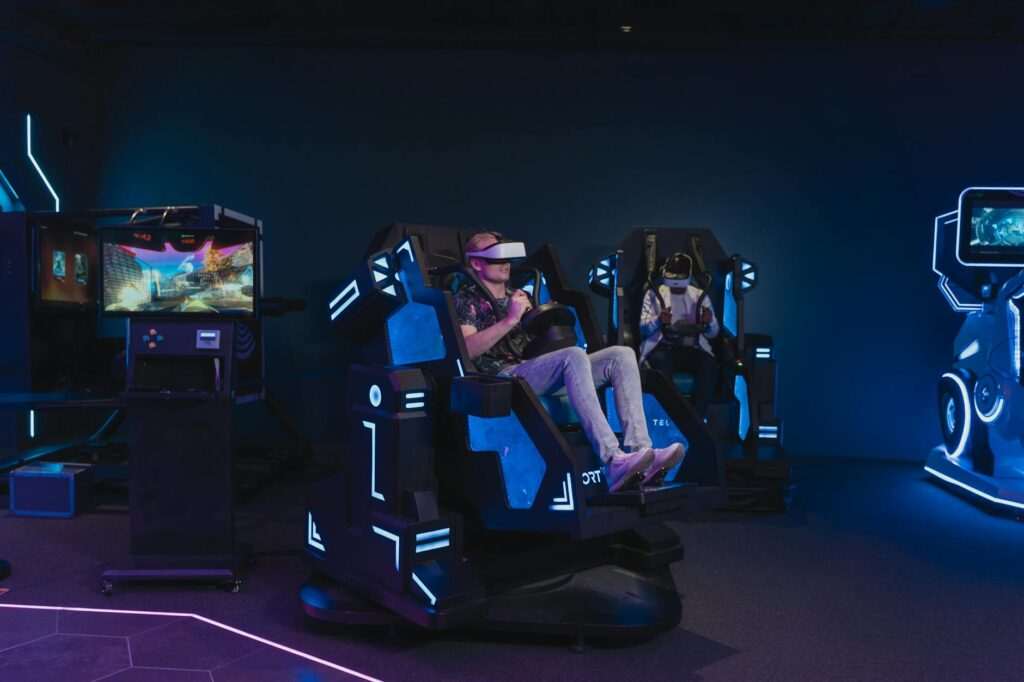
Virtual reality gaming has gone from specialty tech demo to mainstream entertainment in the past few years — and if you’re visiting or living in Anchorage looking for a VR arcade experience, the picture is more nuanced than in most cities its size. Anchorage doesn’t have a standalone dedicated VR arcade with rows of headsets and hourly booth rentals. What it does have is a growing tech-enhanced entertainment scene where immersive experiences are baked into escape rooms, digital projection venues, and mixed-use gaming spaces. Here’s what the VR and immersive gaming landscape looks like in 2026, and where to find experiences that scratch the same itch.
VR Arcades in Anchorage: The Honest Picture
As of 2026, Anchorage doesn’t have a free-standing VR arcade of the type common in larger cities — no dedicated venue with a dozen VR stations, per-minute pricing, and a library of multiplayer shooters you can drop into off the street. This is partly a function of Anchorage’s population size and partly the broader consolidation happening in the standalone VR arcade industry nationally, where many venues that opened in 2018–2020 have since closed or pivoted to hybrid models.
What has filled that gap in Anchorage is the escape room industry, which has expanded significantly and now includes VR-hybrid experiences alongside traditional physical rooms. The distinction matters: an escape room company that offers a VR room is providing a guided, narrative-driven immersive experience in a controlled setting — which is often a better first VR encounter than an unsupervised arcade station anyway. If you want to know what it’s like to genuinely be somewhere you’re not, the escape room VR format delivers that effectively.
Escape Rooms: Anchorage’s Immersive Entertainment Backbone
Anchorage has a well-developed escape room scene that has evolved well beyond the padlock-and-key format. Alaska Escape Rooms is one of the primary venues — multiple themed rooms with technology-integrated puzzles, actor-driven narratives, and the kind of full-environment immersion that VR aims to replicate in a different medium. The group format (typically 2–8 players) makes it a direct substitute for multiplayer VR gaming, with the added benefit that you don’t need a headset to feel like you’re actually inside the experience.
Escape Anchorage is another well-established operator with multiple room formats. Both venues update their room offerings periodically — check their current availability before booking, since the best rooms sell out well in advance on weekends. For groups that want the first-person immersive experience without the learning curve of a new hardware interface, escape rooms are the most reliable option Anchorage offers.
The overlap between escape room audiences and VR arcade audiences is intentional — both formats attract groups looking for active, social, experience-driven entertainment rather than passive consumption. If you’ve been to a VR arcade before and liked it, you’ll find the same energy at a well-run escape room. If you’ve never done either, the escape room is the lower-barrier entry point.
Tech-Enhanced Entertainment: Frosted Axe Throwing’s Digital Experience
Not every tech-forward entertainment venue in Anchorage labels itself as VR, but Frosted Axe Throwing on West Fireweed Lane in Midtown is worth noting for its use of digital interactive projection technology that overlays animated game environments and scoring onto the physical throwing target. It’s not VR in the headset sense, but the projection system turns each lane into a dynamic digital game environment — reactive to your throws, with animated challenges and multiplayer scoring modes that would be familiar to anyone who’s played in an arcade context. The difference is that the game interface is projected at human scale onto the wall in front of you rather than rendered inside a headset.
This matters for groups that want tech-enhanced gaming entertainment but have members who don’t do well with VR headsets — motion sickness, prescription lenses, or simply not wanting something strapped to their face. The Frosted Axe format gives you the game-within-game experience without any of those friction points, and the full bar integration means a session here can anchor a two- to three-hour evening rather than being a quick stop.
The Side Quest: Anchorage’s Immersive Gaming Hub
The Side Quest in South Anchorage holds the distinction of being Alaska’s first dedicated board game café — over 300 games, a cover charge for unlimited table time, and food and drink service throughout. It’s not VR, but it occupies the same entertainment category: a venue where the activity IS the point, where you’re fully engaged with other people in a shared game environment, and where the evening is structured around something other than sitting and watching.
For groups that found the idea of a VR arcade appealing for its social and interactive qualities rather than specifically for the headset technology, The Side Quest is the more accessible local version of that experience. The game library is deep enough that you can find complexity levels from family-casual to serious strategy, and the café format means you can stay for three hours without anyone feeling like they’re on a clock.
Immersive Digital Experiences Beyond Gaming
Two Anchorage venues offer large-scale digital and visual immersion that isn’t gaming but shares the technology-driven sensory quality of VR:
The UAA Planetarium & Visualization Theater runs full-dome digital shows that project across a curved ceiling surface large enough to produce genuine perceptual immersion — the same neurological effect that makes VR feel convincing, just at room scale rather than headset scale. The facility upgraded its projection system in 2024. Programming includes astronomy shows, Northern Lights visualizations, and educational content created specifically for the dome format. For visitors who want the immersive visual experience without the gaming context, it’s one of the best facilities of its type in the state.
The Anchorage Museum runs digital and interactive exhibits that vary by season and year — past installations have included large-format immersive photography, projection-mapped rooms, and interactive data visualization environments. Check the museum’s current exhibit schedule before visiting, as the immersive programming component changes more often than the permanent collection.
Playing VR at Home in Anchorage
For Anchorage residents who want VR gaming access beyond what the current venue landscape provides, consumer VR hardware has become genuinely accessible. The Meta Quest 3 and PlayStation VR2 are available through Best Buy and other Anchorage electronics retailers, and both platforms now have library depth significant enough to justify the investment for regular gaming households. The standalone headset format (no PC required) that the Quest 3 uses is particularly well-suited to Alaska’s in-home entertainment focus during winter months.
Local gaming communities — particularly the groups that organize through Bosco’s Comics Cards & Games and similar venues — occasionally run VR demo sessions and equipment lending circles. Posting in Anchorage gaming groups on Facebook or Reddit to find others with VR setups can connect you with home session opportunities that aren’t available through any venue listing.
What to Expect When VR Arcades Arrive
The VR arcade format will likely reach Anchorage in some form over the next few years as the national industry consolidates around higher-quality experiences at established entertainment complexes rather than standalone storefronts. The most likely path is an existing entertainment venue — bowling alley, escape room operator, or entertainment center — adding VR stations as a complementary offering rather than a dedicated new business launching cold.
When it does arrive, the experiences most likely to land in Anchorage are the free-roaming multiplayer formats — room-scale VR where multiple players move through a physical space with haptic vests and tracked props rather than sitting in stationary stations. These formats survive better as venue-based experiences because they require more physical infrastructure than a consumer headset can provide at home.
Tips for Finding the Best Immersive Experience in Anchorage
- Book escape rooms well in advance. Both major Anchorage escape room operators book out on Friday and Saturday evenings, especially in summer. Check availability mid-week and book online rather than walking in.
- Group size matters. Most immersive entertainment experiences in Anchorage — escape rooms, Frosted Axe, The Side Quest — are optimized for groups of 4–8. Solo visitors or pairs may find the experience less compelling than with a full group.
- Check UAA Planetarium’s show schedule seasonally. Programming changes at the dome theater, and the best shows sell out on weekend evenings. The UAA campus box office or website will have current listings.
- Ask about current VR offerings at escape rooms directly. The escape room industry is actively integrating VR experiences, and new room formats launch without widespread marketing. Calling ahead to ask specifically about VR-integrated rooms will give you the most current options.
Featured photo by Tima Miroshnichenko on Pexels.


No comments yet.