
Wildlife Viewing in Anchorage 2026: Best Tours, Parks & Wild Encounters
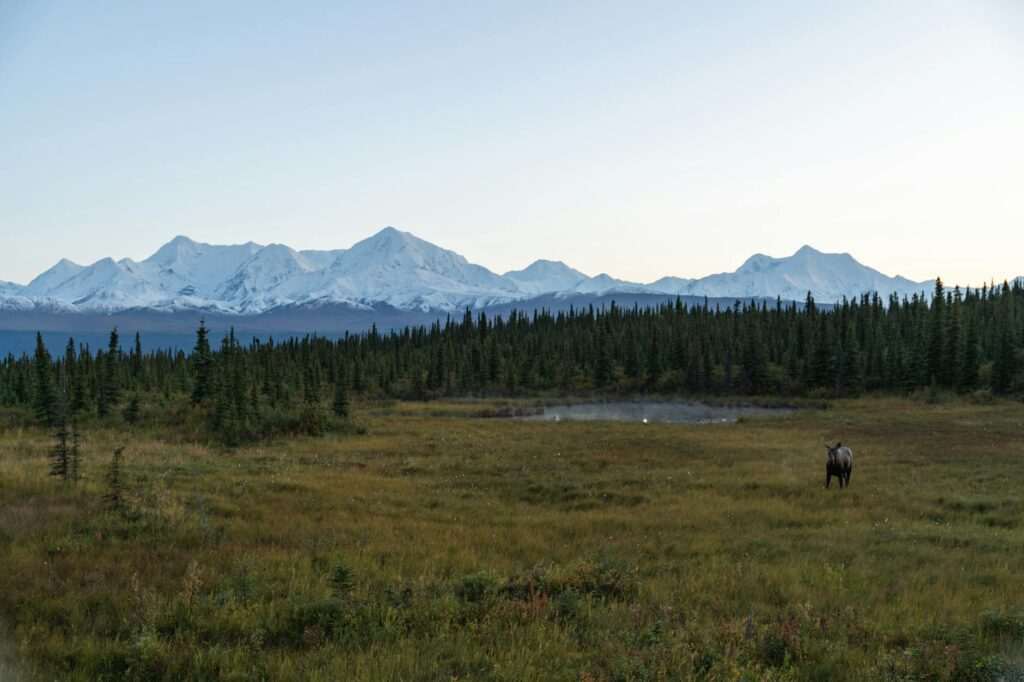
Anchorage has a wildlife viewing situation that most cities would envy: moose wander through residential neighborhoods, beluga whales surface in Cook Inlet at low tide, bald eagles ride thermals above the coastal bluffs, and brown bears fish salmon from river systems that run within sight of the highway. The city isn’t adjacent to wild Alaska — it’s embedded in it. Here’s where to go and what to expect from each encounter.
Moose: Anchorage’s Most Common Large Mammal
Anchorage’s urban moose population is estimated at several hundred animals, and they range freely through the city year-round — grazing in parks, crossing intersections, and resting in backyards with remarkable indifference to human activity. For visitors, this creates a genuinely unusual situation where a 1,000-pound wild animal might appear on a neighborhood street between breakfast and the morning hike.
The most reliable moose viewing in town comes from trail systems rather than dedicated viewing areas — moose use the same corridors humans do. The Tony Knowles Coastal Trail from downtown Anchorage runs 11 miles along the shoreline of Cook Inlet and encounters moose consistently in the wooded sections along its southern half. The Ship Creek Trail through downtown passes riparian habitat where moose water and browse year-round. The Chugach State Park trail systems on the Hillside are productive in early morning when moose move between the park and the city below.
Best viewing periods: spring (cows with new calves, April–May), fall rut (bulls active and visible, September–October), and winter (moose concentrate near food sources in deep snow). Give moose a wide berth regardless of season — they’re unpredictable and can be aggressive, particularly cows with calves. The rule of thumb is 50 feet minimum, farther if the animal shows any signs of stress.
Beluga Whales: Turnagain Arm
The Cook Inlet beluga whale population — a genetically distinct, federally endangered group of roughly 300 animals — feeds in the waters of Turnagain Arm during summer salmon runs. From late July through September, pods of three to thirty belugas move with the tides along the Arm, and they’re visible from the Seward Highway on the drive south from Anchorage. The Turnagain Arm beluga whale viewing pullouts between miles 97 and 107 on the Seward Highway are established watching spots; the whales appear chalky white against the gray-green water and are unmistakable even from the road.
Tide timing matters here: belugas follow salmon upstream on incoming tides and retreat on the outgoing. Viewing windows around high tide — typically 90 minutes before and after — produce the most reliable sightings. Check tide charts for Turnagain Arm before you go; a 9-foot low tide on a flat day may show no whales at all.
Birds: Potter Marsh and the Coastal Trail
The Potter Marsh Bird Sanctuary, 10 miles south of downtown on the Seward Highway, is Alaska’s most accessible birdwatching site and one of the more productive urban wetlands in the United States. The boardwalk over the marsh offers views of nesting Arctic terns, trumpeter swans, Canada geese, sandhill cranes, and shorebirds through the summer season. Sockeye salmon moving through the marsh in late summer draw mergansers, bald eagles, and occasionally belted kingfishers to predictable perching spots. Birding is good from May through September; the boardwalk is free and takes 30–45 minutes at a relaxed pace.
Bald eagles are a year-round presence along the coastal bluffs and Tony Knowles Coastal Trail corridor, but the best concentrated viewing comes during the spring eagle-watching season on Turnagain Arm, when dozens of eagles gather at eulachon (smelt) spawning sites in March and April — one of the largest eagle concentrations accessible from a major American city.
The Anchorage Audubon Society guided bird walks run through the summer season and provide expert identification alongside the geography — a worthwhile addition if you’re serious about birds rather than casual viewing. The Eagle River Nature Center also offers structured bird walks and naturalist programs that include species identification, habitat context, and the kind of local knowledge that separates a productive birding morning from a futile one.
Dall Sheep: Chugach Ridgelines
Dall sheep — white, sure-footed ungulates adapted to high alpine terrain — live on the rocky ridgelines of the Chugach Mountains within view of Anchorage. From the Chugach State Park trails above the tree line, sheep are visible on the cliff faces and talus slopes above the hiking corridors, particularly around Near Point and the ridgelines north of Flattop Mountain. The Chugach Mountains wildlife viewing routes provide access to prime sheep habitat without technical mountaineering — a trail hike to 3,000 feet brings you into their terrain.
Sheep are visible year-round but concentrate in lower, more accessible terrain during winter. Summer brings rams and ewes to the high ridges above 4,000 feet, requiring either binoculars or a committed uphill hike. Fall is productive — rams begin grouping before the rut and are sometimes visible from the Near Point viewpoint with decent optics.
Bears: Urban and Wild
Brown bears and black bears both occur in the Anchorage area, with black bears more common in Chugach State Park’s forested terrain and brown bears found along the river systems to the north and south. The Eagle River Bear Viewing Trail is the closest reliable brown bear viewing spot — 25 minutes from downtown, free access, and productive during the July–August salmon runs when bears concentrate at the lower river. The Alaska Wildlife Conservation Center on the Seward Highway provides guaranteed close encounters year-round for visitors whose schedule doesn’t align with the salmon calendar.
Guided vs. Self-Guided
Most of Anchorage’s best wildlife viewing is self-guided and free — the moose on the Coastal Trail, the belugas from a highway pullout, the eagles at Potter Marsh. The value of a guided experience comes at locations where local knowledge changes the outcome: the Audubon bird walks cover habitat and species identification that a solo visitor would miss; the Eagle River naturalist programs provide bear safety guidance alongside the viewing; and fly-out operators provide access to Katmai, McNeil River, and other destinations where road travel won’t get you.
For a comprehensive wildlife experience without leaving the road system, combine a morning at Potter Marsh, a drive along Turnagain Arm to the beluga pullouts, a stop at AWCC, and an evening walk on the Coastal Trail. That circuit covers birds, marine mammals, large predators, and moose in a single well-organized day — no fly-out required.
Featured photo by John De Leon on Pexels.

No comments yet.