
Salmon Fishing near Anchorage 2026: Rivers, Charters, and What to Expect
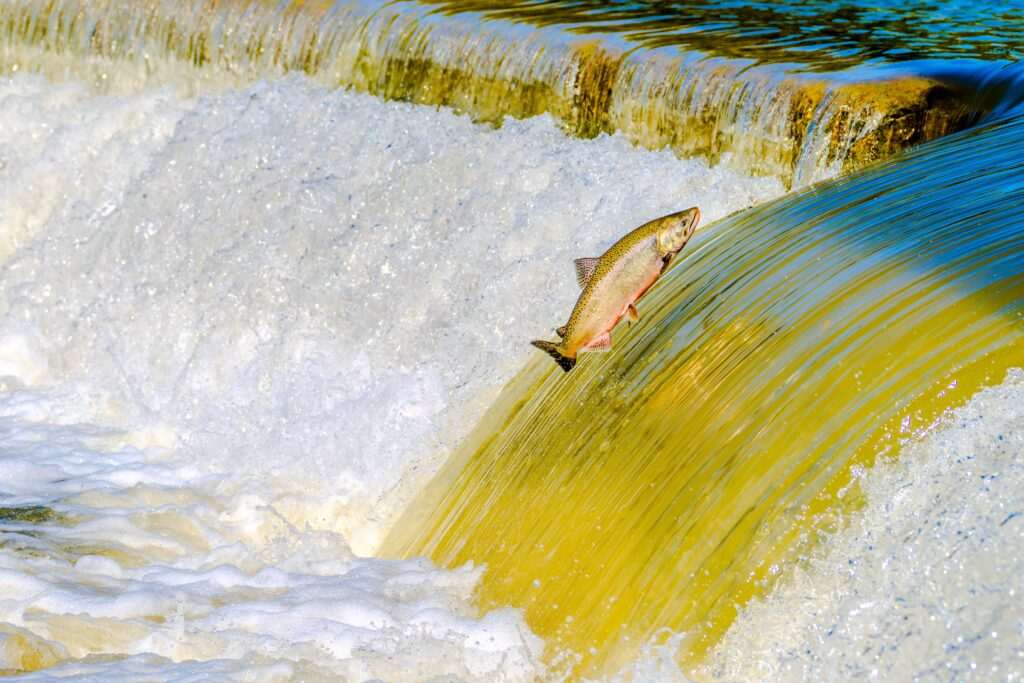
Alaska runs five species of Pacific salmon, and Anchorage sits within reach of some of the most accessible fishing in the state — including one of the most unusual urban fisheries in North America, a river that runs salmon through the downtown core. Understanding the run timing, the access points, and the practical requirements is the difference between a productive fishing trip and a frustrating one. Here’s what to know for salmon fishing near Anchorage in 2026.
Run Timing by Species
| Species | Local Name | Peak Run (Ship Creek) | Peak Run (Kenai River) | Size Range |
|---|---|---|---|---|
| King (Chinook) | King | Mid-June – mid-July | June | 20–50+ lbs |
| Sockeye (Red) | Red | Not present at Ship Creek | Late June – early August | 6–12 lbs |
| Coho (Silver) | Silver | August – September | August – September | 8–20 lbs |
| Pink | Humpy | July–August (odd years only) | July–August (odd years) | 3–6 lbs |
| Chum | Dog | July–August | Late July – August | 8–15 lbs |
King salmon runs are the most sought-after and the most regulated; annual run strength varies and emergency closures happen on short notice. Check the Alaska Department of Fish and Game website (adfg.alaska.gov) for current regulations and emergency orders before your trip.
Ship Creek: Downtown Anchorage
Ship Creek is the most famous urban salmon fishery in Alaska and arguably the country. The lower portion of the creek, flowing past the Port of Anchorage and under the downtown railroad bridge before emptying into Cook Inlet, carries king salmon in June and July and coho in August and September — large fish in a setting where you’re able to fish in the morning and walk to lunch in the city center. The public fishing access along the Ship Creek bank is free and requires only a valid Alaska fishing license; no guide, no charter, no vehicle required. The creek is within walking distance of downtown hotels.
The fishery draws serious pressure during peak king season — anglers bank-fishing shoulder-to-shoulder along the accessible sections is the norm in late June. Arrive early (first light is optimal), use fresh eggs or spinners, and keep expectations calibrated: this is a quality urban fishery, not a remote river. The Ship Creek viewing platform near 3rd Avenue gives a clear look into the water during peak runs without a fishing rod — worth a stop regardless.
Kenai River and Russian River
The Kenai River, roughly 2.5 hours south of Anchorage on the Sterling Highway, is the most famous salmon river in Alaska — its sockeye run in July and early August draws anglers from around the world. The Soldotna section of the river, accessible from the Sterling Highway, is the primary combat fishing zone during peak sockeye: bank fishing at public access points requires only a license, and when the run is strong, anglers can limit out in an afternoon. King salmon run the Kenai in June; coho run in August and September for a longer, less crowded second season.
The Russian River, a tributary of the Kenai that flows into the main stem at the Russian River Ferry crossing, is the other major sockeye destination on the peninsula. Both fisheries require a vehicle from Anchorage. Enterprise Rent-A-Car at Anchorage Airport is the most convenient rental pickup for a southbound peninsula fishing day trip.
Cook Inlet Charter Fishing
King salmon and halibut charters operating out of Seward and Homer on the peninsula’s coast target offshore fish rather than river fish — a different experience involving deeper water, larger boats, and species like halibut that don’t run rivers. Cook Inlet itself has limited charter activity out of Anchorage given its powerful tidal currents, but Turnagain Arm charters do operate in limited form. For visitors who want a guided offshore experience, Seward is the closest base (2.5 hours south) with a full harbor charter fleet, and our whale watching in Anchorage guide covers the Cook Inlet and Turnagain Arm marine environment for additional context on what to expect on the water.
Licensing Requirements
All anglers in Alaska 16 and older require a valid Alaska sport fishing license. Non-resident licenses run $30/day or $145 for an annual non-resident license — the multi-day license pays off quickly for a week-long trip. King salmon fishing on most rivers also requires a separate King Salmon Stamp, available online or at sporting goods stores. Sockeye fishing on the Russian River requires a Kenai River Special Management Area (KRSMA) permit during peak season, free but mandatory. Purchase licenses at adfg.alaska.gov or at local sporting goods stores before heading to the water.
Gear Basics
For Ship Creek king salmon: a medium-heavy spinning or baitcasting rod in the 8–10 foot range, 20–30 lb test monofilament or braid, and a selection of spinners and egg rigs. Chest waders are useful but not required from the bank. For Kenai sockeye: the standard setup is a 9-foot medium-action spinning rod with 10–15 lb test and a single-hook egg fly or weighted hook with red yarn — the technique is a controlled drift through the current. Powder Hound Ski & Bike Shop in Midtown Anchorage carries fishing gear and waders for visitors who need to pick up equipment before heading to the river.
Fish Processing and Shipping
Keeping your catch requires a plan. Most Kenai Peninsula and Seward-area processors clean, vacuum-pack, and flash-freeze your fish for a per-pound fee — processing typically runs $1–2/lb, and the resulting vacuum-sealed packages travel home in a checked cooler with dry ice or gel packs. Airlines allow checked frozen fish with standard baggage fees; call ahead to confirm current policies. Fish shippers operating out of Soldotna and Seward also arrange cold shipping directly to your home address for larger quantities. Budget the processing cost into your trip planning alongside the fishing license and guided trip fees.
Planning Your Trip
- Best species for beginners: Sockeye on the Kenai in July — the numbers are high, the technique is learnable quickly, and limits fill fast when the run is in.
- Best downtown option: Ship Creek for kings in late June to mid-July — no vehicle needed, no guide required, a real fishery with real fish.
- Emergency closures: King salmon fisheries close on short notice when run projections fall below threshold. Always check adfg.alaska.gov the day before your planned trip.
- Guided vs. self-guided: A guided half-day on the Kenai runs $200–300/person and includes gear, license help, and technique instruction — worth it for first-timers.
The Alaska Public Lands Information Center downtown maintains current run status reports and can advise on fishing conditions on the Kenai and Ship Creek before you commit to a day trip south. For visitors combining a fishing trip with the broader peninsula drive, our Glenn Highway scenic drive guide covers the northern route options that round out a multi-day Southcentral Alaska itinerary.
Photo by Leo Cardelli on Pexels.



No comments yet.