
Portage Glacier 2026: Cruises, Hiking & What to Expect
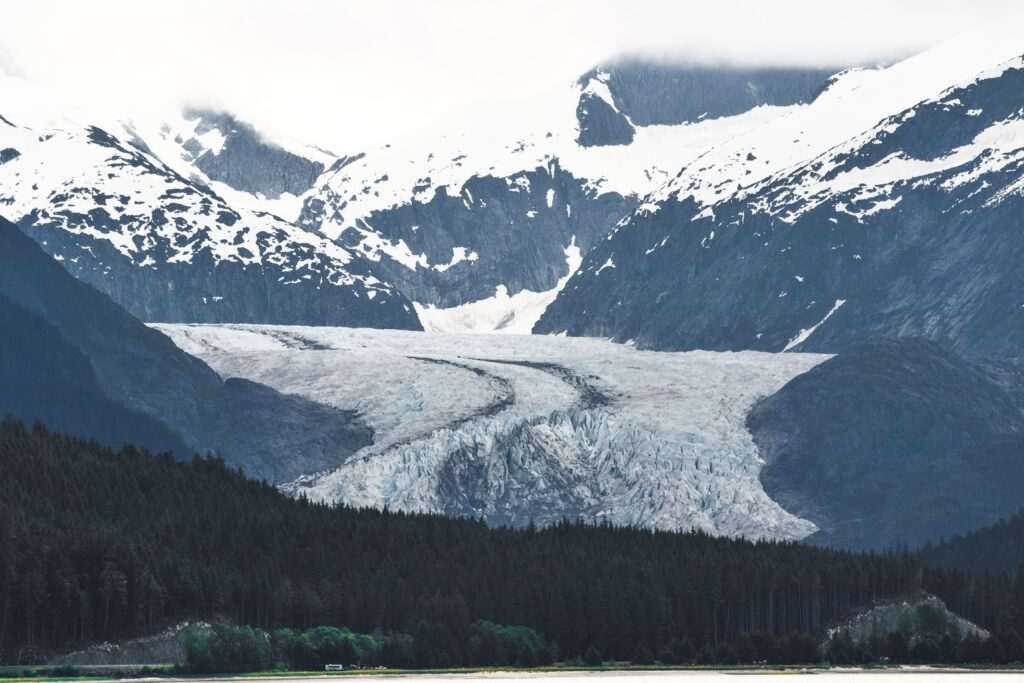
Portage Glacier is one of the most accessible glaciers in Alaska — 50 miles southeast of Anchorage on a paved road, with a visitor center, a boat tour that gets you within 300 feet of the calving face, and a valley full of hiking and wildlife that most day-trippers miss because they come only for the glacier. The drive from Anchorage takes about an hour, and the valley itself sits at the end of a short spur off the Seward Highway. Here’s how to visit in 2026.
Getting There
Take the Seward Highway south from Anchorage toward Girdwood. At Mile 78.9, turn east onto the Portage Valley Road (Portage Glacier Road). The glacier and Begich Boggs Visitor Center are about 5 miles up the valley at the road’s end. Total time from Anchorage: 50–60 minutes. The route passes through Portage Valley, a glacially carved corridor with beaver ponds, a mountain goat hillside visible from the road, and a creek system that attracts salmon in season. Our Turnagain Arm bore tide guide covers the Seward Highway stretch you’ll travel each way — the Turnagain Arm pullouts are worth a stop on the drive down or back.
Visitors without a vehicle can rent one at the airport — Enterprise Rent-A-Car at Anchorage Airport is the most convenient option before heading south on the Seward Highway. There’s no bus service to Portage Valley.
Begich Boggs Visitor Center
The National Park Service visitor center at the end of the road (operated as part of Chugach National Forest) is one of the better roadside glacier interpretation centers in Alaska. The exhibits explain the Portage Glacier’s recession — the glacier has retreated so far since 1914 that it’s no longer visible from the visitor center itself, having pulled back around a bend in the lake — and cover the ecology of the Portage Valley corridor, including the black bears, Dall sheep, and mountain goats that inhabit the slopes above. The center has a small theatre showing a film on Alaska glaciers and an observation deck facing the lake.
Hours: Memorial Day through Labor Day, daily. Check the US Forest Service website for exact hours and shoulder season availability before making the drive.
The Glacier Cruise
The MV Ptarmigan boat tour runs from a dock near the visitor center to within viewing distance of the Portage Glacier face. This is the only way to see the glacier in 2026 — the ice has retreated far enough that ground access to the face requires a longer hike than most day visitors take on. The 1-hour cruise gets you out on Portage Lake, among the icebergs calved from the glacier, with close-up views of the blue ice and the valley walls on both sides.
Tickets are available at the visitor center on a first-come basis; the tours run several times daily in peak season. The lake surface is cold and the open boat can be chilly even in July — bring a wind layer regardless of the Anchorage temperature.
Hiking Portage Valley
The valley has several short trails that most visitors skip in favor of the boat tour, but which reward the extra hour:
- Byron Glacier Trail: 1 mile round-trip to a hanging glacier visible on the valley wall above the trail end. The most dramatic short hike in the valley — the trail passes through alder thickets and ends at a boulder field beneath the ice. Snow lingers here into July most years; poles help on the final approach.
- Moraine Trail: A short interpretive loop near the visitor center that walks through the terminal moraine left by the glacier’s previous extent. The boulders and gravel ridges explain the glacier’s retreat in physical terms more clearly than any exhibit panel.
- Williwaw Lakes Trail: 13 miles round-trip to a high alpine lake basin — a full day route for serious hikers, not typical day-trippers, but exceptional terrain for those willing to commit to it.
Wildlife in Portage Valley
The valley is one of the more reliable spots near Anchorage for mountain goat sightings — the white animals show up against the dark rock of the valley walls when the afternoon light hits them right. Black bears frequent the creek corridors during salmon season (late July–September); give them space if you encounter one near the trail. Beavers have built dams on the valley wetlands visible from the road, and the beaver ponds attract waterfowl throughout summer. For a detailed guide to what lives in this corridor and the surrounding Chugach National Forest, our flightseeing and glacier tours guide covers the aerial perspective of the same terrain.
What to Bring
Portage Valley is wetter and colder than Anchorage — the valley funnels moisture from the Gulf of Alaska side of the mountains, and cloud cover is frequent even when the city is clear. Rain gear is mandatory, not optional. Waterproof boots are worthwhile for the Byron Glacier trail. Powder Hound Ski & Bike Shop in Midtown Anchorage carries waterproof layers and rain gear for visitors who need to equip before heading out.
Combining Portage with a Full Day
Portage Valley pairs naturally with Girdwood and Alyeska Resort (5 miles before the Portage turnoff on the Seward Highway) for a full-day Seward Highway itinerary. In the other direction, the Alaska Wildlife Conservation Center at Portage Creek (Mile 79, Seward Highway) has drive-through wildlife viewing of bison, brown bear, musk ox, and caribou — open daily, no advance booking required. The Alaska Public Lands Information Center in downtown Anchorage has current Portage Valley road conditions, cruise schedules, and Chugach National Forest trail maps.
Photo by Yaroslav Shuraev on Pexels.



No comments yet.