
Anchorage for Remote Workers & Digital Nomads 2026: Co-Working, Coffee & Connectivity

Anchorage doesn’t usually come up in conversations about remote work destinations. That’s a mistake. The city has reliable high-speed internet, a growing number of co-working spaces, some of the best coffee shops in the Pacific Northwest region, and an outdoor access situation that most “laptop lifestyle” cities can’t touch. If you’ve been considering a month-long stay somewhere different, or you’re looking at Alaska as a longer-term base, here’s what you actually need to know.
Best Coffee Shops with WiFi
Anchorage takes its coffee seriously, and the city’s café culture is well-suited to remote work. A few reliable options:
Kaladi Brothers Coffee — the Anchorage-born local chain that’s expanded across Alaska. Multiple locations (Midtown, South Anchorage, and elsewhere) means you can almost always find one close to where you’re staying. The WiFi is reliable, the coffee is consistently good, the outlets are available, and the atmosphere is comfortable without being too loud for focused work. Their Midtown location tends to have the best working environment of the bunch.
Steam Dot Coffee Works — a smaller, more focused roaster and café with a strong local following. The coffee here is excellent — genuinely carefully sourced and well-prepared — and the space tends toward quieter and more focused than a chain café. Good for deep work sessions when you need to concentrate. WiFi is solid.
Black Cup Coffee — another local independent with a strong reputation for quality and a workspace-friendly vibe. The aesthetic leans more modern, and it’s a regular work-from-café spot for Anchorage’s remote worker community. Reliable WiFi, good espresso, reasonable noise levels through the morning hours.
Side Street Espresso — a downtown institution beloved by locals. The WiFi is reliable and the atmosphere is exactly what you want from a neighborhood coffee spot: unpretentious, comfortable, and full of people who actually live and work in Anchorage rather than tourists passing through. The community feel here is a genuine asset if you’re trying to meet locals.
General WiFi advice: Anchorage’s café internet is good but not foolproof. For video calls, arrive early enough to test your connection before the meeting. Most of the cafés above handle standard Zoom or Teams calls without issues, but a backup hotspot is worth having if your work depends on sustained video reliability.
Co-Working Spaces
Anchorage has a developing co-working scene that’s genuinely functional for remote workers who need a dedicated desk, reliable gigabit internet, a mailing address, or the social environment of an office without being in one:
Anchorage Workspace and similar shared offices — Anchorage has several co-working and shared office facilities primarily serving small businesses and freelancers. Search for current operators before you arrive, as the co-working landscape changes faster than most other business categories — a space that existed in 2024 may have changed its model or name. Day passes and monthly memberships are the typical options.
Libraries — the Loussac Public Library in Midtown is a solid free alternative to paid co-working. It has WiFi, study spaces, and a relatively quiet environment during weekday daytime hours. Not a social workspace, but functional for focused work without spending money on café coffee all day.
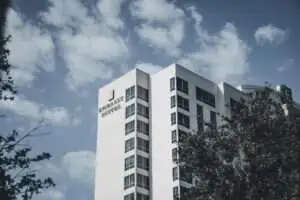
Hotel lobbies and business centers — some of Anchorage’s larger hotels (the Marriott, Embassy Suites, Hotel Captain Cook) have business center access and lobby spaces with WiFi that work for a day of meetings if you’re not in a month-long lease. This is particularly useful if you’re testing the city for a few days before committing to a longer stay.
Internet and Cell Coverage
Anchorage proper has good internet infrastructure. GCI (the dominant Alaska ISP) offers fiber-to-the-premises and cable internet throughout the city, and most residential neighborhoods and commercial areas have access to speeds that support remote work without issues. If you’re renting a short-term furnished apartment, confirm the internet provider and speed before booking — “has WiFi” on a listing can mean anything from 10Mbps to gigabit, and the difference matters if you’re on video calls all day.
Cell coverage within Anchorage is good on all major carriers (AT&T, Verizon, T-Mobile all have solid coverage in the metro area). GCI also operates a strong Alaska-specific network. Outside the city — on the Seward Highway heading south, in Girdwood, or heading north toward the Mat-Su Valley — coverage gets spottier. If you’re planning weekend adventures to more remote areas, don’t count on reliable cell service for work emergencies.
One specific note: satellite internet (Starlink in particular) has strong adoption across Alaska because it solves the coverage gap problem in areas outside city limits. If you’re considering a longer stay in a cabin or rural rental outside Anchorage proper, Starlink availability is worth confirming.
The Alaska Time Zone Factor
Alaska runs on Alaska Standard Time (UTC-9), which puts Anchorage 4 hours behind the East Coast, 1 hour behind the West Coast, and 9 hours behind London. This is the most practically significant Alaska-specific factor for remote workers, and it cuts both ways.
The upside: if your work is US East Coast-based, your “morning” in Anchorage corresponds to midday and afternoon on the East Coast. This means your collaborative hours (meetings, Slack, email) are concentrated in the afternoon Anchorage time, which leaves your Anchorage mornings completely free. A 6am hike up Flattop and back before your first meeting is entirely realistic — your 9am client call is actually 1pm East Coast, giving you the whole morning to yourself. Many remote workers who’ve spent time in Anchorage cite this as the single biggest quality-of-life feature of the time zone.
The downside: end-of-day East Coast activity happens at 2–3pm Anchorage time, which compresses your usable afternoon. If you’re collaborative with West Coast teams, the hour behind means a 4pm Pacific call is a 3pm Anchorage call — manageable but worth noting. West Coast schedules align much more naturally with Alaska time.
The Summer Daylight Productivity Challenge
Anchorage gets up to 19.5 hours of daylight around the summer solstice, and it doesn’t get truly dark at all in June. This is wonderful. It is also, for some people, genuinely disruptive to work rhythms and sleep patterns.
The issues remote workers report most often:
- Sleep disruption — even with blackout curtains, the sustained light affects circadian rhythms for many people in the first week. Plan for this. Blackout curtains are essential; most hotels and short-term rentals have them, but confirm before booking.
- The “it’s still light, I should be doing something” pull — at 9pm in June, it looks like 3pm. The outdoor conditions are extraordinary. This makes it genuinely hard to sit at a desk doing administrative work when your brain is reading the light as afternoon. This is a feature or a bug depending on your work style — some remote workers thrive on it, others find it destabilizing.
- The calendar reframe — experienced Anchorage remote workers recommend scheduling your outdoor activities with the same intentionality you’d schedule meetings. Block your morning hike on your calendar the same way you block a client call, or the lure of “just checking email first” will eat it.
Cost of Living for Short-Term Stays
Anchorage is not cheap, but it’s also not San Francisco or New York. A few benchmarks for short-term remote workers:
- Short-term furnished apartments: $1,800–$3,500/month depending on size, neighborhood, and season. Summer is peak pricing. Platforms like Furnished Finder and VRBO have reasonable inventory.
- Groceries: noticeably higher than the Lower 48, particularly for fresh produce and items shipped from outside Alaska. Buying locally caught salmon, halibut, and other Alaska-sourced food is often competitive in price and dramatically better in quality.
- Restaurants and coffee: comparable to other mid-size Western cities — slightly more than Denver, slightly less than Seattle.
- No state income tax and no state sales tax — Alaska levies neither, which affects cost of living calculations for longer stays or relocation considerations.
The Real Draw: Outdoor Access
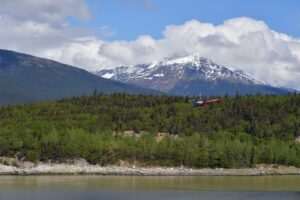
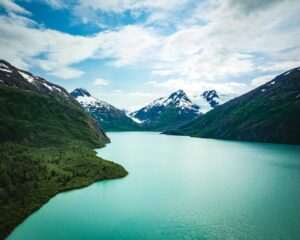
None of the above matters as much as this: Anchorage is a city where you can finish a 9am meeting and be on a trail in Chugach State Park within 20 minutes. The Coastal Trail is a 5-minute bike ride from downtown. Flattop Mountain’s trailhead is 15 minutes from Midtown. In the summer, this access is extraordinary — the weather window, the daylight, and the proximity of genuine wilderness to a functioning city is essentially unique in North America.
For remote workers who relocated to “outdoorsy” cities only to find that actually accessing the outdoors requires an hour of traffic and weekend planning, Anchorage is a genuinely different proposition. The mountains aren’t a weekend trip — they’re a Tuesday afternoon. This is the thing that keeps people here longer than they planned.
If you want help navigating Anchorage’s outdoor options or getting oriented to the city’s neighborhoods and culture when you first arrive, Get Up and Go Tours offers guided city and regional experiences well-suited to newcomers. For guided weekend adventures while you’re here — glacier hikes, wildlife trips, kayaking — Adventures by True North knows the terrain well and can make the most of your non-working hours.
Remote Work Community and Networking
Anchorage has an active small business and entrepreneurial community, and the remote work sector has grown significantly post-pandemic. Resources worth knowing:
- Anchorage Economic Development Corporation (AEDC) — hosts events and maintains connections in the local business community.
- local Meetup groups and Slack communities — search for Anchorage tech and remote work groups; they exist and are active.
- Coworking spaces’ own communities — most co-working spaces host occasional social events that are worth attending in the first week or two of a longer stay.
Anchorage’s professional community is small enough that showing up consistently at a few venues or events will build a real network quickly. That’s a feature most larger cities can’t offer.
Featured photo by Edmond Dantès via Pexels.

No comments yet.