
Matanuska Glacier 2026 — Guided Ice Walks & Self-Guided Access from Anchorage
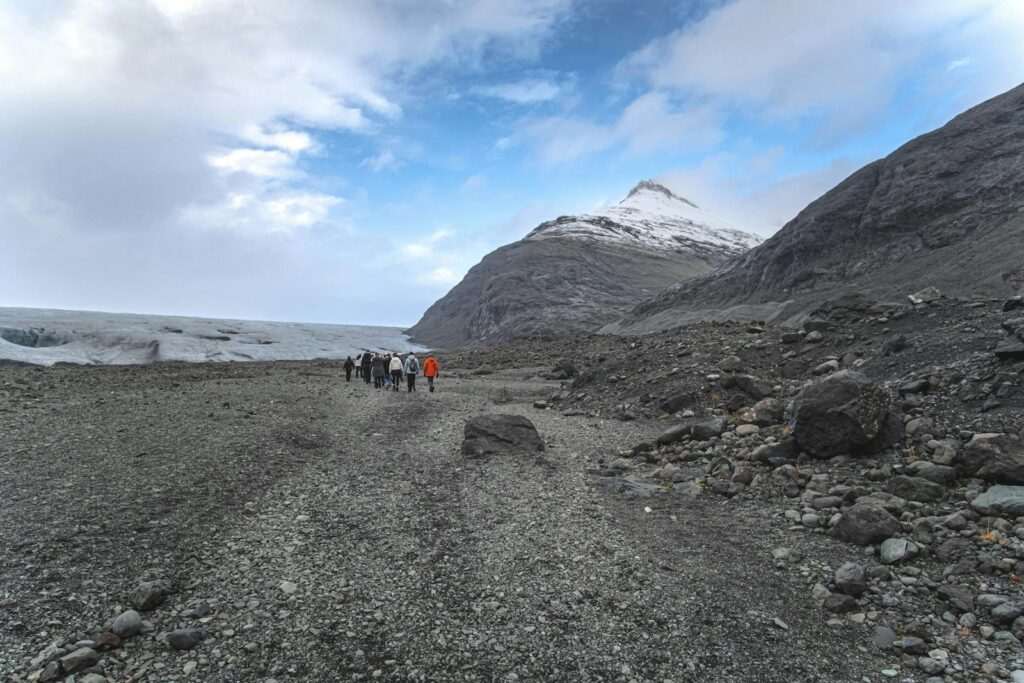
The Matanuska Glacier is one of the most accessible glaciers in the United States — a 27-mile-long river of ancient ice that comes within reach of a paved highway about 100 miles northeast of Anchorage. You don’t need a helicopter, a bush plane, or a multi-day expedition to stand on glacial ice in Alaska. You need a car, a few hours, and the drive up the Glenn Highway. For visitors who want to experience what Alaska’s ice actually feels like underfoot, Matanuska delivers that without apology.
Getting There: The Glenn Highway Drive
The glacier sits at approximately Mile 101 of the Glenn Highway, about 1.5 to 2 hours northeast of Anchorage depending on conditions and stops. The drive itself is a significant part of the experience. The Glenn Highway traces the Matanuska-Susitna Valley through some of the most dramatic roadside scenery in Southcentral Alaska — the Chugach Range to the south, the Talkeetna Mountains to the north, and the Matanuska River running alongside the road for much of the middle section. King Mountain, an isolated peak that rises dramatically above the valley floor, is visible from the highway and makes for a natural photo stop.
By the time you’re approaching Mile 100, the glacier becomes visible — a broad white tongue descending between dark mountain walls. The turnoff to the access point is well-marked. Plan for a full day if you want to do a guided ice walk; a round trip with a 2-3 hour glacier experience on the ice runs about 6 hours total from Anchorage.
Guided Ice Walks: MICA Guides
MICA Guides is the primary authorized operator for guided glacier tours at Matanuska and runs the most established ice walk program at the site. Tours are led by certified glacier guides and typically run 2 to 3 hours on the ice, with an additional approach hike from the staging area to the glacier terminus.
What’s included: crampons, helmets, and trekking poles are provided. No prior glacier experience is required — the guides cover crampon fitting, glacier travel basics, and safety protocols before you step onto the ice. Groups are kept to a manageable size so you’re not shuffling through a crowd; the experience genuinely feels like an expedition rather than a tourist conveyor belt.
On the glacier, guides direct you to the features that make Matanuska remarkable: blue ice formations exposed by meltwater channels, moulins (vertical shafts worn into the glacier by surface water), medial moraines — the dark lines of rock debris that run down the glacier’s center — and crevasse zones that are cordoned off for safety but visible up close. The color of glacial blue ice is something photographs consistently underrepresent; seeing it in person with sunlight filtering through a melt pocket is a different experience entirely.
Pricing is approximately $85–100 per person for the standard guided ice walk. Advance booking is strongly recommended during peak summer season (June–August), when tours fill weeks ahead. Book directly through the MICA Guides website.
Self-Guided Access: Glacier Park Resort Area
The Glacier Park Resort area adjacent to the Matanuska Glacier has historically offered lower-cost self-guided access to the glacier’s edge via private land. This option allows visitors to reach the glacier terminal moraine and walk along the ice margin without a guide, at a lower gate fee than a guided tour.
Availability and access terms for the self-guided option have varied in recent years — land ownership and access agreements in this area have shifted, so it’s worth confirming current access before planning your trip around it. If available, it’s best suited to experienced hikers who are comfortable navigating glacier terrain independently and understand that the ice surface without a guide carries real risks (uneven footing, meltwater channels, unstable ice margins). For most visitors, especially first-timers, a guided tour is the safer and more informative choice.
The Glacier Discovery Days program has also provided educational access opportunities in the area — worth checking for current seasonal programming.
What to Wear and Bring
Glacier conditions can be significantly colder and windier than the valley below, even on warm summer days. The standard packing list for a Matanuska ice walk:
- Layers: A moisture-wicking base layer, a mid-layer fleece or insulated jacket, and a windproof/waterproof shell. Even in July, wind on the ice can make a 60°F day feel like 40°F.
- Sturdy footwear: Hiking boots with ankle support are required. Crampons mount over your boots — they don’t work over trail runners or sneakers. The guide company will confirm footwear requirements when you book.
- Gloves and a hat: Even in summer. Bring them regardless of how warm the parking lot feels.
- Sunglasses: Glacial ice reflects UV aggressively. Eye protection is important on bright days.
- Water and snacks: There are no services on the glacier. Bring more water than you think you need.
Guides provide crampons, helmets, and trekking poles. You don’t need to buy or rent any specialized gear beyond appropriate clothing and footwear.
Best Time to Visit
The glacier is accessible year-round, but May through September is the practical visitor window. Key notes by season:
- May–June: Snow may still cover portions of the approach; ice surface features are cleaner before peak melt. Cooler temperatures.
- July–August: Peak season. Warmest temperatures, best weather odds, most tour availability. Book well in advance.
- September: Crowds thin considerably, fall colors begin on the surrounding hillsides, and the light takes on a lower, more dramatic angle. One of the most scenic times to visit.
The Matanuska Glacier is genuinely one of the most accessible large glacier experiences in North America. For visitors to Anchorage with a free day and a rental car, it’s a clear priority — the kind of experience that reframes how you think about scale, time, and the landscape you’ve been driving through.
Featured photo by Jo Kassis on Pexels.
Combining with Other Glenn Highway Stops
The Glenn Highway corridor between Anchorage and Matanuska Glacier passes several stops worth building into your day. The town of Palmer, about 40 miles from Anchorage, is the agricultural heart of the Mat-Su Valley and makes a natural lunch stop — the downtown has a handful of good cafes and the historic buildings from the 1930s New Deal colonization project give it an unusual character for Alaska.
Past Palmer, the Bodenburg Butte area offers a short but rewarding hike (1.5 miles round trip) with panoramic views of the valley farmland and surrounding peaks — an easy 45-minute detour if you have energy after the glacier. Further up the highway, the Long Rifle Lodge near the glacier access is a well-known stop for pie and local color; worth a slice on your return if the timing works. The full day from Anchorage — drive up, guided glacier walk, optional stops, drive back — runs 8 to 10 hours and is genuinely one of the most complete Alaska day-trip itineraries available from the city.

No comments yet.