
Moose Watching in Anchorage: Best Spots, Seasons & Safety Tips 2026
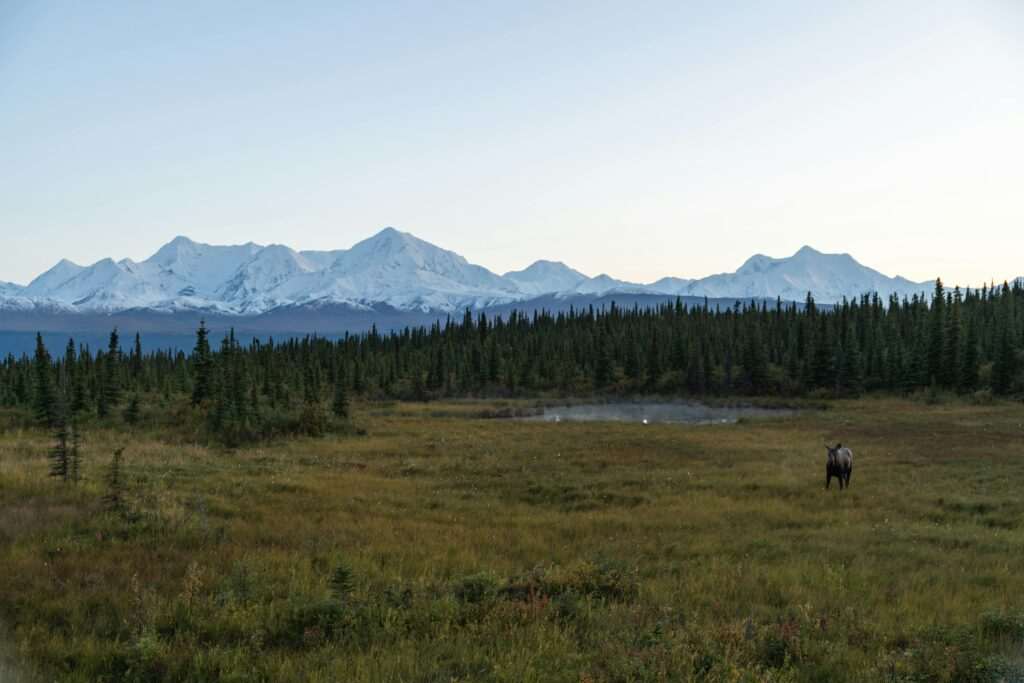
Anchorage is home to approximately 1,500 moose living within the city limits — the largest urban moose population in the world. They walk through front yards, stand at bus stops, browse willows along bike paths, and occasionally hold up traffic on major roads. For visitors who have never seen a moose in the wild, Anchorage offers something unusual: near-guaranteed sightings without leaving the city, in the kind of urban-wilderness overlap that exists almost nowhere else on earth. This guide covers the best spots to find them, the best times to go, and how to watch safely.
Why Anchorage Has So Many Moose
Moose thrive in Anchorage because the city was built in exactly the kind of habitat they prefer. The Chugach foothills bordering the eastern edge of the city provide forested escape cover, while the creek corridors, parks, and greenbelt strips running through the urban core offer the willows, birch, and aquatic vegetation moose depend on year-round. The city’s extensive trail network — more than 250 miles — doubles as a moose corridor. Predator pressure from bears and wolves is lower in town than in the backcountry, which makes Anchorage genuinely attractive moose habitat, not just a place moose pass through.
Best Spots for Moose Watching
Kincaid Park is the single most reliable moose-watching location in the city. The 1,400-acre park at the southwestern tip of Anchorage covers a mix of open meadow, dense birch, and coastal bluff trails that moose use heavily year-round. Early morning on the interior trails consistently produces sightings. The park is large enough that moose encounters feel genuinely wild rather than managed. Ski trails converted to summer hiking and biking paths wind through the areas moose prefer.
Campbell Creek Greenbelt runs from the Chugach foothills through the center of the city along Campbell Creek, connecting residential neighborhoods to open park corridors. Moose travel this greenbelt as a daily commute route. Walk any section of the Campbell Creek Trail at dawn or dusk and moose sightings are common. The greenbelt is accessible from multiple trailheads spread across south Anchorage.
Westchester Lagoon, just west of downtown, draws moose that browse the willow and alder margins of the lagoon year-round. The Westchester Lagoon area is particularly productive in spring when vegetation is lush and in fall when moose are more active. The flat loop trail around the lagoon is an easy walk that also offers views of waterfowl and the Alaska Range on clear days.
Russian Jack Springs Park in east Anchorage is heavily wooded and sees consistent moose activity. The park’s combination of dense spruce and open meadow sections provides the cover moose prefer when bedding during the midday hours. Morning walks into the park’s interior often produce close encounters.
Tony Knowles Coastal Trail and its surrounding greenbelt are worth exploring in fall, particularly during the October rut when bulls move actively through the coastal corridor. The Tony Knowles Coastal Trail begins near downtown and runs eleven miles along Cook Inlet, passing through the moose habitat fringe between the urban core and the water.
Seasonal Patterns
Moose behavior in Anchorage shifts meaningfully through the year. May and June bring calving season — the most dangerous time to encounter moose in the city. Cow moose with newborn calves are highly defensive and will charge without warning if they feel the calf is threatened. Calves are born wobbly and vulnerable, and cows interpret any nearby presence as a potential threat. Give cow-and-calf pairs wide berth and retreat immediately if a cow pins her ears back, raises her hackles, or lowers her head.
September and October bring the rut, when bull moose are aggressive and unpredictable. Bulls spar, vocalize, and move widely in pursuit of cows. Rut-season bulls near trails should be treated with the same caution as a cow with a calf. This is also the best season for photography — bulls carry their largest antlers in September before shedding in late fall.
Winter concentrates moose in the city as deep snow in the surrounding mountains makes travel difficult. Moose move down to lower elevations and urban parks, making January through March productive for sightings. They often bed in yards and under spruce trees, and the contrast of a large bull moose against a snow-covered suburban streetscape is one of Anchorage’s signature winter images.
Safety: What to Do When Moose Are Close
A full-grown moose weighs between 600 and 1,200 pounds and can cover ground faster than a human can react. Unlike bears, moose rarely provide warning before a charge, and their kicks from all four legs are capable of serious injury. The standard guidance is to keep at least 50 feet of distance, never get between a cow and her calf, and treat any moose that is watching you intently as a potential threat.
If a moose charges, run. The common advice to stand your ground applies to bears, not moose — moose charges are more often predatory contact events rather than bluff charges, and putting a large object (a car, a tree, a building) between you and the animal is the right move. Most Anchorage moose charges end quickly when the person moves out of the perceived threat zone. Dog owners should keep pets leashed in any area where moose are likely; a dog that provokes a moose will frequently run back to its owner with the moose in pursuit.
Photography Tips
A telephoto lens in the 200–400mm range is ideal for moose photography from safe distances. Moose in the Anchorage greenbelt are habituated to human presence and often continue feeding undisturbed at 50 to 100 feet, which makes frame-filling images possible with a moderate zoom. Shoot in the first and last hour of daylight — moose are most active then, and the low-angle light catches their coat color and the texture of their antlers more dramatically than midday sun.
The Chugach State Park boundaries run directly along the eastern edge of Anchorage, and the transition zones between park and city are among the highest-density moose areas in the region. Early morning drives on the Glenn Highway access roads, particularly around the Chugach foothills, produce moose sightings on a near-daily basis during summer.
Frequently Asked Questions
Is it guaranteed I’ll see a moose in Anchorage? Nothing in wildlife watching is guaranteed, but Anchorage’s moose density makes sightings highly likely for visitors spending more than a day or two in the city. Kincaid Park at dawn is as close to a sure thing as exists in urban wildlife viewing.
Can I feed moose? No. Feeding moose is illegal in Alaska and dangerous for both the animal and the person. Habituated moose that associate humans with food become aggressive and are often euthanized. Observe from distance and let them browse naturally.
What’s the best time of day to look? Dawn and dusk, consistently. Moose are crepuscular — most active in low light. The hour after sunrise and the hour before sunset on the Kincaid or Campbell Creek trails produce more sightings than midday walks of twice the length.

No comments yet.