Homer Alaska 2026 — The Complete Guide to the Halibut Capital of the World
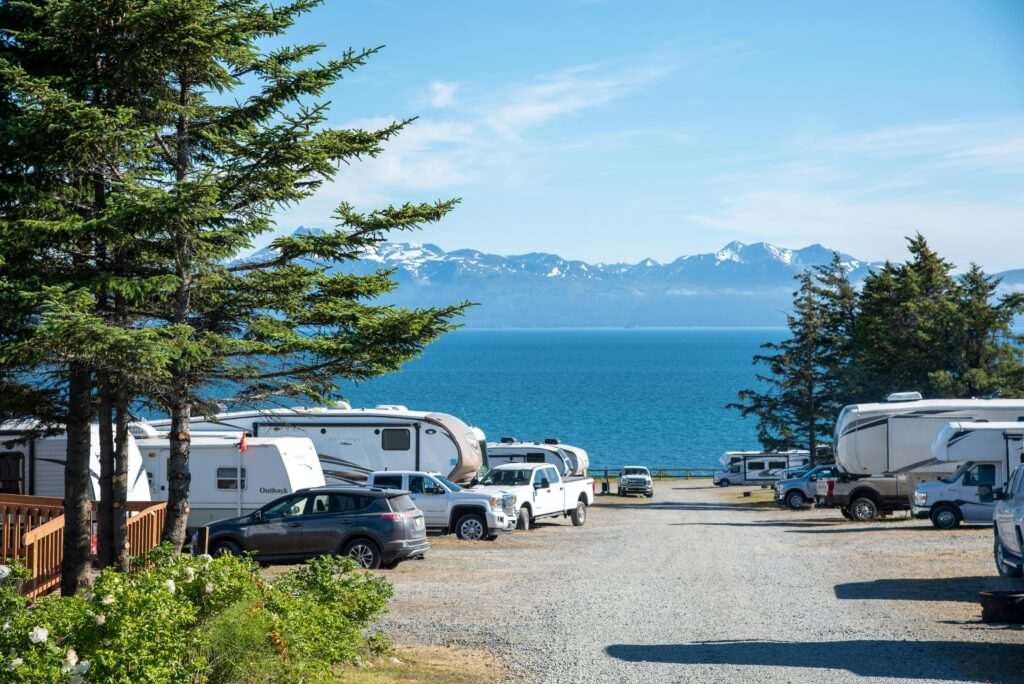
Homer sits at the end of the road — literally. The Sterling Highway terminates here, 225 miles south of Anchorage, at a 4.5-mile gravel spit jutting into Kachemak Bay with Grewingk Glacier glowing across the water. It calls itself the Halibut Capital of the World, and the claim is defensible: Homer’s charter fleet pulls more Pacific halibut from these waters than almost anywhere in Alaska. But Homer is also an arts town, a seafood town, and one of the most scenic places on the Kenai Peninsula. For Anchorage visitors with a free day or two, it is the most rewarding drive on the entire road system.
The Drive from Anchorage
Plan 4.5 to 5 hours one way. The route follows the Seward Highway south from Anchorage before turning onto the Sterling Highway at Tern Lake Junction near mile 37. From there it is a rolling drive through the Kenai lowlands, past Kenai and Soldotna, and then a dramatic final descent into Homer with the bay suddenly opening up below you.
Key stops on the way south:
- Tern Lake Junction (Mile 37 Seward Hwy): Pullout with views of Tern Lake, nesting Arctic terns in summer, and a classic Kenai mountain backdrop.
- Kenai / Soldotna: Fill up on gas and grab food here — both towns have the only significant services before Homer. The Kenai River crossing at Soldotna is worth a pause if salmon are running.
- Anchor Point: The westernmost point on the North American highway system. A short detour to the beach here is worth it.
- Homer Hill descent: The highway drops sharply into Homer with a sweeping panorama of the Spit, Kachemak Bay, and the Kenai Mountains across the water — one of the great road-trip reveals in Alaska.
Homer Spit
The Spit is Homer’s waterfront, its fishing dock, and its social center all in one. Four and a half miles of gravel road runs out into the bay, ending at the harbor where halibut charter boats depart each morning. The drive out is free; parking on the Spit costs a small fee in summer.
What you’ll find on the Spit:
- The Salty Dawg Saloon: An 1897 building that’s served as a post office, railroad station, and coal storage before becoming Homer’s most famous bar. The walls are papered with dollar bills from around the world. It opens mid-morning and closes late.
- Charter fishing docks: The majority of Homer’s halibut charter fleet departs from the Small Boat Harbor on the far end of the Spit. Cook Inlet Charters and other operators line the harbor boardwalk.
- Boardwalk restaurants and seafood shacks: Fresh halibut tacos, chowder, and crab are available at several casual spots from late May through September.
- Spit camping: RV and tent camping is available directly on the Spit. It is windy, raw, and close to everything — a quintessential Alaska experience.
Halibut Charter Fishing
This is why most people come to Homer. Pacific halibut are the largest flatfish in the world; fish over 100 pounds are caught here regularly, and Homer’s charter fleet consistently produces more halibut per boat than most Alaska ports.
Half-day trips (5 hours): $220–$250 per person. Targets fish in shallower nearshore waters; typical catch runs 10–50 lbs. Good for first-timers and families.
Full-day trips (10–12 hours): $300–$380 per person. Runs further offshore to deeper grounds; better odds at larger fish, plus opportunities for lingcod and black rockfish. Most serious halibut anglers book full-day trips.
Book 2–3 months ahead for July and August — peak summer dates fill quickly. Most operators require a fishing license (available online at adfg.alaska.gov or at Homer sporting goods stores). Fish processing and vacuum packing is available on the Spit for approximately $2–3 per pound; processors can arrange shipping home.
Alan’s Water Taxi & Kachemak Bay Adventures also runs fishing and bay tours for visitors who want a shorter, more flexible on-water experience. For day-trip alternatives along the Kenai Peninsula, Seward Ocean Excursions offers similar halibut and wildlife viewing charters departing from Seward.
Things to Do Beyond Fishing
Islands and Ocean Visitor Center
Run by the U.S. Fish & Wildlife Service, this free facility in downtown Homer is one of the best seabird and marine ecology museums in Alaska. The exhibits cover the Alaska Maritime National Wildlife Refuge — the largest wildlife refuge in the U.S. — with displays on puffins, murres, sea otters, and the complex ecosystems of the outer coast. Worth an hour even if wildlife is not your primary interest.
Pratt Museum
Homer’s local history museum covers the region’s Indigenous heritage, early 20th-century settlement, and has a particularly moving section documenting the 1989 Exxon Valdez oil spill and its impact on Kachemak Bay. Alaska Native art and artifacts round out the collection. Admission is approximately $10 for adults.
Kachemak Bay State Park Water Taxi
The far side of Kachemak Bay is accessible only by water taxi or floatplane. A round-trip water taxi ride costs roughly $35–$45 per person and puts you in Halibut Cove, a floathouse village with galleries and the famous Saltry restaurant, or at trailheads for remote day hikes in Kachemak Bay State Park. This is among the finest accessible wilderness experiences in Southcentral Alaska and is rarely crowded even in peak summer.
Gallery Row and Homer’s Art Scene
Homer has more working artists per capita than almost any comparably sized town in Alaska. The main gallery concentration is on Pioneer Avenue near the Pratt Museum. Most galleries are open daily in summer, and many artists work on-site. Homer’s art tends toward the representational — wildlife, seascapes, Alaska Native-influenced design — with a genuine craft focus distinct from tourist-oriented souvenir shops.
Where to Eat
- Cafe Cups: Homer’s most celebrated dinner restaurant. Creative, locally sourced menu that changes seasonally, emphasis on seafood. Dinner only; reservations strongly recommended in July and August.
- Fresh Catch Cafe (on the Spit): Fast, excellent, casual. Halibut tacos, chowder, fish and chips. Ideal for a quick lunch after fishing or before heading home.
- Fat Olives Restaurant: Mediterranean-Alaska fusion downtown. Excellent halibut preparations, wood-fired dishes, good wine list. Dinner. $$.
- Two Sisters Bakery: The best breakfast in Homer. Locally beloved for pastries, espresso, and eggs. Opens early, closes by mid-afternoon.
Day Trip vs. Overnight
Homer is technically doable as a day trip from Anchorage — leave by 6am, fish a half-day charter, walk the Spit, eat lunch, and be back in Anchorage by 10pm. But it is a long day and you will feel rushed.
An overnight stay is the better call for almost everyone. It lets you: book a full-day charter (which requires leaving at 6am), explore Kachemak Bay State Park by water taxi, eat at Cafe Cups, and watch the evening light on Grewingk Glacier from the Spit without a 4.5-hour drive looming over you. If you have two nights, use the second day for a water taxi trip across the bay. Homer rewards slow travel.
Where to stay: The Spit has RV and tent camping. Downtown Homer has several small inns and vacation rentals. Land’s End Resort on the far tip of the Spit has views in all directions and is worth booking if it fits the budget.



No comments yet.