
Blog: Eco-Tourism & Responsible Travel in Anchorage 2026: How to Visit Alaska Sustainably
Alaska tourism is growing. More than two million people visit Anchorage annually, and the combination of cruise ship growth, expanded flight routes, and social-media-driven interest in wilderness travel means that growth shows no signs of slowing. This creates a genuine tension: the places people come to see — glaciers, salmon runs, intact boreal forest, wildlife that exists nowhere else — are sensitive to exactly the pressures that tourism generates. This guide is for travelers who want to be part of the solution rather than the problem, written practically rather than preach-ily.
Choosing Responsible Wildlife Tour Operators
The wildlife tour industry in Alaska varies enormously in its ecological ethics. Some operators run small groups, maintain respectful distances, hire local naturalist guides, and invest in conservation. Others prioritize throughput and proximity at the expense of animal welfare and habitat disturbance.
When evaluating a tour operator, ask these questions directly:
- What is the maximum group size? Smaller groups cause less habitat disturbance, allow better wildlife observation, and create a better experience. Eight to twelve people is ideal; avoid operations running 30 or more to the same wildlife site simultaneously.
- Do guides hold naturalist certifications? Look for Alaska Department of Fish and Game permits, certification through organizations like the Alaska Tourism Industry Association, or documented naturalist training. These signal operators who take ecological responsibility seriously.
- How do they handle wildlife disturbance? A good operator will voluntarily back off if wildlife shows stress signals, even at the cost of a photo opportunity. Ask specifically how the company responds when an animal approaches or shows signs of habituation.
- Are they locally owned? Revenue from Alaska-owned operators is more likely to cycle back into the local economy and conservation efforts than money flowing to outside corporate chains.
Alaska’s Finest Tours is one example of a locally rooted operator with deep knowledge of Southcentral Alaska. When booking any wildlife-focused tour — bear viewing, whale watching, glacier visits — the same vetting questions apply.
Leave No Trace: Alaska-Specific Practices
The seven Leave No Trace principles apply everywhere, but Alaska’s scale and ecological sensitivity create some specific applications worth knowing before you hike.
On trails: Stay on established routes, especially in alpine tundra. Tundra plants grow extremely slowly — boot-crushed cryptobiotic crust and tundra mosses can take decades to recover. When trails are muddy in spring, walk through the mud rather than around it; widening the trail footprint causes more long-term damage than wet boots.
In backcountry: Camp on durable surfaces (gravel bars, established tent pads, bare rock) rather than on vegetation. Campfires are only appropriate in permitted areas with locally sourced wood; in most Alaska backcountry, use a camp stove. Pack out all waste — there are no trash services in Alaska’s wilderness, and human waste composting is unreliable at high-use sites. Catholes should be dug at least 200 feet from water sources, trails, and campsites.
With wildlife: The 100-yard rule for bears and wolves, 25 yards for other large mammals, is the starting minimum — move further away if animals change their behavior in response to your presence. Never feed wildlife. Habituated wildlife is frequently destroyed by wildlife managers.
Glaciers: Visiting Without Damaging
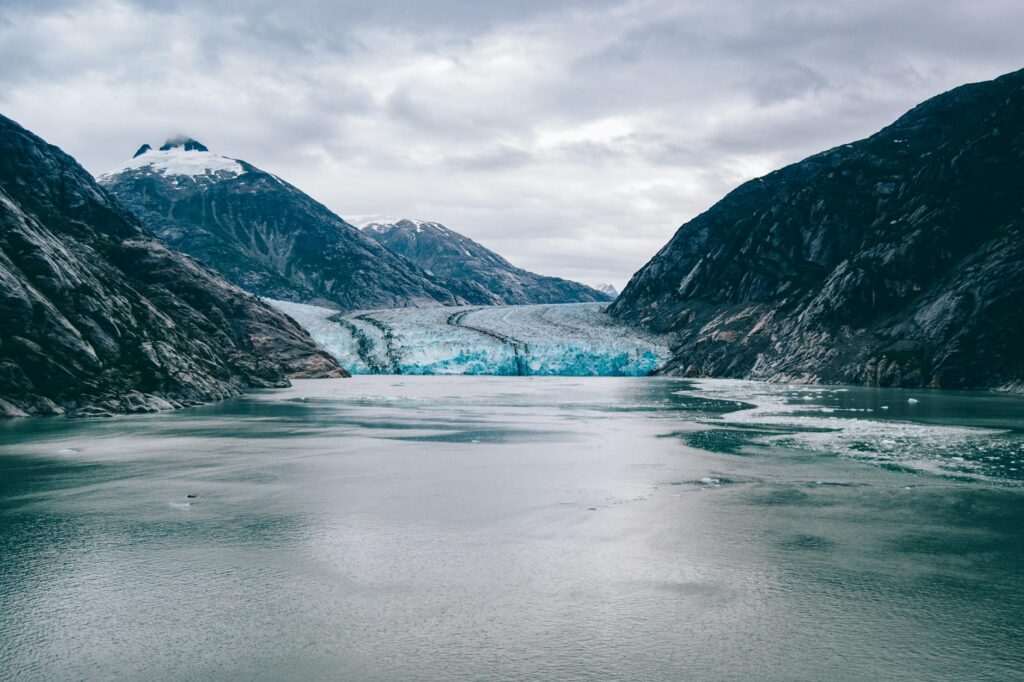
Alaska’s glaciers are among the most visited natural features in the state, and some of the most ecologically vulnerable. Glacial ecosystems — ice worms, ice algae, meltwater streams — are disrupted by physical disturbance and contamination. Practical guidelines:
Never pour foreign liquids (coffee, food waste) on glacier ice. Avoid helicopter or small-plane glacier landings unless the operator has documented environmental protocols — repeated landings compact snow and ice and disturb drainage patterns. On glacier hikes, stay with guides who maintain routes away from crevasse-field edges and meltwater pools, which are fragile microhabitats. The ecological sensitivity of glacier environments is one of the strongest arguments for choosing a certified, small-group operator over an unguided glacier walk.
Sustainable Seafood Choices
One of the most direct ways to support Alaska’s ecological health as a visitor is through your seafood choices. Alaska manages its commercial fisheries under a constitutional mandate for sustained yield — Alaska wild salmon, halibut, pollock, and most king crab fisheries are certified sustainable by the Marine Stewardship Council (MSC), the global standard for fishery certification.
The distinction matters in practice: choose restaurants and markets that source from Alaska commercial fisheries rather than farmed Atlantic salmon or imported shellfish. 10th & M Seafoods in downtown Anchorage sources directly from Alaska’s commercial fleet and can tell you exactly which fishery your purchase supports. Buying directly from fish markets like this puts money into Alaska fishing families rather than distributors, and gets you fresher product.
When dining out, ask servers where the fish comes from. Restaurants that can answer specifically (“sockeye from Bristol Bay,” “halibut from the Gulf of Alaska”) are more likely to be sourcing responsibly than those offering generic “fresh Alaska seafood.”
Alaska-Owned and Indigenous-Owned Businesses
Tourism spending at Alaska Native-owned and Indigenous-operated businesses has a different economic and cultural impact than spending at national chains. Revenue flows to Alaska communities, cultural preservation efforts, and local economies.
The Alaska Native Heritage Center is the primary cultural institution in Anchorage celebrating and preserving Alaska Native traditions — eleven Alaska Native cultural groups represented through living history demonstrations, traditional arts, and educational programming. Admission directly supports the center’s cultural preservation work and the artists and cultural demonstrators employed there.
When shopping for Alaska souvenirs, look for the state’s “Made in Alaska” certification and for work by artists who are enrolled members of Alaska Native tribes. The Heritage Center’s gift shop is one reliable source. Ask sellers directly whether artwork is made by Alaska Natives — the Alaska Native Arts Foundation maintains directories of verified artists.
Low-Impact Transportation in Anchorage
Anchorage is more bikeable than most visitors expect. The city has over 130 miles of paved multi-use trails, and the Tony Knowles Coastal Trail — an 11-mile paved trail along Cook Inlet from downtown to Kincaid Park — provides a spectacular, zero-emission way to see the city’s waterfront and access multiple trailheads. Bike rentals are available downtown.
The People Mover bus system covers most of the city and connects to major attractions. Car rental is often the default for visitors, but for exploring within Anchorage specifically, a combination of transit and cycling covers most destinations while cutting transportation emissions significantly.
Supporting Alaska Conservation
Several Alaska-based organizations accept visitor support and offer meaningful ways to engage with conservation work. The Alaska Wildlife Conservation Center, about 50 miles south of Anchorage on the Seward Highway, is both a wildlife rehabilitation facility and a conservation nonprofit — admission fees directly fund care for injured and orphaned animals, including brown bears, moose, and wood bison. The Alaska Botanical Garden in east Anchorage preserves native Alaska plants and provides free-admission hours; membership fees support horticultural research and plant conservation.
For broader conservation giving, look at the Alaska Wilderness League, the Alaska Conservation Foundation, and the National Park Foundation’s Alaska programs — all channel funds directly into habitat protection and sustainable management of Alaska’s public lands.
A Note on Carbon
A round-trip flight from the continental US to Anchorage generates roughly 0.8–1.5 metric tons of CO2 per passenger depending on routing. Carbon offsets through verified programs (Gold Standard, Verra-certified) can address some of that footprint, though offsets are not a substitute for reducing flying overall. If you are making a once-in-a-lifetime Alaska trip, make it count: spend more time, visit fewer places, go deeper into one area rather than rushing across the state. The ecological impact per visitor-night drops significantly with longer stays.
Featured image: Sandra Seitamaa via Pexels. Photo shows a breathtaking view of a glacier surrounded by mountains and serene lake in Alaska’s wilderness.



No comments yet.