
Best Day Trips from Anchorage 2026: Glaciers, Small Towns & Wilderness
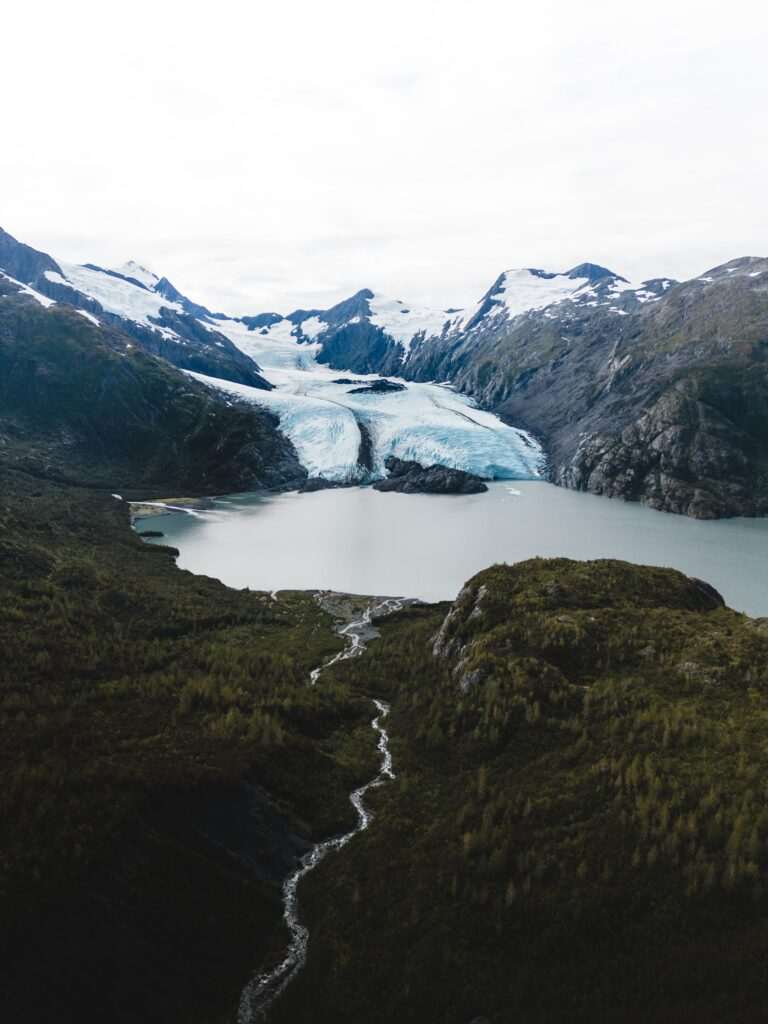
Anchorage sits at the center of one of the most spectacular road networks in North America. Within a two-to-three hour drive in any direction, you can walk on a glacier, watch a pod of orcas, explore a gold rush ghost town, hike alpine meadows above treeline, or watch bears fish for salmon at a waterfall. This guide covers the best day trips from Anchorage in 2026 — where to go, how long each takes, what to do there, and what to know before you leave the city.
Matanuska Glacier — 2 Hours NE via Glenn Highway
The Matanuska Glacier is the most accessible walk-on glacier in North America. At roughly 27 miles long and 4 miles wide, it terminates close to the Glenn Highway at Mile 101, and guided glacier treks let visitors walk directly onto the ice surface — crampons and ice axes included. The drive northeast on the Glenn Highway is itself scenic: the Knik Arm narrows, the Chugach peaks close in, and the valley opens to the Matanuska-Susitna Valley farmland before the glacier comes into view.
Plan for 5–6 hours total including drive time and a two-to-three hour guided ice walk. Wear layers — the glacier surface is significantly colder than the surrounding air, and wind across the ice is cutting even in July. Booking a guided tour in advance is strongly recommended in peak season (July–August), when morning departures sell out. Independent access is also available at the Glacier Park gate for a day-use fee if you prefer to explore the terminal moraine viewpoints on your own without stepping onto the ice.
Talkeetna — 2.5 Hours North via Parks Highway
Talkeetna is the staging town for Denali climbing expeditions and one of Alaska’s most charming small communities. The original Main Street — two blocks of historic storefronts, bars, outfitters, and bakeries — functions as a genuine small Alaska town rather than a tourist facade. The backdrop is extraordinary on clear days: Denali (20,310 feet), Foraker, and Hunter rise above the surrounding lowland spruce in a wall of white that is, by any measure, one of the most dramatic mountain views on the continent.
Bush pilot culture is the heart of Talkeetna. Several operators run Denali flightseeing tours from the small airstrip — glacier landings on the south face of Denali are among the most spectacular aviation experiences available anywhere. River activities (rafting, fishing, jet boat tours) and the Talkeetna Historical Society museum round out the options. Allow 6–7 hours for the round trip including 2–3 hours in town.
Seward — 2.5 Hours South via Seward Highway
Seward anchors one end of the Seward Highway, a federally designated All-American Road that is among the most scenic drives in the country. The town itself sits at the head of Resurrection Bay, a deep fjord ringed by mountains, and serves as the gateway to Kenai Fjords National Park. Day visitors have two main draws: the Alaska SeaLife Center (Alaska’s only public aquarium and ocean research center, with resident Steller sea lions, harbor seals, and puffins) and boat tours into Kenai Fjords for glacier and marine wildlife viewing.
Lazy Otter Charters runs full-day wildlife and glacier cruises from Seward’s Small Boat Harbor into Kenai Fjords National Park, covering humpback whale feeding areas, orca territory, tidewater glaciers, and Steller sea lion haul-outs on a single tour. Departures are typically 8–9 AM with returns in the late afternoon. Leave Anchorage by 5:30–6:00 AM for comfortable timing. Seward is a long day trip — 2.5 hours each way — but the concentration of Alaska wilderness in a single day is difficult to match.
Whittier — 1 Hour via the Anton Anderson Memorial Tunnel
Whittier is the strangest town in Alaska — a small community where most residents live in a single large building (the Begich Towers), accessible from the road system only through the Anton Anderson Memorial Tunnel, a 2.5-mile single-lane bore through the Chugach Mountains that shares the roadway with an active railroad line. The tunnel alternates direction on a schedule, creating distinctive one-way traffic windows. The commute through it is part of the experience.
On the other side: Prince William Sound. Major Marine Tours operates from Whittier’s small harbor on glacier and wildlife cruises into the Sound, covering Columbia Glacier — one of the largest tidewater glaciers in Alaska — along with humpback whales, orcas, sea otters, and Dall’s porpoise. Whittier is genuinely close (1 hour from Anchorage), making it the most practical day trip option for visitors with a half-day or who want to add a marine excursion without committing to the full Seward drive.
Homer — 4.5 Hours Southwest via Seward Highway and Sterling Highway
Homer is the longest day trip from Anchorage, and whether it qualifies as a “day trip” depends on your tolerance for driving. The town occupies a bluff above Kachemak Bay, with the famous Homer Spit extending 4.5 miles into the bay and serving as the center of the halibut charter industry. The Spit is lined with charter operations, seafood restaurants, galleries, and the small-boat harbor. The visual context — snow-covered peaks of the Kenai Mountains reflected in the bay — is consistently one of Alaska’s most striking harbor settings.
The drive itself traverses the entire Kenai Peninsula, passing through Soldotna (Kenai River fishing hub), Sterling, and down through birch and spruce forest to the coast. Homer is better as an overnight or two-night stay, but day trippers who leave Anchorage at 6 AM can spend four hours on the Spit before beginning the return drive. Charter halibut fishing requires a pre-booked full-day trip, which makes a same-day turn-around logistically difficult — Homer rewards an overnight visit far more than a rushed day trip.
Hatcher Pass — 1.5 Hours North via the Mat-Su Valley
The Hatcher Pass and Independence Mine State Historical Park area offers the most accessible true alpine experience within easy reach of Anchorage. The road climbs above treeline into a broad cirque of tundra and rocky peaks, with the restored buildings of the Independence Mine — a 1930s gold mine — sitting at roughly 3,500 feet elevation surrounded by wildflowers in summer and ski trails in winter.
The hiking options range from easy tundra walks across the bowl from the mine buildings to more demanding ridge routes with expansive views of the Talkeetna Mountains. Mid-July through early August, the alpine meadows bloom with fireweed, lupine, and mountain wildflowers — one of the best wildflower displays accessible by paved road in southcentral Alaska. The pass is also a winter destination for cross-country skiing and backcountry snowmobiling, with road access varying by season.
Kenai / Soldotna — 2 Hours South via Seward and Sterling Highways
The Kenai River corridor — centered on Soldotna and the town of Kenai — is the sport fishing capital of Alaska. King salmon returning to the Kenai River are among the largest in the world, and the river hosts a world-record fishery that draws anglers from across the globe during late June and July. Alaska Fishing Adventures runs guided trips on the Kenai with full equipment, targeting king and silver salmon depending on the season, with drift boat and bank fishing options.
Non-anglers in the group will find Kenai itself worth the drive for the historic Old Town area (Russian Orthodox church dating to 1895, original fort site) and Kenai Beach — a wide tidal flat where beluga whales occasionally appear close to shore during salmon runs. The Kenai Peninsula town of Soldotna has Centennial Park, a riverside campground with direct Kenai River access, popular with families in summer.
Eagle River Nature Center — 30 Minutes Northeast
For visitors who want a genuine Alaskan wilderness hike without committing to a multi-hour drive, Eagle River Nature Center is the closest option. Located at the end of Eagle River Road inside Chugach State Park, the center offers interpretive programming and access to trail systems that penetrate deep into the Chugach front range. The Albert Loop Trail (3.2 miles) and the longer Crow Pass Trail corridor provide genuine backcountry character — river crossings, moose habitat, bear country — within 30 minutes of downtown Anchorage.
The Nature Center itself has naturalist staff, wildlife displays, and excellent orientation for understanding the Chugach ecosystem. Evening programming in summer covers aurora forecasting, bear safety, and wildlife ecology. For a low-key half-day with real Alaskan wilderness character, Eagle River is the best ratio of proximity to authentic experience available from Anchorage.
Girdwood — 45 Minutes South on Seward Highway
Girdwood sits in a valley below the Chugach peaks, home to Alyeska Resort — Alaska’s largest ski area in winter, and a summer destination for gondola rides, mountain biking, and hiking during the long Alaskan days. The resort’s tramway runs to 2,300 feet elevation in summer, providing panoramic views of the Turnagain Arm fjord and surrounding mountains without requiring any hiking effort.
Crow Creek Mine, a few miles up Crow Creek Road from Girdwood, is a working gold claim open to visitors — you can pan for gold in the actual creek and tour the original dredging equipment from the early 1900s. The Drive down the Seward Highway from Anchorage passes Beluga Point and Bird Point, two of the most productive roadside viewpoints for beluga whale sightings in Turnagain Arm, making the Girdwood trip a natural pairing with wildlife watching along the highway.
Planning Your Day Trips: Practical Logistics
A rental car is essential for day trips from Anchorage. Most destinations lack any practical public transit access, and the road conditions — particularly on Glenn Highway to Matanuska Glacier and the Sterling Highway through the Kenai Peninsula — require a standard passenger car at minimum. AWD or 4WD adds comfort margin on the Hatcher Pass road above the mine. Fuel up in Anchorage before departing; prices increase significantly at gas stations along the Glenn and Seward highways.
Road closures are a real factor, especially in spring (May–June) when frost heave repairs close lanes on the Glenn Highway, and in early season when the Hatcher Pass summit road may still be snow-covered. AKDOT’s 511 service (dial 511 or check 511.alaska.gov) provides real-time road condition reports. For Whittier’s tunnel, check the current alternating-traffic schedule before you leave — the tunnel closes for direction changes and maintenance windows on a published timetable, and missing a window adds 40–60 minutes to your wait.
Book tour reservations — glacier treks at Matanuska, boat departures from Whittier or Seward, fishing charters on the Kenai — two to three weeks ahead for mid-July through August travel. Popular departures, particularly full-day Kenai Fjords cruises and Matanuska ice walks, sell out well in advance. Flightseeing tours from Talkeetna are weather-dependent; confirm the day before and have a backup plan for the visit if the mountains are socked in.
Matching Destinations to Length of Stay
For a 3-night Anchorage stay, prioritize two distinct day trips: Whittier (close, marine focused) plus either Matanuska Glacier or Hatcher Pass (landlocked, scenic drive character). For a 5-night stay, add Seward or Talkeetna. With a full week, the entire list becomes feasible. Homer and Seward both reward overnight stays over day trips — if your itinerary has flexibility, arriving in Seward the afternoon before a morning boat tour and returning to Anchorage after the cruise is the most satisfying way to structure either destination.
Featured photo by Tomáš Malík on Pexels.

No comments yet.