
ATV and Off-Road Tours Near Anchorage: A 2026 Guide
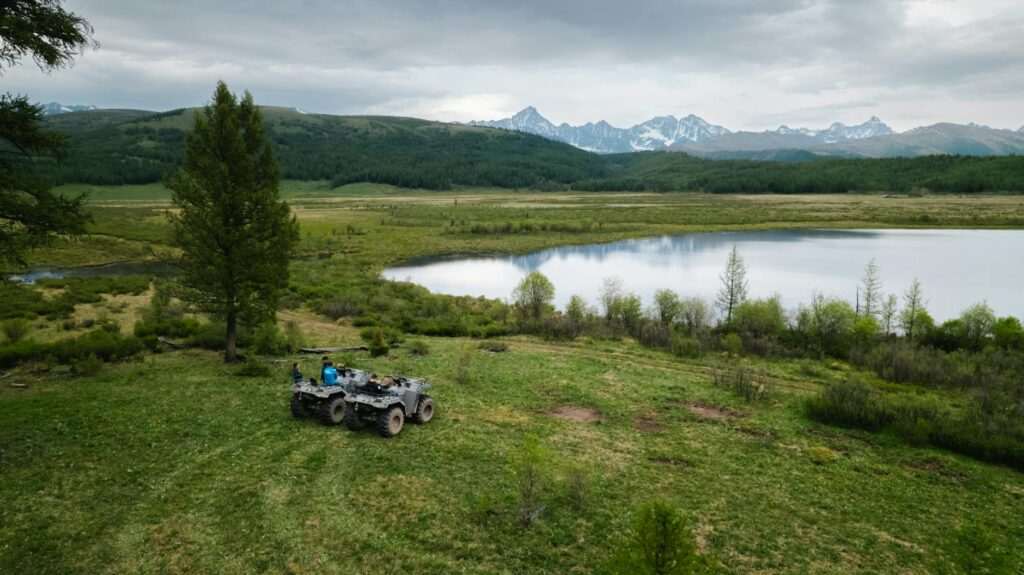
ATV and off-road riding near Anchorage sits in a different category than most Alaska adventure activities. Where hiking and kayaking are broadly accessible with minimal equipment and planning, off-road touring requires an operator, a permit, and terrain that can handle it legally — which means the experience is more curated but also more consistently spectacular. The area within an hour or two of Anchorage includes alpine passes, glacier-carved valleys, and high-elevation ridge routes that deliver exactly the kind of scenery ATV riding looks like in photographs. Here’s how to access it in 2026.
Alaska ATV Adventures: The Primary Operator
Alaska ATV Adventures is the first and only company licensed to lead ATV and UTV tours through the backcountry terrain accessible from Anchorage. Operating primarily out of the Knik River and Matanuska Valley corridors north of the city, they run guided multi-hour tours on late-model machines — side-by-side UTVs for most group configurations, with single ATVs available for solo riders. The guided format handles the logistics that make self-guided backcountry ATV riding complicated in Alaska: route selection, terrain awareness, wildlife protocols, and the vehicle itself.
Tours typically run two to four hours and cover terrain that ranges from gravel river bars to elevated ridge trails with panoramic views of the surrounding mountains. Group sizes are kept small enough that the guide can maintain close contact and adjust pace based on the group’s experience. Bookings run from late spring through early fall, with summer months filling fastest. Reserve well in advance for weekend departures, particularly in July and August.
Where to Ride: Hatcher Pass and the Matanuska Valley
The most dramatic ATV and off-road terrain accessible from Anchorage centers on Hatcher Pass in the Talkeetna Mountains, roughly an hour north of the city via the Glenn Highway and Palmer-Fishhook Road. At elevations reaching 3,900 feet, Hatcher Pass offers alpine tundra, sweeping valley views, and the kind of exposed ridge terrain that makes ATV riding in Alaska feel fundamentally different from riding in forests or flatlands farther south.
The Matanuska Valley — the broad agricultural and recreational corridor stretching from Palmer to Glennallen — also has accessible off-road terrain, particularly around the Knik River drainage south of Palmer. The Knik area has been a destination for off-road riders for decades, with river bar terrain that’s naturally suited to it: flat, drained, and geologically stable in a way that supports heavy vehicle use without significant erosion. Alaska ATV Adventures operates primarily in this zone.
The Butte and Long Lake areas northeast of Palmer have additional off-road vehicle use areas, though access points and permitted zones change seasonally. Current rules and mapped routes are maintained by the Alaska Department of Natural Resources — check the current season’s off-road vehicle guidance before attempting any self-guided riding in state land areas.
The Glenn Highway: Your Corridor into ATV Country
Getting from Anchorage to the best off-road terrain means driving the Glenn Highway Scenic Drive, one of Alaska’s most dramatic road corridors. The 189-mile route from Anchorage toward Glennallen passes through the Matanuska-Susitna Valley, past the Matanuska Glacier overlook, and through the Chugach and Talkeetna mountain ranges. For most ATV tours departing Anchorage, the drive to the meet point is 45–75 minutes and worth taking slowly — the scenery on the way out is part of the experience, not just transit.
If you’re self-driving to a tour meetup, fuel up in Wasilla or Palmer rather than counting on small-town options along the route. Cell coverage is inconsistent past the Palmer turn, so download your maps and confirm the meetup location before leaving Anchorage.
Guided vs. Self-Guided: The Practical Tradeoff
Self-guided ATV riding in the Anchorage area is theoretically possible — renting a machine and accessing public land off-road vehicle areas — but more complicated in practice than in states with established OHV (off-highway vehicle) rental infrastructure. Alaska doesn’t have the equivalent of the ATV rental shops common in Utah or Colorado destinations. The terrain is either on state land with specific permitted access points or on private land that requires outfitter relationships to enter legally.
For most visitors, the guided tour model through Alaska ATV Adventures is the straightforward path. For residents who want ongoing access, purchasing equipment and learning the permitted access points through local off-road vehicle clubs is how most Alaskans do it. The Matanuska Valley has an active OHV community with organized rides and trail maintenance — connecting with local clubs through Facebook or Alaska OHV advocacy organizations will open access to riding that guided tours don’t cover.
Outfitters like Alaska Outdoor Adventures package multi-activity Alaska days that can combine ATV time with other activities — useful if you want to include off-road riding as part of a broader adventure day rather than making it the sole activity. And companies like Alaska Alpine Adventures, which have been guiding wilderness expeditions in Alaska since the 1990s, can provide context on accessing backcountry terrain for experienced riders looking beyond standard guided routes.
Skill Levels: Who Can Participate
Guided ATV tours are designed for participants with no prior experience. The machines used on guided tours — side-by-side UTVs with roll cages, seatbelts, and automatic transmissions — are substantially easier to operate than a traditional ATV. The learning curve for basic operation is measured in minutes rather than hours, and guides adapt the route to the group’s comfort level. If your group contains both experienced riders and complete beginners, the guided format handles that mix well.
For single ATVs and more technically demanding terrain, some prior experience is useful but not required for beginner-rated routes. The primary skill requirement for any off-road riding in Alaska is situational awareness: reading terrain, managing speed on loose surfaces, and understanding how quickly conditions can change at elevation.
Age and weight restrictions apply at most operators. Children are typically permitted as passengers on UTVs but not as solo operators. Check the specific requirements with Alaska ATV Adventures when booking — minimums vary by machine type and tour.
Seasonal Windows
The ATV touring season near Anchorage runs from approximately late May through early October, with the core window from June through August. June offers the clearest high-country access after snow melt; July and August bring the warmest temperatures and most reliable weather for extended ridge riding; September offers dramatic fall color in the Matanuska Valley tundra zones — a genuinely spectacular time to be on the trail if you’re willing to accept some variability in conditions.
Snow at elevation can fall any month of the year in the Talkeetna Mountains. Summer tours regularly encounter snowfields in the Hatcher Pass area even in July. Dress in layers, bring a wind layer regardless of the morning temperature, and follow your guide’s lead on weather-related route adjustments.
Safety Requirements
- Helmet: Provided by operators for guided tours. Non-negotiable for any ATV operation.
- Closed-toe shoes: Required. No sandals, flip-flops, or open-toe footwear.
- Long pants: Strongly recommended — brush, rocks, and vehicle components make shorts a poor choice regardless of air temperature.
- Eye protection: Goggles are standard and usually provided or available for rent on guided tours. Dust, mud splash, and insects at speed make bare-face riding uncomfortable.
- Age minimum: Typically 16–18 for solo operation, younger for passenger seats on UTVs. Confirm with your specific operator.
- Sobriety requirement: Operators enforce zero-tolerance alcohol policies. Riding impaired on any off-road vehicle in Alaska carries criminal penalties equivalent to DUI.
What to Wear and Bring
Base your clothing choice on the assumption that it will be 15–20 degrees colder at the top of your route than when you left the trailhead. Even on a warm Anchorage day, Hatcher Pass ridge terrain can be cold and windy. The standard approach: moisture-wicking base layer, fleece or insulating mid-layer, wind-resistant shell. Avoid cotton — it traps moisture and loses insulating value when wet.
Bring more water than you think you need. Physical activity at elevation dehydrates faster than at sea level, and the dry Alaska air accelerates this. Most guided tours last two to four hours; plan hydration accordingly.
Combining ATV with a Full Anchorage Adventure Day
An ATV tour that departs Anchorage in the morning and returns by early afternoon leaves the rest of the day for a second activity. The Matanuska Valley has several options worth pairing: the Matanuska Glacier has walk-on access for guided ice tours, Palmer has a small but genuine downtown worth a stop, and the drive back on the Glenn Highway can be extended with viewpoint stops.
If you’re building a multi-day itinerary around Alaska adventure activities, ATV riding pairs naturally with flightseeing (another aerial perspective on the same mountain terrain), glacier trekking, and river rafting — experiences that each reveal a different face of the same landscape you’re covering on the ground.
Featured photo by Dmitriy Ryndin on Pexels.
No comments yet.