
Anchorage in Winter 2026: What to Do When It Snows
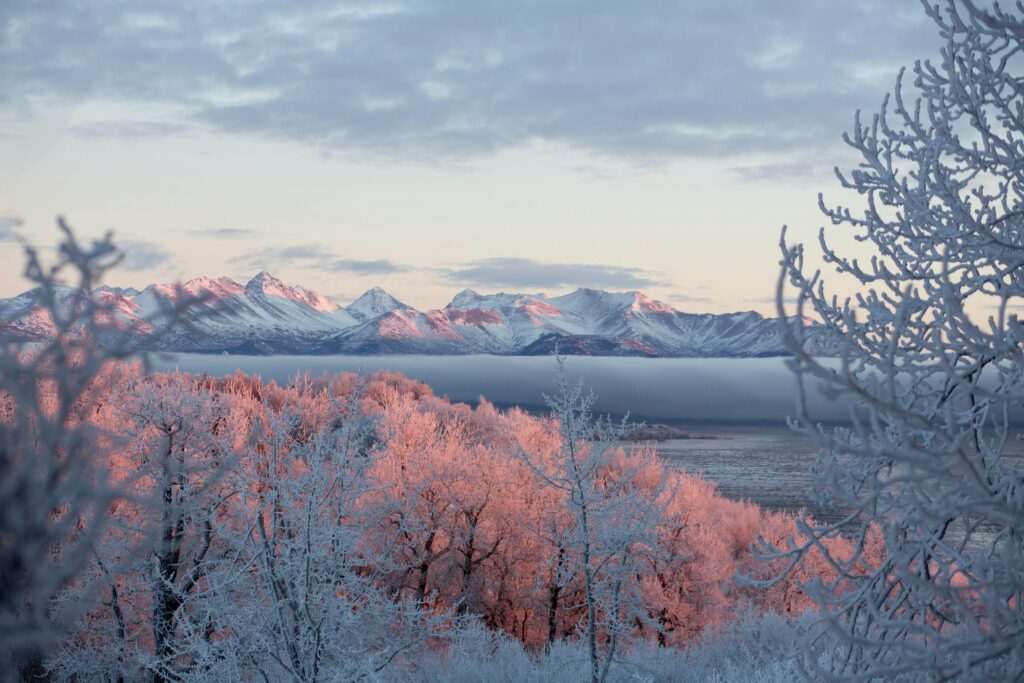
January and February are Anchorage’s most underrated months for visitors. The darkness that sounds discouraging is actually the asset: six hours of daylight means six hours of the pink-gold winter light that turns the Chugach Mountains into something you’d frame on a wall, and the other 18 hours are prime aurora territory. Add world-class alpine skiing 40 minutes from downtown, fat biking on groomed trails, the Fur Rendezvous festival in February, and temperatures that are cold but manageable with the right gear, and you have a winter travel destination that most visitors sleep on. Here’s how to do Anchorage in winter right in 2026.
Skiing at Alyeska Resort
Alyeska Resort in Girdwood, 40 miles south on the Seward Highway, is the anchor winter activity near Anchorage. The mountain rises from 250 to 3,939 feet, with 1,610 vertical feet of lift-served terrain across nine lifts. What distinguishes Alyeska from most western resorts: it’s an Alaska coastal mountain with maritime snowfall that can top 400 inches in good years, dramatically clear days when high pressure locks in, and a tram to the summit that delivers views of the Chugach peaks and Turnagain Arm even for non-skiers. The ski season runs December through April; January and February have the most reliable conditions. Drive time from Anchorage: 45–50 minutes on the Seward Highway.
Fat Biking — The Anchorage Signature
Anchorage has one of the most developed winter fat biking infrastructures in North America. The city’s 130+ miles of trail system — including the Tony Knowles Coastal Trail, Kincaid Park’s singletrack, and the Far North Bicentennial Park network — stays rideable on packed snow through the winter. When the Nordic Ski Club grooms Kincaid, the fat bike tracks run parallel to the ski tracks on a surface that’s fast and consistent. The key variable is overnight temperature: cold nights that consolidate fresh snow produce ideal fat biking conditions. Powder Hound Ski & Bike Shop in Midtown rents fat bikes and can advise on current conditions.
Aurora Borealis — Prime Viewing Window
Anchorage sits at the southern edge of the auroral oval. Peak season runs September through March, with the darkest months (November–January) providing the longest viewing windows. On clear nights during active geomagnetic periods, the lights appear as green curtains, arcs, and spirals visible from city parks. The best viewing requires getting clear of light pollution: the Hillside above the city, Flattop Mountain trailhead, and the roads above Eagle River are the reliable local spots. Check the NOAA Space Weather Prediction Center aurora forecast (swpc.noaa.gov) before dedicating a night to viewing — cloudy skies produce nothing. Our northern lights near Anchorage guide covers best viewing locations, Kp index interpretation, and how to photograph the lights.
Fur Rendezvous — Anchorage’s Winter Festival
The Anchorage Fur Rendezvous (“Fur Rondy”) runs for ten days in mid-to-late February and is the largest winter festival in Alaska. The festival dates to 1935 and originally served as a gathering for trappers and miners coming out of the bush at the end of the season. Modern Fur Rondy includes:
- World Championship Sled Dog Races — sprint racing on a downtown course, distinct from the Iditarod’s distance format. Three consecutive days of racing in the streets of Anchorage.
- Outhouse Races — exactly what it sounds like: outhouses on skis pushed down a city block. A genuine Anchorage institution.
- Running of the Reindeer — participants run through downtown ahead of a reindeer herd in Pamplona-inspired mayhem that’s considerably less dangerous than the original.
- Carnival, arts fairs, and community events throughout the festival footprint.
Fur Rondy is free to attend as a spectator for most events. The dates shift annually around Presidents’ Day weekend — check the official Fur Rendezvous website (furrondy.net) for 2026 scheduling.
Snowshoeing and Winter Trails
The Chugach State Park trail network is accessible on snowshoes from multiple trailheads within 20 minutes of downtown. Powerline Pass from Glen Alps (700 feet of gain over 5 miles), the South Fork Eagle River valley, and the lower Flattop approach all offer rewarding winter routes. Far North Bicentennial Park on the city’s east side has unpacked winter trails with good snowshoe terrain and no grooming dependency.
Ice Skating
Ben Boeke Ice Arena in Midtown has public skating throughout the winter with skate rentals available. Several outdoor rinks operate in city parks when temperatures hold; the Delaney Park Strip downtown is occasionally converted to an outdoor skating surface during extended cold snaps. Check Anchorage Parks and Recreation for current outdoor rink status — conditions vary by year.
Gear and Logistics
Winter in Anchorage requires real cold-weather preparation. Base layers should be merino wool or synthetic — no cotton against the skin. Down insulation works for static activities (aurora watching, Fur Rondy spectating); synthetic mid-layers work better for active use where sweat moisture management matters. Waterproof outer shells are mandatory; coastal winters involve rain mixed with snow. Powder Hound Ski & Bike Shop handles base layers, insulated mid-layers, and cold-weather accessories. The Alaska Public Lands Information Center downtown has winter trail maps, current Chugach State Park conditions, and snowshoe rental contacts.
For dog mushing tours in the winter window — one of the most distinctly Alaskan experiences available near Anchorage — our dog mushing near Anchorage guide covers working sled dog kennels in the Mat-Su Valley that run visitor tours from November through March.
Photo by Laura Tancredi on Pexels.




No comments yet.