
Anchorage Whale Watching 2026: Beluga Whales in Cook Inlet & Turnagain Arm
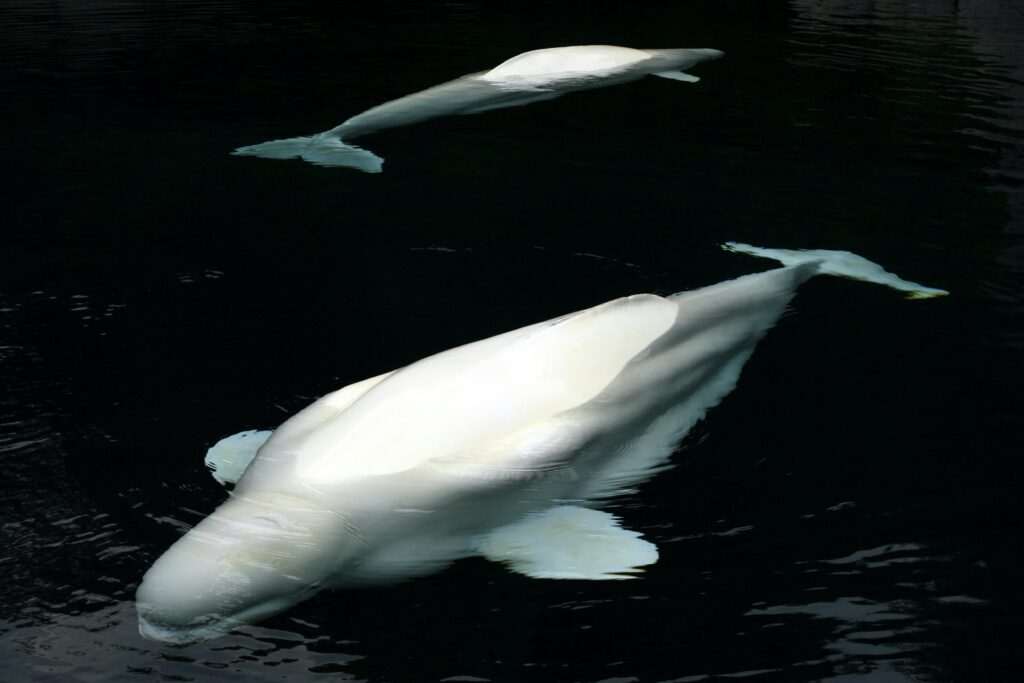
Cook Inlet is one of the highest-density beluga whale habitats in Alaska, and Anchorage happens to sit at its head. The Cook Inlet beluga population — a distinct, non-migratory subpopulation — hunts salmon in the tidal shallows that surround the city from spring through fall. Watching them requires no boat, no tour, and no remote backcountry logistics: several pullouts on the Seward Highway put you within binocular range of the animals on a good incoming tide. Here’s what to know about whale watching near Anchorage in 2026.
Cook Inlet Belugas — What Makes This Population Unusual
Most beluga whale populations migrate between Arctic and sub-Arctic waters. The Cook Inlet population stays year-round, following salmon runs up and down the inlet through the seasons. The animals are intensely white as adults — younger belugas are gray, darkening to white over several years — and highly social, often traveling in groups of five to thirty. The inlet’s turbid water means sightings are visual, not underwater: you’re watching dorsal ridges, blows, and surface rolls rather than clear-water wildlife viewing. Binoculars are essential.
The population is listed as critically endangered under the Endangered Species Act, with an estimated 279 individuals as of the most recent survey count. Viewing is entirely passive — the animals aren’t approached, and the road-based vantage points are the appropriate way to observe them without disturbance.
Best Viewpoints from Land
Beluga Point (Mile 110, Seward Highway)
The named viewpoint, with a signed turnout and interpretive panels covering both the belugas and the bore tides that move through this stretch of Turnagain Arm. At high tide, water reaches the base of the bluff; at low tide, mud flats extend hundreds of yards. Belugas hunt in the deeper channels on the incoming tide, typically appearing 1–2 hours before high water. The right approach: check the tide table for Anchorage, subtract roughly one hour for the Turnagain Arm timing lag, and arrive before the peak.
Windy Corner (Mile 106.5, Seward Highway)
A pullout on a curve with an unobstructed view down the arm. No formal signage, but a consistent local sighting location for those who know the tide schedule. The cliff face above is also a Dall sheep habitat in summer — scan the upper rocks while waiting for belugas below.
Bird Creek Area (Mile 101, Seward Highway)
The Bird Creek Campground and fishing access area puts you at water level on Turnagain Arm during salmon season, when belugas follow king and sockeye runs toward the head of the inlet. Late July and August are the peak period here. Our Turnagain Arm bore tide guide covers the tide timing for this entire stretch — the same incoming cycle that produces the bore wave concentrates the salmon, and the belugas that follow them.
Point Woronzof and Earthquake Park (Anchorage)
These two Anchorage coastal parks face Cook Inlet directly north of the city. Belugas occasionally appear in the shallows here during high-tide salmon pushes, particularly in late summer. Not as reliable as the Turnagain Arm pullouts, but worth a scan during high water in August if you’re already in the area.
Boat-Based Options — What’s Available
No organized whale-watching cruises operate specifically in Cook Inlet — the inlet’s commercial traffic, turbid water, and the beluga protection zone make dedicated cetacean tours impractical here. The Seward Highway pullouts are the right venue for Cook Inlet belugas.
For humpback whales, orcas, and Steller sea lions on a boat tour, the Kenai Fjords out of Seward (2.5 hours south) and Prince William Sound out of Whittier (1 hour east) both run wildlife cruises with open-ocean cetacean viewing. Our sea kayaking near Anchorage guide covers the Whittier and Prince William Sound corridor, which overlaps with the whale-watching cruise territory. For a boat-based encounter with humpbacks and orcas, Seward and Whittier are the correct departure points.
Timing — When Belugas Are Most Visible
- June: Early-season sightings possible but less consistent. Belugas are present but haven’t yet concentrated in numbers at the inlet head.
- July–August: Peak period. King and sockeye salmon runs push belugas into the Turnagain Arm shallows. Beluga Point and the Bird Creek area see the most reliable sightings.
- September: Silver salmon runs extend beluga activity into fall. Good viewing with smaller crowds than midsummer.
- Tide matters more than time of day: The two hours before high tide consistently produce more surface activity than low-tide periods.
What to Bring
Binoculars are the single most important item — 8×42 or 10×42 optics give enough reach to identify animals in the channel at typical pullout distances. A camera with a telephoto lens extends range further. The Turnagain Arm pullouts are exposed to wind; bring a layer regardless of the Anchorage temperature. Powder Hound Ski & Bike Shop in Midtown carries binoculars and outdoor layers. The drive to the Turnagain Arm viewpoints is about 45 minutes from downtown Anchorage — Enterprise Rent-A-Car at Anchorage Airport handles vehicle rentals for visitors without a car.
Trip Planning
The Alaska Public Lands Information Center in downtown Anchorage has current tide tables, in-season beluga sighting reports, and wildlife viewing guidance for the Turnagain Arm corridor — worth a stop before heading out to time the viewing correctly. Sightings aren’t guaranteed; Cook Inlet belugas track tide and salmon, not visitor schedules. A morning with no sightings still gets you 45 minutes of Turnagain Arm scenery, which is worthwhile on its own.




No comments yet.