
Oil Pastel Workshops in Anchorage: Sennelier vs Holbein, Sgraffito, and Alaska Projects (2026)
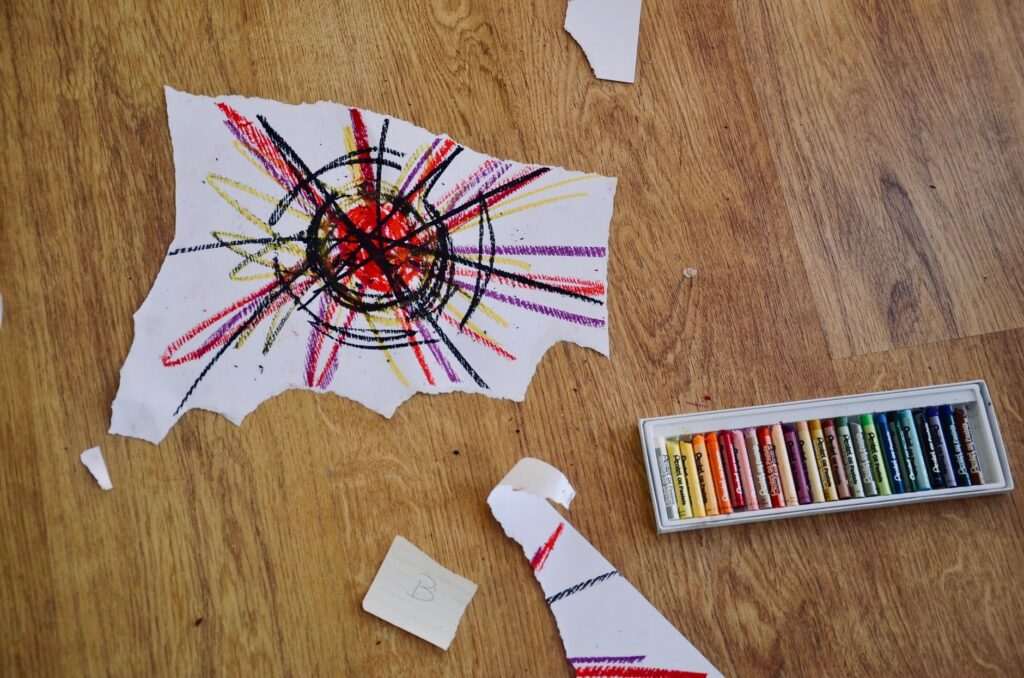
Oil pastels occupy a unique position among drawing and painting media — they’re neither the dry, dusty chalk of soft pastels nor the fluid paint of oils, but something in between: a waxy, oil-bound pigment stick that smears, layers, blends, and dissolves in ways that give artists unusual expressive range without the commitment of traditional oil painting. Invented by Sakura Color Products of Japan in 1925 (originally for student use), oil pastels were embraced by fine artists including Picasso, who was among the first to use them seriously as a professional medium, and Henri Sennelier, who worked with Picasso to develop the high-quality oil pastel formulation that the Sennelier brand produces to this day. Contemporary oil pastel practice spans everything from children’s art education (Cray-Pas and similar student-grade products) to serious fine art (where Sennelier and Holbein professional grades are used alongside sophisticated solvent blending techniques). The medium’s learning curve is gentle — immediate, colorful results are achievable from a first session — but its depth of technique rewards extended exploration. In Anchorage, oil pastel workshops attract both beginners drawn to the medium’s accessibility and experienced artists investigating its specific expressive qualities. This guide covers brand comparisons, blending methods, layering techniques, surface choices, solvent effects, and project approaches for 2026.
Brand Comparisons: Sennelier, Cray-Pas, and Holbein
Oil pastels vary dramatically in quality across price points, and the quality difference is immediately felt in the studio:
Sennelier
The professional standard for oil pastels — Sennelier’s formulation uses high-quality pigments and a soft, creamy binder that produces intense color, smooth application, and exceptional blendability. The stick’s softness means it picks up significant color from adjacent sticks when blending, allowing nuanced color mixing directly on the surface. Sennelier’s pigments are the most lightfast in the oil pastel category, making them suitable for work intended to be exhibited or collected. The tradeoff is price (a set of 120 colors runs $200+) and the soft consistency, which can smear unintentionally if work is handled carelessly. Available in 120 colors including many mixed pigment and iridescent tones.
Holbein
Japanese professional-grade oil pastels with a firmer consistency than Sennelier — Holbein pastels are easier to control for fine detail work and don’t smear as readily during work. The color range (225 colors) is the widest of any professional oil pastel brand, including many unique mixed colors not available elsewhere. Holbein’s firmness makes it the preferred brand for sgraffito technique (scratching through layers) because the layers separate more cleanly than with the softer Sennelier. The tradeoff is that Holbein’s firm consistency requires more pressure to build color and doesn’t blend as smoothly as Sennelier.
Cray-Pas (Sakura) and Student Grades
Cray-Pas Expressionist (Sakura’s student/artist grade) and similar mid-range products (Pentel Arts, Mungyo) offer accessible entry points without the professional price. Cray-Pas Expressionist is specifically formulated with higher pigment concentration than the children’s Cray-Pas Junior Artist, making it suitable for serious student work. The limited color range and less intense pigment concentration of student grades are their main limitations — professional grades produce noticeably richer color with less pigment applied. For beginners testing whether oil pastels suit their practice, a Cray-Pas Expressionist set is the recommended starting point before investing in Sennelier or Holbein.
Blending: Fingers, Solvents, and Tools
Blending is central to oil pastel technique, and different methods produce different qualities:
Finger Blending
The most immediate and intuitive method — fingers apply warmth and pressure that softens the oil binder and moves pigment smoothly. Finger blending produces soft, atmospheric transitions and is particularly effective for backgrounds, skin tones, and any area where smooth gradation is wanted. The limitation is precision — fingers cover too large an area for fine detail blending, and pigment transfers between colors if fingers aren’t wiped between uses.
Solvent Blending
Mineral spirits, odorless turpentine, or Gamsol applied with a brush over oil pastel dissolves the oil binder and produces a fluid, paint-like effect. Solvent blending creates smooth, even transitions and can thin oil pastel to a wash-like consistency where the texture of the pastel completely disappears. This technique bridges oil pastel and oil painting — the solvent-dissolved pastel behaves much like thin oil paint. Work in a ventilated area when using mineral spirits; odorless variants reduce (but don’t eliminate) vapor concentration.
Colorless Blender
A colorless oil pastel stick (available from most brands) blends and softens colors without adding pigment — useful for smoothing transitions in areas where finger blending would pick up too much adjacent color. The colorless blender also lightens colors slightly as it dilutes the pigment concentration.
Layering and Sgraffito
Oil pastel’s layering capacity is one of its most powerful technical features:
Layering builds color depth by applying successive pastel layers — a yellow underpainting, then orange, then red produces a rich sunset glow that flat red alone can’t achieve. Unlike watercolor, where each layer must dry before the next is applied, oil pastel layers can be applied immediately one over another. The key is pressure: heavier pressure with later layers picks up and blends with underlying colors; lighter pressure keeps colors more separate. Five or more layers of oil pastel on a heavily toothed surface can produce remarkable depth and complexity.
Sgraffito (from the Italian “to scratch”) uses a pointed tool (palette knife, dental tool, scratching blade, or even a sharp pencil) to scratch through upper oil pastel layers to reveal the color underneath. The technique creates precise line textures — grass, fur, wood grain, architectural detail — that are difficult to achieve with additive oil pastel application. Apply a heavy dark layer over a lighter color, then scratch through the dark layer to reveal the light color underneath in fine lines. Holbein’s firmer consistency produces cleaner sgraffito lines than Sennelier’s softer formula.
Working on Black Paper and Toned Surfaces
Oil pastels perform extraordinarily well on black and toned paper — the opacity of professional-grade oil pastel allows light colors to sit visibly over dark backgrounds, which reverses the usual light-to-dark building of traditional oil painting and creates striking luminosity effects:
On black paper, oil pastel colors appear to glow in a way that’s impossible to replicate on white paper — the dark ground makes the pigment’s inherent brightness visible without requiring contrast from adjacent dark areas. Aurora borealis compositions, night sky scenes, candlelight effects, and fluorescent flower closeups all read with exceptional drama on black paper. Canson Mi-Teintes black paper and Strathmore 400 series black mixed media paper both handle oil pastel well.
On toned papers (grey, tan, ochre), oil pastel allows highlights and lights to be applied as “added” elements rather than “saved” areas — the mid-tone ground takes care of the middle values, and the artist applies both darks and lights to it. This approach is faster and more expressive than building from white paper and is the standard approach in professional portrait and landscape work in oil pastel.
Turpentine Effects for Painterly Results
Applying oil pastel heavily, then working into it with a turpentine-dampened brush, produces a distinctly painterly surface indistinguishable from alla prima oil painting at normal viewing distance. The technique works best on primed canvas or oil-primed pastel paper (which handles solvent without buckling). Apply the initial oil pastel marks quite heavily — the solvent will thin them, and under-applied areas become too transparent. Once the turpentine-worked layer dries (typically 24–48 hours), additional dry oil pastel can be applied over the top for texture and detail. This two-phase approach (underpainting in turpentine, detailing in dry pastel) is how many professional oil pastel artists build complex works.
Beginner Projects: Landscape and Still Life
- Alaska landscape sunset: On toned tan or grey paper, build a Cook Inlet or Turnagain Arm sunset scene — warm orange/pink sky reflected in water, dark mountain silhouettes on the horizon. The toned paper handles the mid-values; oil pastel adds the warm lights and dark shadows. An achievable first project with immediate visual satisfaction.
- Fruit still life on black paper: Arrange two or three brightly colored fruits against a dark background. Oil pastel on black paper handles this subject magnificently — the deep shadows are the paper itself; the pastels add only the lit and midlit areas. Apple reds, lemon yellows, and plum purples glow on black paper in a way that’s genuinely surprising for beginners.
- Wildflower closeup: Alaska wildflowers — fireweed, lupine, forget-me-nots — offer bold, simple color masses that suit oil pastel’s blending strengths. A closeup perspective (filling the paper with one or two flowers) simplifies composition and lets the color work carry the image.
Oil Pastel Workshops in Anchorage
Anchorage oil pastel workshops typically run 2–3 hours for beginner landscape or still life projects, with multi-session formats for larger, more complex works. Workshop prices run $45–$85, with oil pastels, paper, and solvent provided. A home starter kit (a set of 24 Cray-Pas Expressionist, a pad of black paper, and a pad of toned grey paper) costs $25–$40. Anchorage craft workshop participants can show and sell their finished work at year-round events including the Anchorage Market & Festival, the Anchorage Native Arts & Culture Festival, and the Alaska State Fair. Our free things to do in Anchorage guide covers the galleries and open studio events where Anchorage oil pastel artists exhibit their work. Our Anchorage hiking guide covers the wildflower fields, coastal views, and mountain landscapes that provide Alaska-specific subject matter particularly well-suited to oil pastel’s rich, expressive color range.
Photo by Boris Sopko on Pexels.
No comments yet.