
Alaskan Husky vs Siberian Husky 2026: Sled Dog Differences & Where to Meet Them Near Anchorage
Alaska’s sled dog culture produced two dog types so visually similar that first-time visitors regularly confuse them — but experienced mushers and kennel operators draw a sharp line between them. The Siberian Husky and the Alaskan Husky share wolf-like appearance, dense double coats, and an enthusiasm for cold-weather running that borders on compulsive, but they diverge fundamentally in origin, breeding philosophy, and purpose. For visitors to Anchorage drawn to the Iditarod, kennel tours, dog sled rides, or simply curious about the dogs that define so much of Alaska’s identity, understanding the difference sets the foundation. This guide covers the key distinctions between Alaskan and Siberian Huskies, the history that put sled dogs at the center of Alaska culture, where to meet them near Anchorage, and how to plan a dog sled experience in 2026.
Alaskan Husky vs Siberian Husky: The Key Differences
Breed Status
The Siberian Husky holds American Kennel Club (AKC) recognition as a purebred breed, with a defined standard for physical characteristics, coat, eye color, and temperament. Breeders register Siberians through the AKC; puppies come with papers, bloodlines, and predictable physical traits.
The Alaskan Husky has no AKC registration and no formal breed standard because it has never been a breed in the traditional sense. The Alaskan Husky is a type — a performance category, not a pedigree. Mushers breeding Alaskan Huskies prioritize function over form. The goal has always been to produce the fastest, most efficient, most cold-tolerant dog possible for pulling a sled, and decades of selective breeding have crossed Siberian Huskies with Greyhounds, German Shorthaired Pointers, Border Collies, and other dogs to reach that goal. The result stands outside AKC categories — and outside the show ring entirely.
Physical Appearance
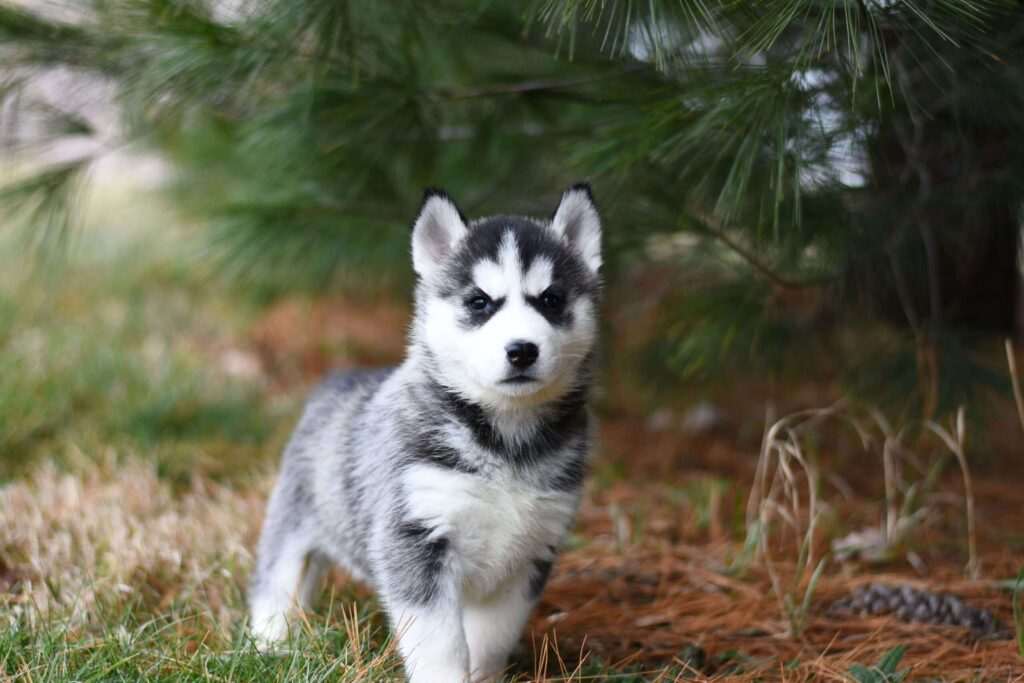
Siberian Huskies follow a consistent template: medium-sized (35–60 lbs), thick double coat in grey/white, black/white, or red/white, erect triangular ears, and eyes that frequently run blue or carry heterochromia (one blue, one brown). The AKC standard produces visual predictability — a Siberian from a registered breeder looks like the Siberian in the breed standard.
Alaskan Huskies look like whatever the musher bred them to look like. A Greyhound-cross Alaskan Husky runs lean and long-legged with a shorter coat. A Pointer-cross Alaskan Husky shows a narrower head and more athletic build. Most Alaskan Huskies weigh 40–55 lbs, tend toward brown eyes, and carry slightly less coat than Siberians — enough for cold-weather protection, but reduced insulation that allows better heat dissipation on hard training runs. Visit any Iditarod kennel and the dogs in the yard vary considerably in appearance, all united by their drive to run.
Performance
In competitive long-distance racing, the Alaskan Husky has largely displaced purebred Siberians at the top of the field. Alaskan Huskies can cover 100+ miles per day on the Iditarod trail while maintaining food intake, hydration, and health — a metabolic efficiency achieved through generations of selection for exactly this task. At Iditarod winning kennels, the dogs hold genetic profiles that would surprise a show-ring judge but produce race-winning performance.
Siberian Huskies remain competitive in mid-distance races (300–500 miles) and in sprint events, and still constitute many recreational and touring teams. For visitors on a dog sled excursion, the experience of running a team of Siberians differs little from running Alaskan Huskies — both pull hard, both love the work, and both communicate their enthusiasm before and after the harness goes on.
Temperament
Both breeds share a pack-oriented social structure, a strong prey drive, and a vocal communication style — Huskies of both types howl rather than bark, a trait rooted in their history as dogs living in large working teams where howling coordinated group activity. Siberians tend toward the sociable end of the dog temperament spectrum: friendly with strangers, affectionate with family, and mischievous in ways that catch unprepared owners off guard. Alaskan Huskies vary more widely by individual lineage — the best working dogs combine drive and focus with enough social ease to live comfortably in a kennel environment.
The History of Sled Dogs in Alaska
Indigenous Traditions
Dog sledding in Alaska predates any recorded European or American contact. Indigenous Athabascan, Inupiaq, and Yupik peoples developed dog teams as primary winter transportation technology — for hunting, travel between camps, and carrying equipment. The breeds these cultures developed, including the ancestors of today’s Alaskan Malamute, represented thousands of years of selection for endurance, cold tolerance, and cooperative pulling behavior.
The 1925 Nome Serum Run
The event that put Alaska sled dogs into the permanent national consciousness unfolded in January 1925. Nome, a remote coastal community on the Bering Sea, faced a diphtheria outbreak with depleted antitoxin stores and no viable way to resupply — the harbor was frozen, and winter aircraft technology of the era lacked the capability to navigate the Alaska Range and brutal temperatures of the interior. The Alaska Railroad moved 300,000 units of antitoxin from Anchorage to Nenana, the nearest rail point, and from there 20 mushers and roughly 150 sled dogs relayed the serum 674 miles to Nome in 5.5 days through temperatures that hit –50°F.
Gunnar Kaasen and his lead dog Balto completed the final leg, arriving in Nome at 5:30 a.m. on February 2. The story captured national attention — and Balto, a Siberian Husky, became famous enough to earn a bronze statue in New York’s Central Park, where it stands today. The 1925 serum run directly inspired the creation of the Iditarod Trail Sled Dog Race in 1973, which follows portions of the original relay route.
The Iditarod and Susan Butcher
The Iditarod begins each year with a ceremonial start through downtown Anchorage on the first Saturday of March, with the competitive restart following the next day from Willow, 71 miles north of Anchorage. The 1,000-mile race to Nome typically finishes in 8–12 days depending on conditions. Four-time winner Susan Butcher (1986, 1987, 1988, 1990) transformed the race and the sport — her dominance through the late 1980s brought national attention to both dog sledding and Alaska, and she remains one of the defining figures of the Iditarod era. Alaska celebrates Susan Butcher Day on the first Saturday in March.
How to Meet Sled Dogs Near Anchorage in 2026
Iditarod Headquarters, Wasilla
The official Iditarod Trail Sled Dog Race headquarters in Wasilla, 40 miles north of Anchorage via the Parks Highway, runs summer dog demonstrations and musher talks from June through August. Visitors meet working sled dogs, watch harness demonstrations, and tour the Iditarod museum and hall of champions at the headquarters facility. The summer programs run on a schedule — check the Iditarod website (iditarod.com) for 2026 demonstration times before making the drive. Our Anchorage winter activities guide covers the ceremonial start in downtown Anchorage, which represents the most dramatic way to experience the race for visitors arriving in early March.
Kennel Tours Near Anchorage
Several Anchorage-area mushers offer kennel tour experiences where visitors spend time in the dog yard meeting the dogs, watching training runs, and hearing about working husky life from the musher directly. These tours vary from informal drop-ins to scheduled programs with educational components. Searching “Anchorage sled dog kennel tour” returns current operators — availability changes by season and by whether the musher is in active training or post-race recovery mode.
Summer Wheeled Sled Rides
Winter snow creates the most authentic dog sledding experience, but summer visitors gain access to wheeled cart tours where dog teams pull a wheeled sled on dirt or gravel tracks through kennel properties. Seavey’s Ididaride in Seward — run by the Seavey family of multi-Iditarod-winning fame — offers summer sled dog experiences with the actual race team dogs. The Seavey kennel also gives visitors an up-close look at the training operation and a chance to interact with dogs that have competed at the Iditarod level.
Alyeska Resort Dog Sled Encounters
During the winter ski season, Alyeska Resort in Girdwood has hosted sled dog demonstrations and short rides near the mountain base area. Check the Alyeska Resort website for 2026 winter programming. Our snowshoeing near Anchorage guide covers the full Girdwood and Chugach winter activity landscape including Kincaid Park and other sites where dog teams operate on groomed winter trails.
Dog Sledding Tours from Anchorage
Winter dog sledding tours from Anchorage range from short 15-minute introductory experiences to full-day excursions. Most tours operate from kennels in the Mat-Su Valley (Wasilla, Palmer, Willow) or in the Chugach foothills east of Anchorage. Pricing typically ranges from $75–$150/person for short tours to $250–$450 for multi-hour experiences. Book at least 2–3 weeks in advance for January through March tours when demand peaks around Iditarod season.
A complete dog sled tour typically includes harnessing the dogs with musher instruction, riding as a passenger while the musher drives, and a short segment of independent mushing for guests who want to handle the sled. Our Anchorage winter emergency preparedness guide covers cold-weather clothing requirements relevant to any extended outdoor winter activity, including dog sled tours where you will stand exposed on a sled at speed in subzero temperatures. Anchorage craft workshop participants can show and sell their finished work at year-round events including the Anchorage Market & Festival, the Anchorage Native Arts & Culture Festival, and the Alaska State Fair. Our free things to do in Anchorage guide covers the Iditarod ceremonial start as a zero-cost winter spectator event — an option for visitors who want the Iditarod experience without booking a formal tour.
Bringing Your Own Dog to Alaska
Alaska’s entrance requirements for dogs traveling from the continental United States require no quarantine period. The practical requirements: current rabies vaccination (required), a health certificate from a licensed veterinarian (required for air travel and recommended in general), and current contact information on a tag or microchip. No additional Alaska-specific permits apply to pet dogs entering from other US states.
Air travel with dogs follows the policies of the specific carrier. Alaska Airlines permits dogs in-cabin as carry-on for dogs meeting size requirements, and as checked baggage for larger dogs — check current restrictions, as size, breed, and seasonal temperature policies change. Summer heat on Anchorage airport tarmac during cargo loading creates real risk for dogs traveling as checked cargo; in-cabin travel for small dogs eliminates this concern. Our Anchorage dog parks and pet-friendly activities guide covers specific dog-friendly locations in Anchorage, trail access with dogs, and leash requirements at major parks. Enterprise Rent-A-Car at Anchorage Airport provides vehicle pickup for visitors arriving with dogs who need transportation directly from the terminal to Anchorage accommodations without waiting for shuttle services that may limit pet travel.

No comments yet.