
Alaska Fall Foliage 2026: When & Where to See Autumn Color Near Anchorage
Most visitors to Alaska come in July. They see fireweed in bloom, salmon in the rivers, and the Chugach Mountains in full summer green. What they miss is the season that follows — the six-week window from late August through mid-September when the same landscape shifts into something equally remarkable and far less crowded.
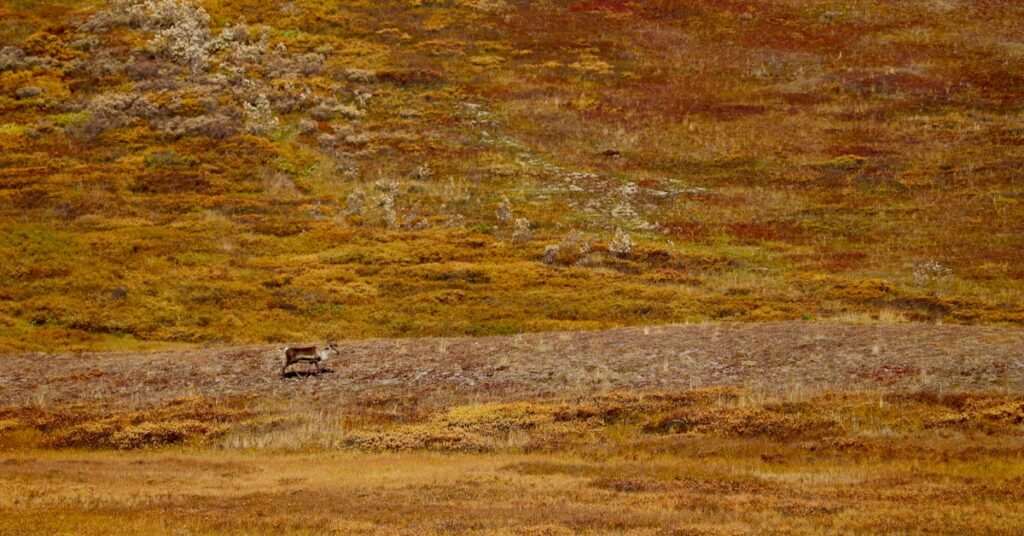
Alaska’s fall foliage is not New England — it won’t be replicated by driving a scenic highway corridor on a warm October day. It’s faster, cooler, earlier, and in some ways more intense. The dwarf birch on alpine tundra turns a startling ruby red. The hillside birch forests go gold seemingly overnight. The blueberry leaves produce a deep crimson at eye level while the cottonwood along river corridors turns butter-yellow above. The whole thing happens in about three weeks and it begins, in the high Chugach, while most of the country is still in August.
The Alaska Autumn Palette
Dwarf birch (Betula nana) is the plant responsible for the red tundra that makes aerial photos of Alaska in fall look almost unreal. This low-growing shrub — rarely more than knee height — blankets open alpine terrain above treeline throughout Southcentral Alaska. When it turns in late August and early September, it produces a deep burgundy-red that covers entire mountainsides. From a distance, whole ridgelines appear to be on fire.
Paper birch (Betula papyrifera) is the tall forest species that produces the gold that defines valley-floor fall color. Anchorage’s hillside neighborhoods and the forests of the Chugach foothills are dominated by birch, and when they turn in mid-September, the effect from Anchorage’s elevated viewpoints is a golden wash across the entire terrain below the treeline.
Blueberry leaves turn a vivid crimson in early September, adding a mid-level color layer between the red tundra above and the gold birch below. Walk through a hillside blueberry field in early September and the berries themselves are still blue while the leaves surrounding them have already gone scarlet.
Cottonwood and aspen follow the birch slightly, turning yellow along river corridors and valley bottoms in mid to late September. The Matanuska and Susitna River valleys have strong cottonwood displays visible from both the Glenn and Parks Highways.
Bearberry (Arctostaphylos uva-ursi) is another low-growing tundra species that turns orange to deep red in fall. It holds its color longer than most species and can still show vivid tones into early October at low elevations.
Week-by-Week Timing Guide (Anchorage Region)
Late August (Aug 20–31): Alpine tundra above 3,000 feet turns first. Dwarf birch, blueberry, and bearberry all show color changes on exposed ridgelines and above-treeline slopes. The Chugach peaks visible from Anchorage begin to show the first tinge of red on their upper faces. This is the window for high-elevation hiking with color — Flattop Mountain, Near Point ridge, and the upper Powerline Pass route show significant change. Valley birch is still green.
Early September (Sep 1–10): Color descends through the elevation bands. The 1,500–3,000 ft zone — the hillside birch forests above Anchorage’s south and east neighborhoods, the Chugach foothills — shows a mixed palette of gold, amber, and red. This is the most complex and photogenic phase, when multiple species are transitioning simultaneously. Blueberry leaves peak. The Seward Highway south of Anchorage begins to show strong color on the hillsides above Turnagain Arm.
Mid-September (Sep 11–20): Valley floor birch forests peak. This is the single most dramatic week in the Anchorage area — the hillside forests go fully gold, the parks and trails are carpeted in fallen yellow leaves, and the contrast between the gold birch and the snow-capped Chugach above is at its most striking. Hatcher Pass (1,500–4,000 ft) is in peak full color during this window. The Parks Highway corridor toward Denali shows strong tundra and birch color.
Late September (Sep 21–30): Colors fade from the upper elevations, and rain and wind begin to strip leaves from valley birch. Early-season snows are possible above 3,000 feet. The cottonwood along river corridors is often still in color through the last week of September. By late September, the season is largely over below treeline and completely over above it.
Best Scenic Drives for Fall Color
Seward Highway — Anchorage to Portage (40 miles)
The Seward Highway south from Anchorage follows Turnagain Arm through a narrow corridor between the Chugach and the water. In early September, the hillsides above the highway — particularly the north-facing slopes on the Anchorage side — show rich mixed color while the waters of the Arm reflect the sky. The Bird Point and Beluga Point pullouts offer the most dramatic combo of fall color, water, and mountain backdrop. This is also the prime corridor for beluga whale sightings in September as whales follow late salmon runs into the Arm.
Glenn Highway — Anchorage to Palmer (42 miles)
The Glenn Highway northeast from Anchorage passes through the Matanuska Valley, with Pioneer Peak and the Talkeetna Mountains visible across the valley floor. In mid-September, the cottonwood and birch along the valley corridors are in full color, and the contrast with the snowcapped peaks above is exceptional on clear days. The Palmer Hay Flats — visible from the highway near Palmer — attract waterfowl staging for migration throughout September, adding a wildlife dimension to the fall drive.
Parks Highway — Wasilla toward Denali (80–120 miles)
The Parks Highway north from Wasilla moves through terrain that transitions from valley birch to open rolling tundra as you approach Denali State Park and the park boundary. In mid-September this drive is spectacular — tundra on either side of the road in red, gold, and orange, with the Alaska Range visible to the northwest on clear days. The Denali viewpoint at Mile 135 of the Parks Highway (Denali State Park) is among the most accessible spots in the state for a full Denali view framed by fall tundra color.
Top Hikes for Foliage Immersion
Flattop Mountain via Glen Alps (Chugach State Park)
The Glen Alps trailhead — accessed from Upper Huffman Road off the Hillside — puts you immediately into tundra terrain on the approach to Flattop. In late August and early September, the trail corridor is in full alpine color: red dwarf birch, orange bearberry, gold grasses. The broad meadow below the Flattop summit provides a 360-degree view of the autumn hillsides spreading toward the Anchorage bowl and Cook Inlet. One of the most accessible foliage hikes in the region, accessible to most fitness levels in 2–4 hours round-trip. Part of the Chugach State Park trail system.
Kesugi Ridge (Denali State Park)
Kesugi Ridge is a 27-mile backcountry traverse through Denali State Park that offers sustained Denali views from an elevated tundra ridgeline. In early September, the entire ridge is in peak alpine fall color — the kind of landscape where every direction you look produces a potential photograph. Day hikers can access the ridge from the Ermine Hill trailhead (Troublesome Creek trailhead is the full-traverse start). This is a 3-to-4-hour drive from Anchorage and warrants an overnight. Guided fall hike itineraries through Get Up and Go Tours can incorporate Kesugi Ridge access with transportation from Anchorage.
Denali National Park — Polychrome Pass Area
The Polychrome Pass area at around Mile 46 of the Denali Park Road is named for the multicolored volcanic rock exposed on its slopes — but in September, the surrounding tundra adds its own layers of color. Bus passengers moving through the park in early September see the full valley floor and hillside tundra in autumn: the golden birch and spruce of the lower slopes transitioning to red and orange on the open terrain above. This is accessible only by park bus from the Wilderness Access Center.
Photography Tips for Alaska Autumn Light
The sun stays low. By mid-September in Anchorage, the sun doesn’t rise above 30 degrees above the horizon even at noon. This means every hour of daylight is effectively golden-hour quality — the warm, angled light that makes foliage photography exceptional. Unlike summer, when harsh midday light flattens color, Alaska fall light is flattering almost all day.
Shoot toward the light. Birch leaves backlit against a blue sky are translucent and glow. Position the sun behind or to the side of your subject rather than over your shoulder for the most vivid results.
Use reflections. The lakes and ponds throughout the Chugach and Denali corridors hold mirror-still reflections on calm mornings. Tundra color reflected in a lake surface doubles the visual impact. Early morning before wind picks up is the ideal window.
Include wildlife context. Fall is when bears are in hyperphagia — actively feeding to build winter fat — and when caribou and moose are moving through their late-season ranges. Including an animal in a fall color composition is the difference between a landscape photo and a distinctly Alaska photo.
What Else Is Happening in Fall
Salmon runs: The coho (silver) salmon run peaks in Anchorage-area streams in September, with Ship Creek and Bird Creek both productive through mid-month. Bears follow the salmon, making September one of the best months for bear-viewing from the roadside and on foot near coastal streams.
Low crowds: Visitor numbers drop sharply after Labor Day. Hotels, campgrounds, and popular trailheads that are packed in July are quiet in September. Advance booking is rarely necessary for September travel.
Aurora season begins: The aurora borealis returns to visibility as nights grow dark again after the midnight-sun period. By mid-September, Anchorage has enough darkness for aurora viewing on clear nights. The aurora forecast (via the University of Alaska Fairbanks Geophysical Institute) is worth monitoring from late August onward.
Fall near Anchorage asks for a flexibility of spirit — the weather is variable, the window is short, and you may need to move with the conditions rather than a fixed itinerary. But visitors who time their trip to overlap with the peak color week in their target elevation band typically leave with photographs and memories that outlast any summer trip.
No comments yet.