
Alaska Snowkiting & Winter Paragliding 2026
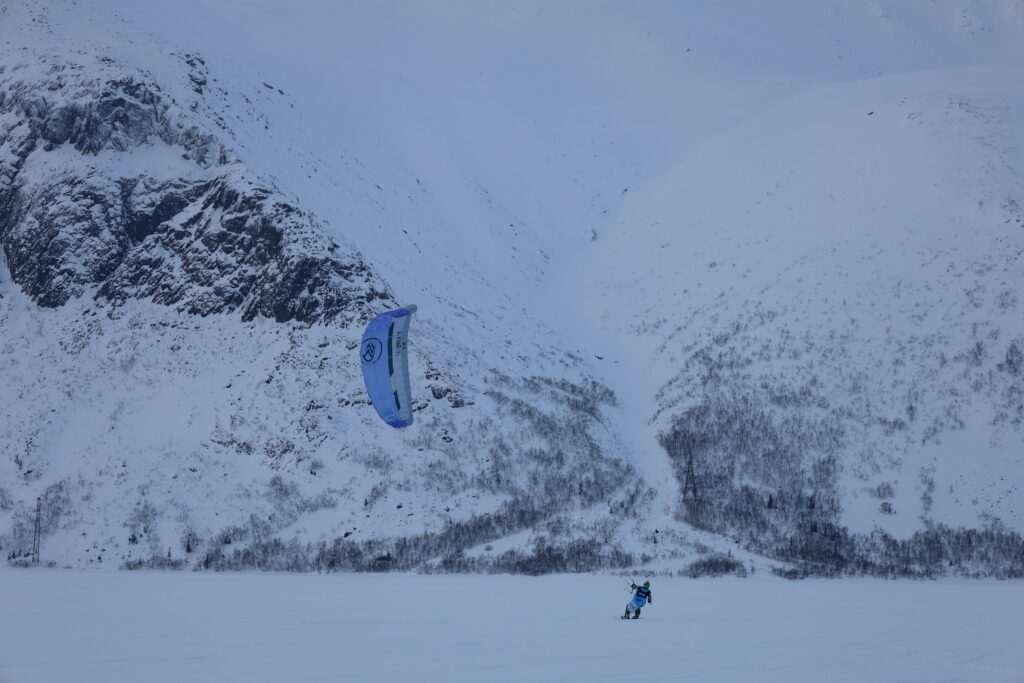
Alaska’s open frozen lakes and high mountain passes create wind conditions and unobstructed terrain that make the state one of the better locations in North America for snowkiting — the discipline where a large power kite pulls a skier or snowboarder across snow rather than through water. The combination of reliable arctic winds, vast flat frozen lake surfaces, and alpine terrain accessible from Anchorage within an hour puts serious wind sport options within reach of visitors willing to look beyond the standard ski resort experience. This guide covers snowkiting and winter paragliding near Anchorage in 2026, where the best terrain and conditions are, what skill and equipment these sports require, and how to connect with the Alaska community that practices them.
What Snowkiting Is
Snowkiting uses a large inflatable kite (typically 6–15 meters depending on wind conditions and rider weight) connected to a control bar to harness wind power across a snow surface. The rider wears skis or a snowboard and uses the kite’s power to travel upwind, downwind, and across the wind — a fundamental advantage over regular skiing that lets snowkiters climb terrain without lifts, travel long distances across frozen lakes, and achieve speeds unavailable to human-powered winter travel. Advanced snowkiters do jumps and tricks; beginners focus on controlling the kite and managing power.
Snowkiting differs from surfkiting (kiteboarding on water) in that the snow surface provides friction that slows crashes and the rider doesn’t need to worry about water entry. It also differs significantly from parasailing or powered paragliding — snowkiting is unpowered (wind-dependent) and self-directed. Learning to snowkite requires first learning to fly a kite on the ground, then progressing to body dragging (kite drags you across snow without skis), then adding skis or a board to the system.
Eklutna Flats
The Eklutna Flats, the wide flat estuary of the Eklutna River where it meets the upper arm of Cook Inlet approximately 25 miles northeast of Anchorage, freeze solid in winter and offer an enormous flat surface exposed to consistent winds channeled down the inlet. This area sees regular use by Anchorage-area snowkiters who take advantage of the unobstructed surface and reliable outflow winds. Access is via the Old Glenn Highway corridor; the Flats are on state land and open to recreation. Wind conditions vary — the Flats work well when the inlet’s katabatic winds are running, which happens often in deep winter.
Hatcher Pass
Hatcher Pass, 70 miles north of Anchorage near Palmer, provides a different snowkiting environment: alpine terrain with variable winds, steeper gradients, and the ability to use kite power to travel uphill on skis that would otherwise require a skin track. The open bowls above the pass road see snowkiting when winds cooperate, and the proximity to established ski terrain means conditions are easier to assess before committing to the drive. Hatcher Pass snowkiting suits intermediate to advanced riders — wind predictability in mountain terrain is lower than on flat lake surfaces, and terrain management with a kite in hilly terrain requires solid skill.
Turnagain Pass and Long Lake
Long Lake, visible from the Seward Highway south of Anchorage near Turnagain Pass, freezes reliably and offers a flat surface accessible from the highway pull-off. The lake sees less dedicated snowkiting use than Eklutna Flats but provides a convenient intermediate option when Seward Highway access is the priority. Turnagain Pass itself — the same area popular with backcountry skiers and snowmachiners — offers alpine terrain for more experienced snowkiters looking to combine kite power with the area’s substantial snowpack.
Winter Paragliding and Speed Riding
Winter paragliding and speed riding (a hybrid discipline combining paraglider and skis) are practiced by a small but active Alaska community, primarily at Hatcher Pass and the Chugach Mountains above Anchorage. Speed riding in particular — where a small wing provides a combination of gliding and skiing that allows extremely fast descent on steep terrain — has followers in the Girdwood and Hatcher Pass community who fly in the same terrain they ski.
Paragliding in Alaska requires navigating variable mountain weather that doesn’t follow continental US patterns. Anchorage’s proximity to Cook Inlet creates rapid weather changes; the Chugach Mountains generate rotor conditions on their lee sides. Alaska paragliders typically have significant experience before flying here — the state’s flying community is self-organized through the Alaska Paragliding Association, which maintains site guides and current conditions for known flying areas. Hatcher Pass is the most established Anchorage-area paragliding site; Bodenburg Butte near Palmer provides a beginner-accessible hill with consistent wind behavior.
Finding the Alaska Snowkiting and Paragliding Community
Neither sport has formal commercial instruction in the Anchorage area — both operate as self-taught communities where beginners learn from more experienced practitioners rather than through certified school programs. The Alaska Paragliding Association maintains an online presence and connects new pilots with local mentors. For snowkiting, Alaska Kiteboarding (based in Anchorage, operating primarily in summer on water) has members who also kite on snow in winter — contacting the club through its social media presence is the most direct path to finding current Eklutna Flats and Hatcher Pass snowkiting activity.
Equipment for snowkiting runs $1,500–$3,500 new for a complete kite, bar, and lines setup; add skis or a board and boots suitable for the discipline. Rental equipment isn’t widely available in Anchorage — most practitioners own their gear. For new or replacement gear, Powder Hound Ski & Bike Shop in Anchorage carries winter sports equipment and can advise on layering and binding needs; Alaska Mountaineering & Hiking stocks technical cold-weather outerwear appropriate for extended exposure on open snowfields. Visitors interested in a first snowkiting experience should plan around connecting with a local who can provide a brief introduction on their equipment, which requires advance relationship-building through the local community before arrival.
Visitors looking for guided introductions to Alaska’s winter backcountry in the terrain where snowkiting operates can connect with Alaska Alpine Adventures, which runs winter mountaineering and ski touring trips in the Hatcher Pass and Turnagain Pass corridors.
Our Anchorage winter activities guide covers the full range of winter sports infrastructure near Anchorage, including the Hatcher Pass and Turnagain Pass terrain that forms the backdrop for snowkiting at the alpine end of the spectrum. Our snowshoeing near Anchorage guide covers access logistics for the same mountain terrain that winter kite and paragliding practitioners use.
Photo by Sinitta Leunen on Pexels.




No comments yet.