
Cooper Landing Alaska 2026 — Kenai River Rafting, Russian River Fishing & Canyon Views
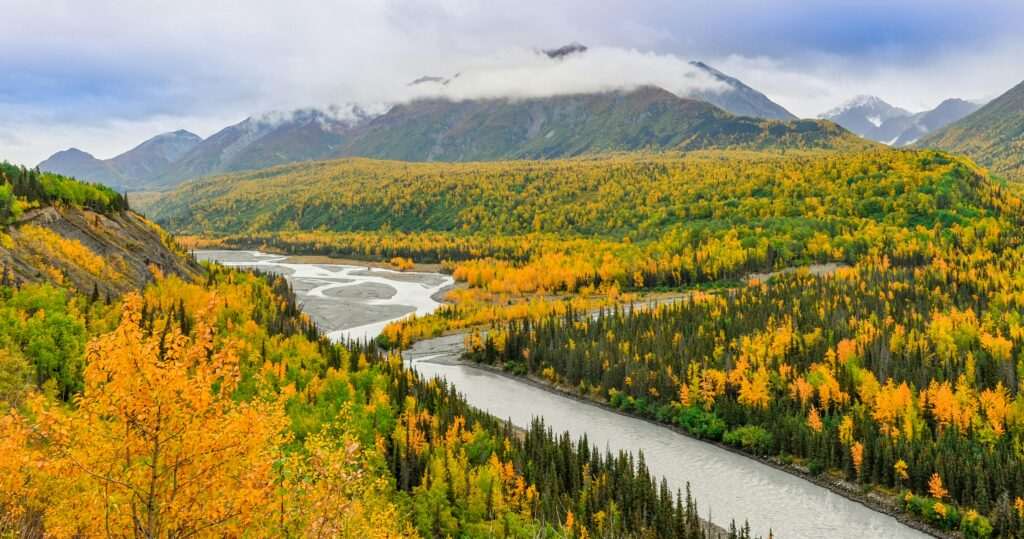
Two hours south of Anchorage at the junction of the Kenai River and the Russian River, Cooper Landing sits in a narrow canyon valley that punches well above its size. The community is small — a few outfitters, a handful of lodges, a general store — but the landscape it occupies is among the most productive outdoor recreation terrain on the Kenai Peninsula. The river is wild and turquoise and full of salmon. The canyon walls above it are steep and wooded. Within a mile of the road, the bears outnumber the people. Cooper Landing delivers concentrated Alaska wilderness within a day’s drive of Anchorage, and the drives in and out are among the best in the state.
Getting There
Cooper Landing is approximately 100 miles south of Anchorage via the Seward Highway south, turning left onto the Sterling Highway at the Tern Lake junction. The Seward Highway section runs through Turnagain Arm and climbs over Turnagain Pass — one of the most scenic two-lane drives in Alaska — before the Sterling Highway junction marks the transition to the Kenai Peninsula interior. Cooper Landing is roughly 10 miles west of that junction. The total drive takes about two hours from Anchorage in normal conditions.
Kenai River Rafting
The Kenai River canyon below Cooper Landing is the main attraction for visitors who are not fishing. Several outfitters based in the community run guided whitewater raft trips through the canyon section, which runs Class II to Class III rapids through a gorge flanked by spruce and cottonwood. The scenery is exceptional — the river is a deep glacial blue-green, and the canyon walls rise sharply above both banks. Guided trips are appropriate for beginners and families; the outfitters provide all equipment, and the canyon float typically runs two to three hours. Advance booking is recommended for summer weekends, when the most popular departure times fill quickly.
Russian River Fishing
The Russian River confluence with the Kenai is one of Alaska’s most accessible and productive sockeye salmon fisheries. Two distinct sockeye runs peak in late June and late July, and the stretch near the confluence is designated flies-only bank fishing. At peak timing, the crowding earns its reputation — anglers shoulder to shoulder on the bank is the defining image of “combat fishing.” Outside those windows the water is significantly quieter and the fishing remains good. A current Alaska sport fishing license is required; check ADF&G run timing reports before the trip.
Kenai Lake
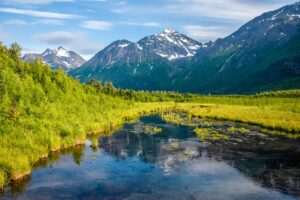
Cooper Landing sits at the eastern end of Kenai Lake — a glacially-fed lake with the vivid turquoise color characteristic of glacier-melt water systems. The lake stretches several miles to the west and is visible from the road and from the eastern shore near the community. On calm days it reflects the surrounding spruce-covered ridges and the snow patches that persist on higher terrain through early summer. It is not a hiking destination so much as a visual reward — the kind of scene that stops most first-time visitors mid-sentence.
Resurrection Pass Trailhead
The southern terminus of the Resurrection Pass Trail is accessible from Cooper Landing. The trail runs 38 miles north through subalpine terrain to Hope on Turnagain Arm — one of the classic multiday routes in Southcentral Alaska, with Forest Service cabins available for advance reservation. Day hikers can access the first few miles from the Cooper Landing trailhead; the trail climbs through boreal forest toward open alpine ground above the canyon.
Wildlife
Bears are the dominant wildlife story at Cooper Landing. Both brown and black bears concentrate at the Russian River confluence during salmon runs, and sightings from the fishing access road and campground are routine in June and July. Bear spray is standard equipment, and fishing with other people nearby reduces risk. Bald eagles work the river corridor throughout summer, perching above the confluence and diving on spent salmon. Moose are common in the willow thickets along the river margins, particularly in early morning.
Season and Practical Information
June through August is peak season. The Russian River sockeye runs anchor June and July; rafting operates May through September. September brings fall color to the canyon walls and significantly smaller crowds. Book rafting trips in advance for summer weekends; arrive early for fishing access parking, which fills before 7am at peak timing. The nearest full-service facilities are in Soldotna, about 40 miles south.
Combining with the Kenai Peninsula
Cooper Landing is positioned to anchor a larger Kenai Peninsula day or overnight loop. Seward, another 1.5 hours south via the Sterling and Seward Highways, adds the Alaska SeaLife Center and Kenai Fjords glacier cruise access to the itinerary. Visitors driving a Kenai Peninsula loop — down the Seward Highway, through Cooper Landing, and back north via the Sterling Highway — cover some of the best scenery the Kenai has to offer in a single extended day.
How far is Cooper Landing from Anchorage?
Cooper Landing is approximately 100 miles south of Anchorage — about two hours by car via the Seward Highway south to the Sterling Highway junction at Tern Lake, then west on the Sterling. The Seward Highway portion is one of the most scenic drives in Alaska.
When is the Russian River fishing at its peak?
The Russian River sockeye salmon fishery has two runs: the first peaks in late June, the second in late July. Both produce the “combat fishing” scene at the Russian-Kenai confluence. The flies-only bank section requires an Alaska sport fishing license; check current Alaska Department of Fish and Game run timing reports before heading out.
Is Kenai River rafting appropriate for beginners?
Yes — guided raft trips through the Cooper Landing canyon run Class II to III rapids and are appropriate for beginners and families when guided by a licensed outfitter. Equipment is provided. Book in advance for summer weekends.
What should I know about bears at Cooper Landing?
Both brown and black bears concentrate at the Russian River confluence during salmon runs. Bear spray is standard at Cooper Landing, particularly on the fishing access trails. Sightings are routine in June and July. Fishing in groups and making noise reduces encounter risk.
Cooper Landing is the kind of place that takes most Anchorage residents years to get to and then returns to every summer after that. The salmon run, the canyon float, the turquoise lake — it earns the drive south and then some. Head out early and stay for the afternoon light on the river.


No comments yet.