
Eklutna Lake Alaska: Day Trip, Hiking & Recreation Guide 2026
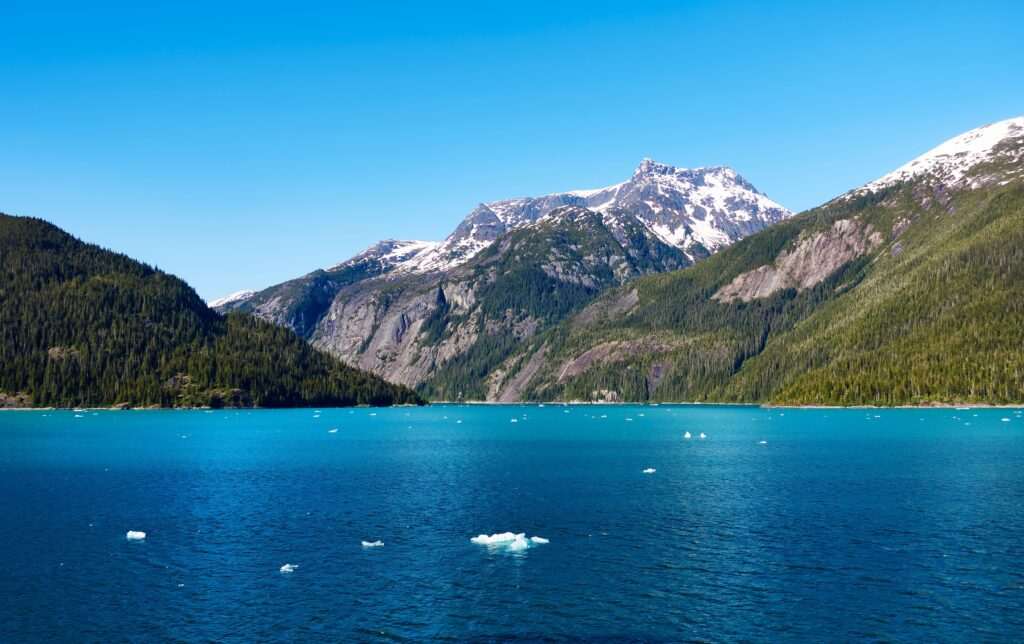
Eklutna Lake sits 35 minutes northeast of downtown Anchorage in the heart of Chugach State Park, and most visitors who drive past the turnoff on the Glenn Highway have no idea what they’re missing. The lake is Alaska’s largest body of water within the Anchorage bowl — 7 miles long, 870 acres, set between valley walls that rise to glaciated peaks above 8,000 feet. For a half-day or full-day escape from the city, Eklutna offers hiking, kayaking, camping, wildlife, and a dose of Indigenous and Russian Orthodox history that makes the visit genuinely layered, not just scenic. The drive up the lake road in any direction is worth the effort.
Getting There
From downtown Anchorage, take the Glenn Highway northeast toward the Matanuska-Susitna Valley. Take the Thunderbird Falls exit (Exit 24) and follow the signs to Eklutna Lake Road — a 10-mile paved access road that ends at the lake parking area. The drive takes 35–40 minutes from downtown in normal conditions. This is also the turnoff for the Eklutna Village historic site, which sits just 5 minutes from the Glenn Highway exit and makes a natural addition to the day trip.
Chugach State Park charges a day-use parking fee at Eklutna Lake — currently $5 per vehicle via self-pay kiosk. Annual passes are available for Alaska residents who visit the park frequently. The fee covers access to the lake, trailheads, and the campground day-use area.
The Eklutna Lakeside Trail
The Eklutna Lakeside Trail runs 13 miles along the eastern shore of the lake from the main trailhead to the Eklutna Glacier at the head of the valley. The trail is wide and relatively flat, with only modest elevation gain over its length — it follows the natural contour of the glacial valley floor. This makes it one of the most accessible multi-mile trails in the Chugach, suitable for hikers and cyclists of intermediate fitness without technical skill.
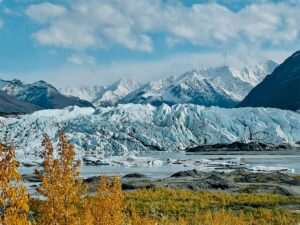
The trail surface is gravel and hardpack, well-maintained and passable for fat-tire bikes from spring through fall. Most day visitors target the first 5–6 miles — enough to reach the lake’s widest midpoint, gain full views of the surrounding peaks, and turn around without overcommitting. The full out-and-back to the glacier is 26 miles and requires either a very long day on foot or a bike. The trail eventually connects to the Eklutna Glacier overlook, where the blue-grey snout of the retreating glacier comes into view between the valley walls.
The valley walls on both sides rise sharply from the trail. On clear days — common in summer and early fall — the upper slopes of Twin Peaks and Bold Peak are visible, dusted with snow well into June. The trail itself passes through a mix of boreal forest, open rocky flats, and lakeside meadow that changes character with the light and season.
Twin Peaks and Bold Peak: More Serious Terrain
Hikers looking for elevation gain and ridge access should continue past the first few miles of the Lakeside Trail to pick up the Twin Peaks Trail, which branches from the main trail and climbs steeply to a ridgeline with panoramic views of the lake, the Knik Arm, and on clear days, Denali to the northwest. The round trip from the trailhead to Twin Peaks summit takes 6–8 hours and involves 3,700 feet of elevation gain — a genuine Chugach alpine day.
Bold Peak, at 7,522 feet, is the most prominent summit visible from the lake and a technical objective requiring scrambling skills. It is not a casual hike, but for experienced parties the routes to the upper mountain are described in the Alaska alpine literature and the views from the upper flanks are among the finest accessible from Anchorage.
Kayaking and Canoeing the Lake
Eklutna Lake’s 7-mile length makes it one of the best flatwater kayaking destinations accessible from Anchorage. The lake is cold year-round — water temperatures rarely exceed 50°F even in midsummer — and winds can pick up through the afternoon as air moves down the valley. Morning is the calmest time on the water, and the reflection of the surrounding peaks in still water at 8 a.m. is worth setting an early alarm.
Lifetime Adventures at Eklutna Lake operates the lake’s rental concession from late May through September, offering kayaks, canoes, and paddleboards by the hour and the day. This is the only rental operation at the lake — if you want to paddle without hauling your own boat, plan around their seasonal schedule. Reservations are recommended on summer weekends when demand is high.
Paddlers launching from the main beach can work their way up the lake’s eastern shore and find a series of small coves and gravel beaches suitable for lunch breaks and wildlife observation. The western shore is more exposed but offers closer views of the valley walls and avalanche chutes that feed from the upper terrain. Bears are occasionally spotted on the shoreline — maintain distance and stow food appropriately.
Camping at Eklutna Lake
The Chugach State Park campgrounds at Eklutna Lake offer tent and RV-accessible sites at the main campground near the trailhead parking area. The campground is one of the more popular Chugach sites because of its lake access and protected valley location. Sites fill quickly on summer weekends — reserve in advance through the Alaska State Parks reservation system, particularly for July and August.
A second, more primitive campground (Twin Peaks Campground) sits several miles up the Lakeside Trail, accessible by bike or on foot. This backcountry option is available first-come, first-served and provides a quieter alternative for campers willing to carry their gear in. Fires are permitted in designated rings; bear boxes are provided at both campgrounds.
For those combining Eklutna with other Glenn Highway destinations, the lake campground serves as a practical base for multi-day exploration of the Matanuska Valley, Thunderbird Falls trail, and the Eklutna Village historic site.
Eklutna Village and Russian Orthodox Heritage
Five minutes from the Glenn Highway exit, before you reach the lake, the historic Eklutna Village occupies the oldest continuously inhabited Dena’ina Athabascan settlement in the Anchorage region. The site’s cemetery is one of the most visually striking in Alaska: rows of small painted spirit houses — miniature structures built over Dena’ina graves to shelter the spirit of the deceased — stand in a pattern that reflects the fusion of Dena’ina tradition and Russian Orthodox Christianity introduced by missionaries in the nineteenth century. Each spirit house is painted in family colors maintained by living relatives.
St. Nicholas Russian Orthodox Church, built in the 1870s on the foundation of an earlier log mission, still stands on the village grounds. Guided tours of the cemetery and church are offered seasonally by the Eklutna Native Village organization and provide essential context for the significance of individual spirit houses and the community’s ongoing stewardship of the site. The village cemetery is an active burial ground — visit with corresponding respect.
Wildlife
The Eklutna Valley supports healthy populations of moose, black bears, and brown (grizzly) bears, along with Dall sheep visible on the upper scree slopes and bald eagles soaring over the lake from spring through fall. Moose are most commonly spotted near the lake outlet, in the meadows along the first few miles of the Lakeside Trail, and at the lake’s margins in early morning. Bears follow the berry patches in late summer — blueberries, highbush cranberries, and soapberries ripen along the trail corridor in August and September.
Bring bear spray on any hike into the valley. The terrain is genuine bear habitat, not a zoo or park designed for passive viewing. Making noise on the trail, especially in forested sections with limited sight lines, is standard practice throughout the Chugach.
Planning Your Visit
The Eklutna Lake area is accessible and enjoyable from May through October, with peak conditions in June through September. Snow lingers on the upper trails into June in most years; the lake campground typically opens by late May. The Lakeside Trail dries out quickly after snowmelt and is generally rideable on bike from late May.
For a half-day trip from Anchorage, a drive up the lake road with a 3–4 mile walk along the Lakeside Trail covers the essential ground — lake views, boreal forest, valley walls, and the chance of moose in the willows along the shore. For a full-day visit, add a kayak rental, a hike up the Twin Peaks Trail to gain elevation, or extend the lakeside walk to the 8-mile mark where the valley narrows and the glacier comes into the frame.
Stop at the Eklutna Village on the way in or out — the 30-minute stop adds a historical and cultural dimension that makes Eklutna genuinely different from a standard state park visit. The combination of Indigenous heritage, Russian Orthodox architecture, glacial lake, and alpine terrain in a single 35-minute drive from Anchorage is unusually rich, even by Alaska standards.
Featured photo by Simon Hurry on Pexels.
No comments yet.