
Salmon Fishing Near Anchorage Alaska: Best Spots & Seasons 2026
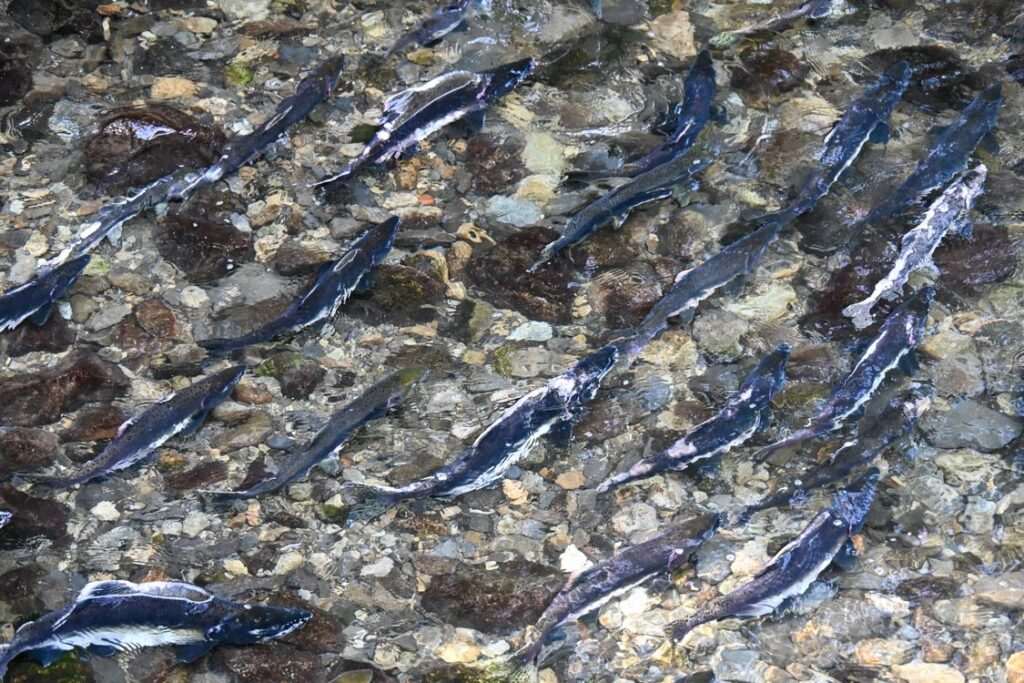
Salmon fishing near Anchorage isn’t just accessible — it’s the kind of accessible that surprises visitors from the Lower 48. You can catch king salmon a short walk from downtown hotels at Ship Creek. Within two to three hours, you’re on the Kenai River, one of the most productive salmon rivers in the world. This is what salmon fishing in Southcentral Alaska looks like in 2026: four species, multiple runs, spots ranging from urban walk-up fishing to guided float trips, and a season that stretches from late May into September. Here’s how to plan it.
Species and Seasons: What Runs When
The salmon calendar near Anchorage covers most of summer, with different species peaking at different times. Knowing the schedule matters as much as knowing the spots.
King (Chinook) salmon run May through July, with peak fishing typically in late May and June. Kings are the largest Pacific salmon — 20 pounds is a common fish on the Kenai, and 50-plus pounds is possible — and they’re the most prized. The Ship Creek run in downtown Anchorage is a reliable king salmon fishery in June and early July. King salmon fishing requires both an Alaska Sport Fishing License and a separate King Salmon Stamp.
Sockeye salmon are the volume fish near Anchorage. The Russian River confluence with the Kenai River, about 90 miles south, is the most famous sockeye spot in the region — drawing elbow-to-elbow anglers during the July peak. The first run arrives in late June; a second, often larger run comes through late July into August. Sockeye are aggressive fighters and excellent eating.
Pink salmon run July and August. On odd-numbered years, pink runs near Anchorage are massive, overwhelming some streams and making others spectacular. On even years like 2026, pinks are lighter but still present and worth targeting — they’re aggressive biters and provide fast-action fishing at accessible locations.
Silver (coho) salmon are the late-season prize, running August through September. Ship Creek gets silvers after the kings; the Kenai River’s fall coho fishing is excellent and considerably less crowded than the peak July sockeye runs. Silvers are hard strikers, strong fighters, and arguably the best-eating Pacific salmon.
Ship Creek — Salmon Fishing in Downtown Anchorage
Ship Creek is the anomaly that makes Anchorage unique among Alaskan cities. The creek runs through industrial land between downtown and the railroad yards, and every summer it fills with salmon visible from the road. The urban king salmon fishery runs June through mid-July; the silver run follows in August and September. You can walk here from most downtown hotels.
The lower creek near the mouth is where most angling happens — anglers stand shoulder-to-shoulder during the June king run in what locals call combat fishing, and it’s part of the experience. The Ship Creek Salmon Viewing Area offers free viewing platforms where you can watch king salmon holding in the clear water even if you’re not fishing. The fish are clearly visible, which makes it as much of a wildlife spectacle as a fishing destination.
The gear is straightforward: a medium-heavy spinning or casting rod, 20–30 lb test line, and salmon spinners or cured roe. Hip waders are useful for accessing the best water. Fishing requires a valid Alaska Sport Fishing License plus the King Salmon Stamp for kings — pick these up at any Anchorage sporting goods store or online at the Alaska Department of Fish and Game website before you go.
Russian River — Sockeye Central
About 90 miles south of Anchorage on the Sterling Highway, the Russian River confluence with the Kenai River is the sockeye capital of Southcentral Alaska during the July runs. The Russian River Ferry — a hand-pulled cable crossing operated during the season — connects the campground to the best fishing water. Limits vary by run strength, and emergency orders can restrict openings with short notice — check the Alaska Department of Fish and Game regulations before every outing.
Russian River fishing means close quarters — with other anglers and with brown bears. Bears follow the salmon runs just as anglers do, and encounters on the access trail are common enough that trailhead signage posts current bear activity during peak season. Carry bear spray and make noise on the forested trail in to the water.
Kenai River — A Day Trip Worth the Drive
The Kenai River’s main sport fishing area around Soldotna and Cooper Landing is 2.5 to 3 hours from Anchorage via the Seward and Sterling Highways. It’s arguably the best all-around salmon river in Alaska: kings from May through July, sockeye through August, silvers in September. The Kenai produces world-class numbers across all four species, and the sport fishing villages of Soldotna and Cooper Landing are well set up for guided day trips from Anchorage.
Guided charter fishing on the Kenai removes the logistics of accessing the best water and adds local expertise about which sections are producing on a given day. Big Time Alaskan Fishing Adventures and Cook Inlet Charters operate guided trips throughout the season, from half-day floats to full-day drift boat experiences. Book Kenai River guided trips months in advance — peak season (June and July) fills fast and walk-up availability is rare.
Most visitors drive out and back in a day, though staying overnight in Soldotna gives you flexibility for early-morning fishing when the river is least crowded and the salmon are most active. If you’ve got time for only one overnight from Anchorage during the salmon season, the Kenai River is where to spend it.
Eklutna Tailrace — Fishing Close to Anchorage
The Eklutna Tailrace is the outflow from the Eklutna Hydroelectric Project, about 35 miles north of Anchorage off the Glenn Highway. The tailrace stays open year-round and supports rainbow trout and Dolly Varden fishing through winter — a legitimate option when the salmon runs are over. It’s not salmon fishing, but it fills the off-season gap in a way few places near Anchorage can. Lifetime Adventures at Eklutna Lake runs guided outdoor experiences in the area if you want local expertise on the water.
Licenses and Regulations
Every angler in Alaska needs a valid Alaska Sport Fishing License, available online through the Alaska Department of Fish and Game, at most Anchorage sporting goods stores (REI, Bass Pro Shops, and Sportsman’s Warehouse all stock them), or via the ADF&G mobile app. King salmon require a separate King Salmon Stamp on top of the base license. Non-resident licenses cost significantly more than resident licenses — factor this into your trip budget.
Regulations change each season based on run strength. The ADF&G publishes emergency orders during peak season that can restrict or open specific fisheries with as little as 48 hours notice. Don’t assume last season’s rules apply — check before every outing, particularly at high-traffic fisheries like the Russian River.
Guided vs. Self-Guided Fishing
Self-guided fishing at Ship Creek is the natural entry point for most first-time Anchorage salmon anglers. You can walk there from downtown hotels, gear requirements are minimal, and the fish are visible from the bank — the combination makes it easy to get on the water without much planning.
The Russian River is still self-guided but requires more preparation: camping nearby or the round-trip drive from Anchorage, waders, and willingness to fish in close company with other anglers and bears. It’s the step up from Ship Creek that most dedicated salmon anglers take when they want volume and variety.
The Kenai River rewards guided investment. Float trips and drift boat fishing cover water that’s inaccessible from the bank, and guides know which sections are producing and which tactics are working on a given day — a meaningful advantage over fishing blind from shore.
What to Pack
A medium-heavy rod (8–9 feet), spinning or baitcasting reel with 20–30 lb test monofilament or braid, and a selection of salmon spinners, spoons, and cured roe covers most scenarios near Anchorage. Hip waders are useful for Ship Creek and the Russian River; chest waders give you more flexibility if you’re fishing multiple locations on a trip. A fish bonker and a cooler for transport are necessities. If you’re flying in and out of Anchorage, most charter operators can coordinate vacuum-sealing and shipping fresh salmon at the end of your trip — worth asking about when you book.
What salmon species can you catch near Anchorage?
Four Pacific salmon species run near Anchorage: king (Chinook), sockeye, pink, and silver (coho). Kings run May through July with the urban Ship Creek fishery in downtown Anchorage accessible without a car. Sockeye peak in July at the Russian River confluence with the Kenai River, 90 miles south. Silvers run August through September at Ship Creek and on the Kenai. Pink salmon run July and August and are particularly strong on odd-numbered years.
Do you need a fishing license to salmon fish near Anchorage?
Yes — Alaska requires a valid Alaska Sport Fishing License for all anglers, with a separate King Salmon Stamp required specifically for king salmon fishing. Non-resident licenses are available online through the Alaska Department of Fish and Game, at sporting goods stores in Anchorage, or via the ADF&G mobile app. Licenses are required even at free public access points like Ship Creek, and ADF&G enforcement officers check regularly during peak season.
How far is the Kenai River from Anchorage?
The Kenai River’s main sport fishing area around Soldotna and Cooper Landing is 90 to 120 miles south of Anchorage — about 2.5 to 3 hours via the Seward and Sterling Highways. Most visitors make it a day trip with a guided charter, though overnight stays in Soldotna give you access to early-morning fishing and the flexibility to extend if conditions are exceptional.
Is Ship Creek worth fishing for salmon?
Yes, particularly during the king salmon run in June and early July. Ship Creek is one of the few places in North America where you can catch a king salmon within walking distance of a major city’s downtown hotels. It’s combat fishing during the peak run — crowded, with anglers fishing at close quarters — but the combination of accessible water, visible fish, and the urban backdrop makes it one of the more memorable experiences in Alaska fishing. Silvers arrive in late summer for a second season that’s less crowded and equally worth fishing.
The salmon calendar near Anchorage gives you options across five months and four species, from a 10-minute walk to a 3-hour drive. Ship Creek in June for kings is the best introduction; the Kenai River anytime during summer is the benchmark. If you’re in Anchorage between late May and September and you want to fish, you’re in the right place at the right time — the question is just how far you want to drive.
Featured photo by Beth Fitzpatrick on Pexels.

No comments yet.