
Botanical Illustration Classes and Workshops in Anchorage: Art, Science, and Alaska Wildflowers
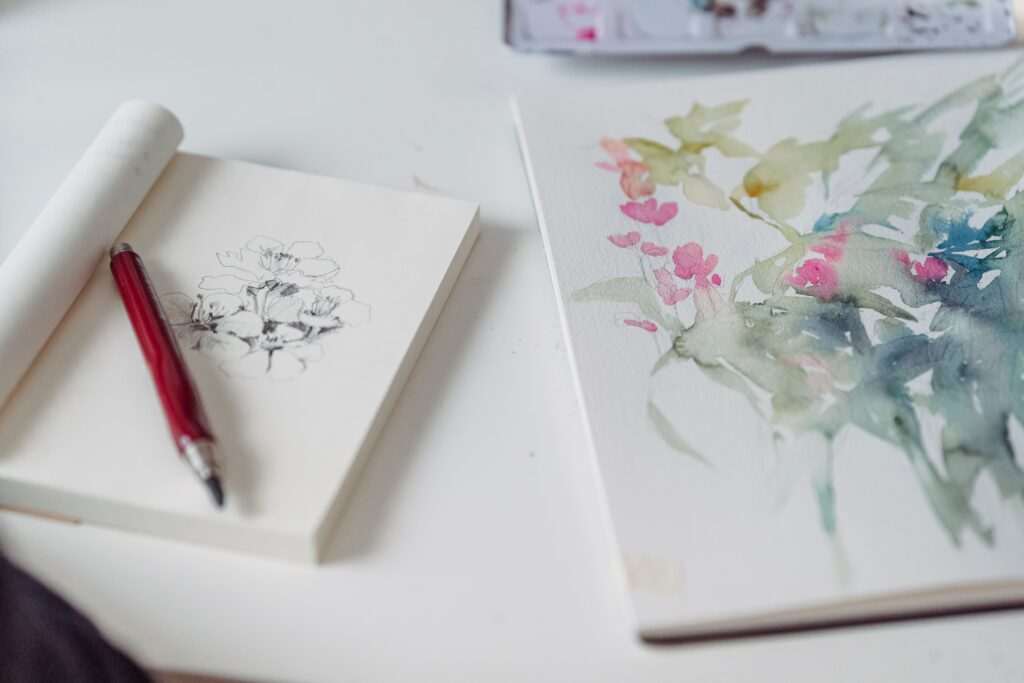
Botanical illustration occupies a precise intersection between art and science — it exists to depict plants with enough accuracy to serve scientific documentation while producing images of genuine aesthetic beauty. The tradition predates modern taxonomy: Renaissance herbals contained woodcut botanical images intended to help physicians identify medicinal plants; the great botanical expeditions of the 18th and 19th centuries employed trained illustrators who worked alongside naturalists to produce the plates that still define how entire plant families are understood visually. The Royal Botanic Gardens at Kew maintains an archive of botanical illustration that encompasses centuries of work, and contemporary illustrators trained in the tradition produce pieces that bridge scientific rigor and fine art quality. Botanical illustration’s current revival in the broader art world reflects both a renewed interest in natural history aesthetics and the meditative quality of observational drawing — studying a single plant specimen closely enough to render it accurately produces a depth of attention to living form that’s increasingly rare in fast-moving visual culture. In Anchorage, botanical illustration workshops have found a receptive audience drawn to Alaska’s extraordinarily rich wildflower and plant vocabulary, from fireweed to lupine to forget-me-not to the complex lichens that cover the boreal forest floor. This guide covers the history, techniques, accuracy vs. style, composition, specimen preparation, and beginner projects in 2026.
History: From Renaissance Herbals to Kew Gardens
The earliest European botanical illustrations were woodcuts in printed herbals — medical and botanical texts that proliferated after the invention of moveable type in the 15th century. These images were sometimes copied from earlier manuscripts and accumulated errors with each reproduction; accuracy was secondary to tradition. The shift toward observed illustration came in the 16th century when artists like Albrecht Dürer produced plant studies of extraordinary precision directly from living specimens — his “Large Piece of Turf” (1503) remains one of the most remarkable botanical images in art history.
By the 18th century, botanical illustration had become essential infrastructure for the expanding science of plant taxonomy. Artists sailed with explorers and worked in greenhouse settings to document plants previously unknown to European science. Georg Ehret, Pierre-Joseph Redouté (whose rose illustrations remain the standard of the genre), and Franz and Ferdinand Bauer produced thousands of plates that defined the visual vocabulary of botany. The tradition continued through the colonial botanical garden system — Kew Gardens, in particular, maintained a continuous school of botanical illustration that still operates.
Contemporary botanical illustration has expanded beyond scientific publication into gallery exhibitions, limited-edition prints, and the personal art practice of naturalists and plant enthusiasts worldwide. The American Society of Botanical Artists and similar organizations have established rigorous training standards and exhibition programs that treat botanical illustration as a fine art discipline in its own right.
Watercolor and Graphite Techniques
Two media dominate botanical illustration, each with specific applications:
Watercolor
Watercolor is the primary medium for published botanical illustration and the one most people associate with the tradition. The transparency of watercolor allows layered glazing to build depth and color complexity; the medium’s capacity for precise edge control (wet-on-dry technique) produces the clean, sharp boundaries between leaf surface and background that characterize botanical work. Specific botanical watercolor techniques include:
- Wet-on-dry for edges: All botanical edges — the precise silhouette of a petal, the clean line of a leaf margin — use wet paint on dry paper to produce sharp, controlled boundaries. Wet-on-wet passages (soft shadow areas within a form, background washes) are contained within these hard-edge boundaries.
- Layered glazing for depth: Building color through multiple transparent layers — rather than mixing to the final color and applying it once — produces the depth and luminosity that distinguishes fine botanical work from amateur illustration. Five thin glazes produce better results than one thick application.
- Lifting highlights: Small, precise highlights on berries, stems, and water droplets are lifted from wet paint with a damp brush or a piece of masking tape rather than left unpainted — this produces the rounded, three-dimensional quality that makes botanicals read as solid, not flat.
Graphite
Graphite pencil botanical illustration produces results with exceptional fine detail — the ability to render individual trichomes (leaf hairs), scale textures, seed surface patterns, and fine venation is greater in graphite than in any other medium. Graphite illustration has a long tradition in scientific publication where color printing was prohibitively expensive. Contemporary graphite botanical illustration achieves extraordinary realism through progressive tonal layering — building from light pencil marks to dense, burnished tones — and careful attention to the direction of mark-making (marks follow the surface form, as in classical drawing technique). Graphite additionally works as preliminary underdrawing for watercolor botanical work.
Scientific Accuracy vs. Artistic Style
The defining tension in botanical illustration is the balance between scientific documentation and artistic expression. Scientific botanical illustration for taxonomic purposes prioritizes accuracy above all else: the illustration must show identifying characteristics clearly, reproduce in print, and survive the scrutiny of botanists who’ll use the image to identify species. Artistic botanical illustration — for gallery work, prints, and personal practice — can subordinate strict accuracy to compositional and aesthetic choices: exaggerating color saturation, choosing unusual viewpoints, composing multiple species together for visual interest.
Most contemporary practitioners work along a spectrum between these poles, and workshop instruction typically teaches the observational skills and technical accuracy of the scientific tradition as the foundation from which artistic choices can be made. You can’t choose to simplify a form effectively without first understanding what makes it botanically accurate — the abstraction has to be deliberate.
Composition and Negative Space
Botanical illustration’s compositional conventions developed to serve both scientific and aesthetic purposes simultaneously. Key principles:
- Show all life stages when possible: A complete botanical plate typically shows the plant at flower, fruit, seed, and leaf stages in the same composition — providing maximum identification information while creating visual rhythm through varied forms. Multiple developmental stages of the same plant arranged together produce the characteristic “specimen sheet” aesthetic of traditional botanical illustration.
- Use negative space actively: The white (or tinted) background of a botanical illustration isn’t empty — it defines the plant form as clearly as the painted areas. The shape of the background between leaves and stems is as compositionally active as the plant itself.
- Ground the plant without creating a landscape: Traditional botanical illustration places the specimen against a neutral background without environmental context, though a cut stem end or a subtle shadow ground the form without suggesting a specific setting. Contemporary botanical work increasingly incorporates environmental context, which enriches the image at some cost to botanical convention.
Plant Specimen Preparation
Working from live specimens produces the most accurate botanical illustration. Specimen preparation:
Cut stems should be kept in water until the last possible moment before drawing; wilted specimens distort proportions. Pressing specimens flat temporarily helps study leaf venation and surface detail but flattens three-dimensional forms. Rotating the specimen under consistent lighting to understand its three-dimensional structure before committing to a viewpoint prevents compositional problems mid-illustration. Photography as reference for ephemeral details (individual flower positions, dewdrops, color before fading) supplements live observation without replacing it.
Alaska specimens available to Anchorage botanical illustrators include some of the most visually distinctive plants in North America: fireweed (Epilobium angustifolium) with its distinctive magenta spike and delicate petal structure; lupine (Lupinus nootkatensis, the Nootka lupine native to Southcentral Alaska); forget-me-not (Myosotis asiatica, Alaska’s state flower); wild geranium, crowberry, bog rosemary, and the extraordinary diversity of mosses, lichens, and ferns that characterize the boreal and coastal plant communities surrounding Anchorage.
Beginner Projects: Leaves and Flowers
Two project types develop foundational botanical illustration skills effectively:
Single leaf study: A single leaf rendered in graphite or watercolor — focusing on venation pattern, surface texture, margin detail, and the dimensional quality of a folded or curled leaf — develops observational accuracy and tonal technique in a contained, achievable composition. Alaska’s birch and alder leaves, with their distinctive dentate margins and clear venation, make excellent beginner subjects.
Single flower study: A cut flower head — a fireweed floret, a lupine cluster, a wild rose — rendered with attention to petal layering, color gradation, and the three-dimensional structure of petals emerging from a calyx teaches the layering and glazing techniques central to botanical watercolor work. The flower’s temporary nature motivates disciplined, focused observation.
Botanical Illustration Workshops in Anchorage
Anchorage botanical illustration workshops range from 2-hour beginner sessions (producing a graphite or watercolor leaf or flower study) to multi-week courses developing a complete botanical plate over several sessions. The Alaska wildflower context gives Anchorage botanical illustration workshops a regional specificity — participants are often drawing specimens they’ve encountered hiking or in their own gardens, creating a direct connection between the observational practice and the surrounding landscape.
Workshop prices run $45–$90, with paper, pencils or paint, and fresh specimens (or high-quality photographic references) included. A botanical illustration starter kit (300gsm hot press watercolor paper, a small set of professional watercolors, a few rounds and a flat brush, an HB and a 2H pencil) costs $40–$70. Anchorage craft workshop participants can show and sell their finished work at year-round events including the Anchorage Market & Festival, the Anchorage Native Arts & Culture Festival, and the Alaska State Fair. Our free things to do in Anchorage guide covers the natural history museums, botanical gardens, and gallery spaces where Alaska botanical illustration is exhibited. Our Anchorage hiking guide covers the wildflower meadows, boreal forests, and coastal environments where Anchorage’s most distinctive botanical illustration subjects — fireweed, lupine, forget-me-not, boreal mosses — grow in greatest abundance.
Photo by Sarah Films on Pexels.


No comments yet.