
Matanuska Glacier 2026: Alaska’s Largest Road-Accessible Glacier
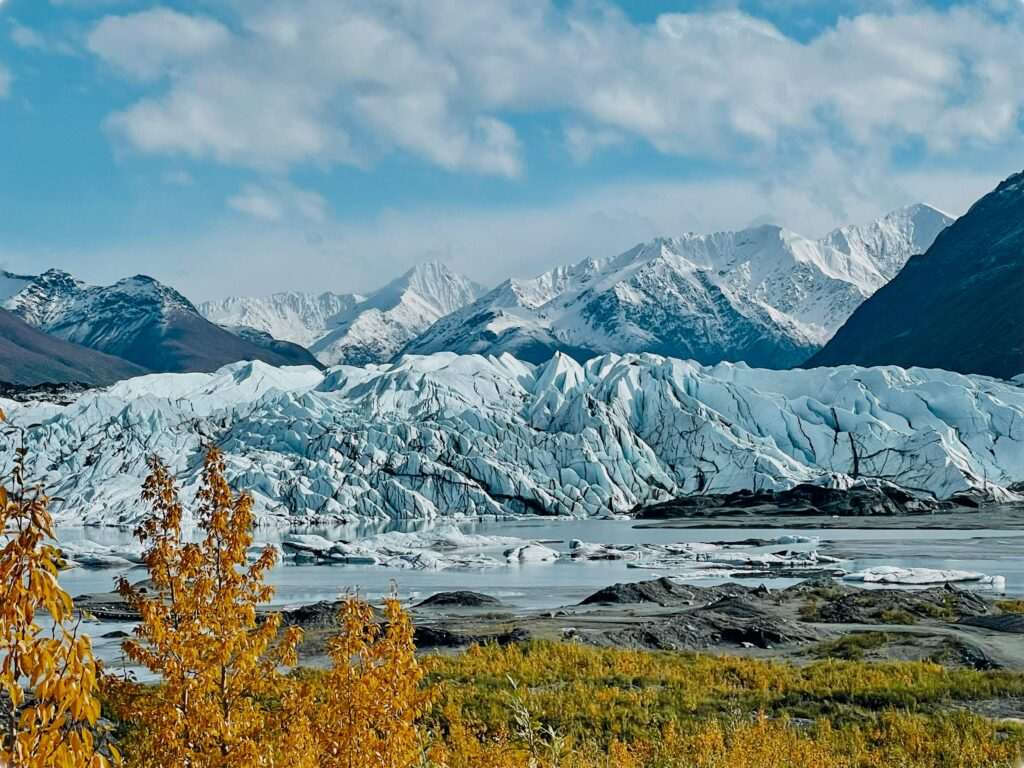
Matanuska Glacier is one of the most accessible glaciers in the United States — a 27-mile-long river of ice that terminates in a valley floor parking area, roughly 100 miles northeast of Anchorage via the Glenn Highway. Unlike tidewater glaciers viewed from boat tours or aerial glaciers reached by small plane, Matanuska puts visitors directly on active glacier ice via a short guided walk from the access road. For travelers who want to stand on a glacier without booking a backcountry expedition, it’s the best option in Southcentral Alaska. Here’s how to plan the day trip in 2026.
Getting There: The Glenn Highway Drive
The drive from Anchorage to Matanuska Glacier runs northeast on the Glenn Highway through Palmer, through the Matanuska-Susitna Valley, and into the glacier valley at roughly Mile 101. The highway itself is one of Alaska’s most scenic road corridors — it passes through the Matanuska-Susitna Valley farmland, gains elevation through the Chugach range foothills, and opens into the broad glacier valley with increasingly close views of the ice as you approach. Dall sheep are commonly visible on cliffsides above the highway in the lower canyon sections; moose appear in the valley flats on either side of Palmer. Our Glenn Highway scenic drive guide covers the best pullouts and wildlife viewing points along the full route.
Drive time from downtown Anchorage: 2 to 2.5 hours in normal traffic. The Glenn Highway is open year-round; winter driving requires preparation for ice and reduced daylight on the return trip. In summer, the long daylight means even a 10 a.m. departure gives plenty of time for a full glacier visit and return before dark.
Access and Admission: Guided vs. Self-Guided
Matanuska Glacier sits on private land, and access requires purchasing a pass through one of the permitted concessionaires or guiding operations at the glacier terminus.
| Option | Operator | What’s Included | Approx. Cost (2026) |
|---|---|---|---|
| Self-guided access | MICA Guides | Access pass + crampons; walk glacier at your own pace | $30–35/person |
| Guided ice walk | MICA Guides | 2–3 hour guided walk to blue ice caves and deeper glacier terrain | $95–125/person |
| Guided glacier hike | Nova Guides | Guided glacier hiking with ice-climbing option; crampons included | $99–150/person |
Self-guided access is the budget-conscious option and works well for visitors who want a close look at glacier ice without structured instruction. Crampons are included or rentable, and you can explore the accessible sections of the glacier face at your own pace. Guided tours go further — blue ice caves, deep crevasse edges, and the more dramatic interior terrain that casual walkers don’t reach on self-guided passes. Both MICA Guides and Nova Guides operate at the glacier and can be booked in advance online. Book ahead in summer; guided walk slots fill on peak weekends.
What to Bring
Glacier ice is cold, wet underfoot, and exposed to wind even in summer. Temperature on the glacier surface runs 10–15 degrees colder than the valley floor on warm days. Pack for this regardless of the Anchorage forecast:
- Layers: a mid-layer fleece or insulated jacket plus a waterproof shell is the standard setup. Even July can feel cold at the glacier face.
- Waterproof boots: the glacier surface involves meltwater streams and wet ice. Ankle-height waterproof hiking boots are the minimum; taller is better.
- Crampons: included with most guided tours and rentable for self-guided access. Don’t attempt the ice without them.
- Sunglasses: glacier glare is intense on sunny days. Polarized lenses help significantly.
- Camera: blue ice interior shots are among the most striking glacier photographs in Alaska. The deep blue coloring comes from compressed ancient ice that has expelled air — it photographs dramatically in overcast light.
Gear and waterproof layers are available in Anchorage before your departure. Powder Hound Ski & Bike Shop in Midtown carries shells, waterproof boots, and traction devices for visitors who need to kit out before heading northeast.
Photography on the Glacier
The blue ice caves inside the glacier are the signature photography location — the compressed blue ice walls and ceiling create dramatic color contrast against the dark interior. Best light for blue ice photography is overcast conditions, which diffuse harsh shadows. Bright sun creates glare on the exterior ice and washes out the blue coloring in wide shots. For dramatic exterior glacier shots showing the scale of the ice face, overcast days also produce more even light on the terminus wall.
Drone photography is subject to operator permissions — check with MICA or Nova Guides before flying anything. The glacier valley itself provides compelling landscape shots from the parking area and approach road: the blue-white ice framed by the Chugach peaks on both sides.
Nearby Stops on the Return
The Glenn Highway corridor offers two natural return-trip additions that extend a Matanuska glacier day into a fuller Southcentral Alaska loop:
Sheep Mountain Lodge at Mile 113 is the closest full-service stop to the glacier on the return route — a historic roadhouse lodge with food service and a panoramic view of the surrounding peaks and valley. Worth a stop for lunch or coffee before the drive back.
Hatcher Pass is accessible from the Palmer area on the return — a mountain pass above treeline with wildflower meadows, Independence Mine State Historical Park (Alaska’s largest gold rush-era mine complex), and exceptional views. The Hatcher Pass turnoff from the Glenn Highway adds about 45 minutes to the return trip and is most spectacular in late June through early August when the tundra is at peak color. For visitors interested in wildlife along the route, see our bear viewing near Anchorage guide — the Palmer-Hay Flats at the Glenn Highway’s southern end is one of the more reliable moose and black bear habitat zones on the return drive.
Best Times to Visit
Late June through August is peak season — the access road is fully clear of snow, guiding operations run full schedules, and the glacier ice is accessible without winter complications. September extends the season with fewer visitors and fall color in the valley, though blue ice caves may be less accessible as seasonal melt changes the interior structure. Winter visits are possible but require more planning — crampons and traction devices are essential on winter ice, temperatures at the glacier can drop significantly, and daylight is limited.
Planning Tips
- Book tours in advance: Guided ice walk slots on summer weekends fill well ahead. Book 1–2 weeks ahead for peak July visits.
- Leave Anchorage by 9 a.m.: A 9 a.m. departure from Anchorage reaches the glacier by 11:30 a.m., allows a 2–3 hour tour, and returns to Anchorage with time for dinner.
- Weather backup: Glacier visits work in light rain — the blue ice caves are actually more dramatic when the exterior is misty. Only lightning is a hard stop for guided tours.
- Combine with Glenn Highway stops: Hatcher Pass, Sheep Mountain Lodge, and the Matanuska-Susitna Valley make the full round trip feel like a tour of Southcentral Alaska rather than an out-and-back.
The Alaska Public Lands Information Center on 4th Avenue in Anchorage carries current road conditions for the Glenn Highway corridor and can confirm access status for the glacier approach road before you depart. Enterprise Rent-A-Car at Anchorage Airport is the most convenient vehicle pickup for visitors who need a rental before heading northeast on the Glenn.
No comments yet.