Whitewater Rafting Near Anchorage 2026 — Six Mile Creek, Matanuska River & Alaska Canyon Guide
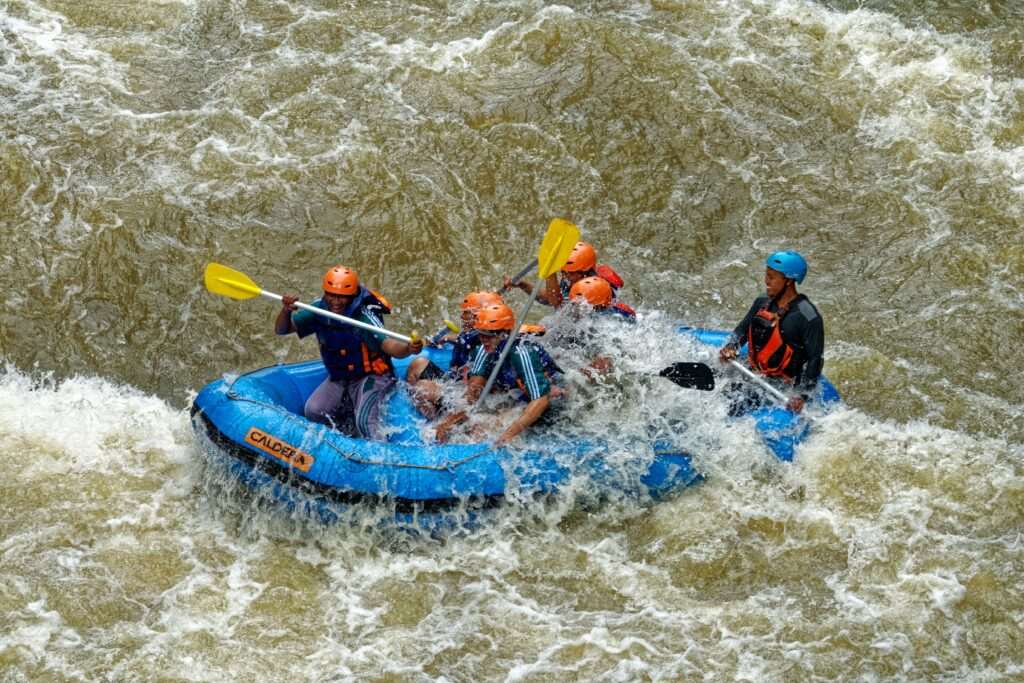
Two legitimate whitewater rivers sit within ninety minutes of Anchorage in opposite directions, and they cater to opposite ends of the skill spectrum. Six Mile Creek near Hope drops through a Class IV-V canyon ninety minutes south — one of the most demanding commercial rafting runs in Southcentral Alaska. The Matanuska River, northeast of Palmer, runs Class III-IV beneath the face of the Matanuska Glacier with guided options appropriate for first-timers and families. A whitewater day from Anchorage is not a compromise between scenery and difficulty. Both rivers offer both.
Six Mile Creek Canyon
Six Mile Creek runs into Turnagain Arm near Hope, a small community at the end of a spur road off the Seward Highway. The creek drops through three canyon sections classified Class IV to Class V — powerful hydraulics, narrow slot features, and basalt walls that leave little room for error. Commercial operators run guided trips through Canyon One and Canyon Two, the most commonly paired combination, with Canyon Three reserved for experienced paddlers at specific water levels.
Six Mile is guided-only. The canyon terrain makes self-rescue impractical, and the water temperature in summer runs between 38°F and 48°F — conditions requiring a drysuit, not just a wetsuit. Every legitimate operator provides drysuits, helmets, and paddle jackets as standard equipment. Total trip time on the water runs four to five hours; add drive time from Anchorage and the day spans eight to ten hours. The minimum age is typically sixteen for the full canyon combination. Cost runs $150 to $250 per person depending on the operator and which canyon sections are included.
Matanuska River
The Matanuska River runs glacier-fed and aquamarine through the broad valley between Palmer and the Glenn Highway corridor, roughly ninety miles northeast of Anchorage. The river carries Class III to IV water through the middle sections most commonly run by guided trips — genuine current and real rapids, but without the canyon confinement of Six Mile. The Matanuska Glacier is visible from the river on clear days, its blue-white face rising above the valley end in a way that is impossible to look away from.
The Matanuska is the beginner-accessible option near Anchorage. Guided trips run with participants who have never held a paddle before; most operators accept participants as young as twelve for the standard sections. Total time on the water is typically two to three hours for a half-day trip. The lower valley sections offer calmer water appropriate for younger children with some operators. Cold-water precautions apply here as on Six Mile — the river temperature stays near 45°F through midsummer, and wetsuits or drysuits are standard.
Outfitters and What to Expect
Chugach Adventures operates guided raft trips across Southcentral Alaska including whitewater outings in the Anchorage region. A full guided day on either river includes wetsuit or drysuit, helmet, paddle, and PFD. The guide’s safety briefing before launch covers paddle commands, self-rescue basics, and what to do if you come out of the boat. That briefing is short and the terrain is real — pay attention to it.
Book well in advance for July departures, when summer demand peaks and popular half-day slots fill weeks out. Most operators take online reservations. When comparing options, confirm which river sections are included, whether drysuit rental is covered in the price, guide-to-guest ratios, and whether transport to the put-in is provided. Tipping the guide at the end of a good trip is standard.
Choosing Your River
Six Mile Creek is the right choice for adults who want genuine whitewater challenge — committed canyon terrain, Class IV-V rapids that demand active paddling, and an immersive half-day in the gorge. It is not appropriate for first-timers, anyone with significant physical limitations, or children under sixteen.
The Matanuska is the right choice for families, first-timers, and visitors who want the Alaska river experience without the full commitment of Class V water. The scenery is exceptional — glacier color, valley views, and the kind of scale that reminds you where you are. Experienced rafters who have already run Six Mile often return for a Matanuska float specifically because the lower-stakes environment lets them look at the mountains instead of the next hydraulic.
Best Season and Practical Notes
June through August is the peak rafting window on both rivers. July offers the best combination of water level and weather consistency. September is possible on the Matanuska but many operators wind down operations after Labor Day. Water levels on Six Mile vary significantly by year and by week — guides make real-time decisions about which canyon sections to run based on the gauge. If your operator modifies the plan due to high water, that is a safety call, not a shortchange.
Wear a synthetic base layer under whatever your guide provides. Cotton absorbs moisture and drops your core temperature in cold-water conditions — leave it at home. Bring a dry change of clothes for after the trip; expect to be wet regardless of whether you swim. Secure cameras in the car — waterproof housings are the only reliable option on Class IV water.
Which river near Anchorage is best for beginners?
The Matanuska River is the beginner-friendly option — Class III-IV guided trips are appropriate for adults and older children with no prior rafting experience. Six Mile Creek’s Class IV-V canyon sections require physical fitness, comfort in fast water, and are not appropriate for first-timers or children under sixteen.
How far are Six Mile Creek and the Matanuska River from Anchorage?
Six Mile Creek is approximately eighty-five miles south of Anchorage via the Seward Highway — about ninety minutes to the Hope area. The Matanuska River rafting corridor is roughly ninety miles northeast via the Glenn Highway, also about ninety minutes depending on traffic through the Mat-Su Valley.
What gear do I need for rafting near Anchorage?
Your outfitter provides the essential equipment: drysuit or wetsuit, helmet, PFD, and paddle. Wear a moisture-wicking synthetic base layer underneath and bring waterproof footwear with a secure fit. Leave cotton clothing and unsecured cameras behind. Bring sunscreen — summer sun on the water is more intense than it looks at high latitudes.
When should I book rafting trips near Anchorage?
Book two to three weeks ahead for any July weekend departure — popular slots fill that far in advance. June trips book faster than you expect; September departures are easier to get. Most operators have online booking. Confirm which canyon sections are included, drysuit provision, and the minimum age before paying.
Anchorage is one of the few cities on earth where a Class V canyon and a family-friendly glacier float are both achievable before dinner. Pick the river that matches your group, book early, and leave time on the Seward or Glenn Highway to pull over. Both approaches earn their own stops.

No comments yet.