Denali National Park 2026: Wildlife, Wonder Lake & the Bus Tour Experience
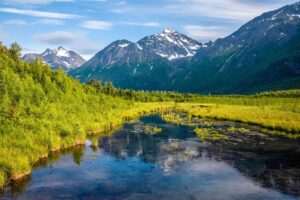
Denali National Park contains six million acres of wilderness and one road. That road — 92 miles of dirt cutting through tundra, river valleys, and alpine passes — is closed to private vehicles past Mile 15. The only way to see the backcountry is by bus. This is not an inconvenience. It is the park’s defining feature: a managed wilderness where the wildlife comes first, crowds are controlled, and grizzly bears wander in front of your window without a fence in sight. Denali is unlike any other national park in America, and a day on the park road is unlike any other day in Alaska.
The Mountain: Managing Your Expectations
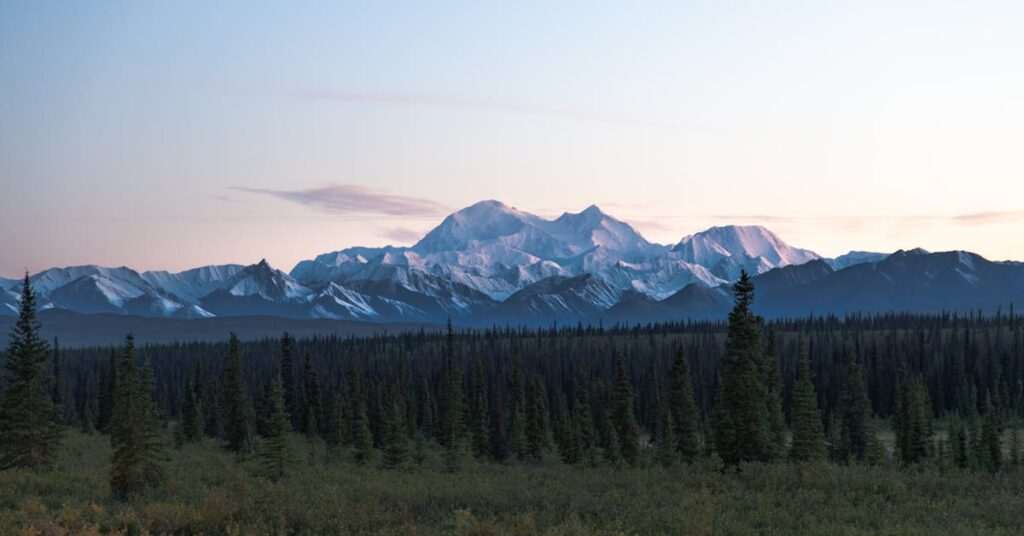
Denali — formerly known as Mount McKinley — rises to 20,310 feet, making it the highest peak in North America. It is also one of the most frequently hidden mountains on Earth. The peak generates its own weather system, pulling moisture off the surrounding lowlands and wrapping itself in clouds for the majority of summer days. Statistically, Denali is visible from the park road roughly 30% of the time in summer. On the days it appears — the entire massif blazing white above the tundra, seemingly floating free of the earth — it is genuinely one of the most extraordinary sights in North America. Plan to visit and be grateful if you see it, rather than building your trip around a clear-day guarantee.
The best viewing odds come in the early morning hours before cloud buildup begins, and in late August and September when clearer weather is more common. Talkeetna, south of the park on the Parks Highway, offers a closer and sometimes clearer view of the mountain’s south face.
The Bus System: Transit vs. Tour
Two types of buses operate on the park road, and choosing between them shapes your entire experience.
Transit buses are the flexible option. Fares are lower (roughly $30–$60 depending on distance), and — critically — you can hop off at any point along the road and reboard a later bus. This is how experienced visitors explore the park: ride out to a promising area, disembark to hike off-trail on the open tundra, and catch the next bus when ready. Transit buses still stop for wildlife, and drivers still call out sightings, but there’s no narration. Bring water, food, and bear spray if you plan to hike off the bus.
Tour buses (Tundra Wilderness Tour, Kantishna Experience): Guided narration throughout, a specific itinerary, and a naturalist driver who knows the road well. These cost more ($100–$200+ per person depending on the tour) and don’t allow hop-off hiking, but they provide structured wildlife interpretation and are ideal for visitors who want a curated experience without managing logistics. The Kantishna Experience goes the full 92 miles to the former mining community at road’s end — the longest and most expensive option.
Both bus types stop for every significant wildlife sighting. When a grizzly is spotted, the bus pulls over and everyone scrambles to one side with binoculars and cameras. These unscheduled stops are the park at its best.
Wildlife: What to Look For and Where
Denali’s wildlife is genuinely wild and genuinely abundant. The lack of hunting pressure and the controlled visitor access mean animals behave naturally around buses — they’ve learned buses are not threats. What this produces is close, behavioral wildlife viewing that would be impossible in a drive-through or walk-in setting.
- Grizzly bears: The most sought-after sighting and reliably encountered on most full-day bus trips. Sow grizzlies with cubs are common in the Sable Pass area (Mile 38–43, closed to foot traffic specifically to protect bears). Bears dig for ground squirrels, graze on berries, and occasionally wander directly alongside the road.
- Caribou: The Denali caribou herd numbers in the thousands and migrates through the park in late summer. Large groups crossing the road or grazing on open tundra slopes are common from August onward.
- Dall sheep: White shapes high on rocky slopes, most visible near Polychrome Pass (Mile 46) and the Alaska Range ridgelines. Binoculars are essential for sheep viewing.
- Moose: Common in the spruce forest near the entrance and in willow thickets along river drainages throughout the park.
- Wolves: Present but unpredictable — a wolf sighting is a genuine event that the bus will stop for immediately. More common in early morning and late evening runs.
Eielson Visitor Center: Mile 66
Eielson Visitor Center sits at the edge of the Alaska Range with an unobstructed view of Denali on clear days — arguably the best roadside viewpoint in the park. The center has interpretive exhibits, restrooms, and rangers on duty who can advise on current wildlife locations and weather conditions. All bus routes include a stop here. Even if the mountain is in cloud, the view of the Muldrow Glacier and surrounding peaks from Eielson is extraordinary. Plan at least 30 minutes at the center before reboarding.
Wonder Lake: Mile 85
Wonder Lake sits in the lowlands near the road’s end, and on the rare days when Denali is fully visible, the mountain’s reflection in the calm lake surface produces one of the most photographed images in Alaska. The lake is accessible only on full-day tours or by overnight bus to Kantishna. Given the distance — 85 miles each way — Wonder Lake is a commitment. If you’re planning to reach it, build the trip around a clear forecast window rather than assuming the mountain will cooperate. That said, the wonder of Wonder Lake on a perfect day with Denali fully reflected is worth every mile of the journey.
Hiking in Denali
Denali has almost no maintained trails beyond the park entrance area. This is intentional. The park is designed for off-trail wilderness hiking — you step off the bus onto open tundra and navigate by map and compass across terrain that has never been groomed. This is thrilling for experienced backcountry hikers and genuinely unsuitable for casual day hikers without navigation skills and bear spray.
Near the entrance (the first 15 miles accessible by personal vehicle), the Horseshoe Lake Trail and Taiga Loop Trail offer easy, well-marked walks through spruce forest. The Savage Alpine Trail at Mile 15 is more challenging and offers good ridge views. For backcountry permits, contact the Backcountry Information Center at the Visitor Center — permits are free but require a mandatory orientation.
Camping Along the Road
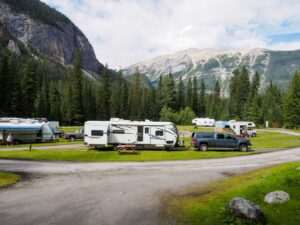
Six campgrounds operate along the park road, ranging from the vehicle-accessible Riley Creek near the entrance to Wonder Lake Campground at Mile 85. Teklanika River Campground (Mile 29) is a favorite for multi-night stays — it’s accessible by personal vehicle with a minimum 3-night stay commitment, placing you deep enough into the park for genuine wildlife encounters from camp. All campgrounds require reservations through Recreation.gov; summer dates book out months in advance.
Getting There from Anchorage
The most direct route from Anchorage to Denali is a 4-hour drive north on the Parks Highway — one of Alaska’s most scenic drives, passing through the Matanuska-Susitna Valley with views of the Alaska Range building throughout. The town of Healy, just outside the park’s north entrance, has hotels, restaurants, and services for park visitors.
The Alaska Railroad‘s Denali Star train runs daily between Anchorage and Fairbanks in summer, stopping at the park entrance. The train journey takes approximately 8 hours one-way but passes through spectacular terrain — including the Hurricane Gulch bridge and views of Denali from the south — making it a destination experience in its own right rather than just transportation. If you have the time, taking the train one direction and driving the other makes for an exceptional two-day itinerary.
Planning Your Denali Visit
Book bus reservations through the park’s official reservation system (recreation.gov) as early as possible — popular July dates sell out months in advance. Decide in advance whether you’re going for a full-day Wonder Lake experience or a half-day Eielson trip, as the logistics differ significantly. Pack layers regardless of the forecast; temperatures on the park road can swing 30 degrees in a day. Bring binoculars, a telephoto lens, bear spray if hiking, and more snacks than you think you’ll need for a full-day bus ride. Then sit back, watch the tundra roll past, and let Denali reveal itself on its own terms.
No comments yet.