
Turnagain Arm Bore Tide 2026: How to Watch One of the World’s Largest Tidal Bores
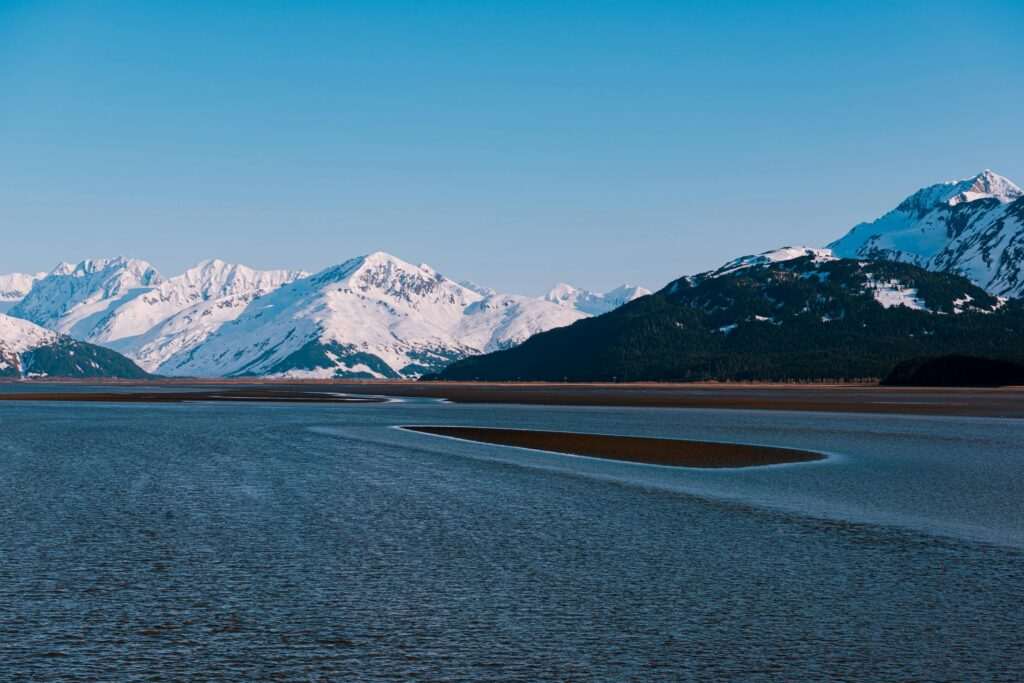
On most days, Turnagain Arm looks like a typical Alaska inlet: mountains rising from the water’s edge, mudflats stretching toward a receding tide, the Seward Highway threading along the northern shore. Then the bore tide arrives. A line of white water appears in the distance, moving against the apparent logic of a calm surface, advancing steadily until it becomes audible and then visible as a coherent wall of churning water moving at highway speed up the length of the inlet. The whole event takes less than fifteen minutes from first sighting to passing the viewpoint, and it is one of the more genuinely strange natural phenomena a visitor to Southcentral Alaska can witness. The bore tide is free to watch, predictable to the minute, and located 40 minutes from downtown Anchorage along one of the most scenic drives in the state.
What a Bore Tide Is
A bore tide is a tidal bore — a wave produced when an incoming tidal surge funnels into a narrowing waterway, compressing the water’s energy into a visible front that travels upstream against the current. Turnagain Arm is among the most favorable environments on earth for bore tide formation. The arm is approximately 48 miles long and narrows significantly from its mouth near Portage to its head near Anchorage. More critically, the tidal range at the head of Turnagain Arm reaches up to 40 feet — among the highest tidal ranges recorded anywhere in North America. When 40 feet of tidal exchange rushes into a narrowing funnel at the pace of an ocean tide, the result is a physical wave that advances against the current, visible from shore as a moving wall of water.
The bore itself typically stands between 6 inches and 6 feet tall depending on the lunar cycle, recent weather, and tidal amplitude on a given day. It travels at 10 to 15 miles per hour. The biggest bores occur within a few days of the new and full moon, when tidal amplitude is at its maximum — these are the days to prioritize if you want the most dramatic display. Small-moon bore tides are still visible and still worth watching; they simply arrive as a lower, faster-moving ripple rather than a breaking wave.
How to Predict Bore Tide Timing
The bore tide arrives approximately 2 hours and 15 minutes after low tide in Anchorage. NOAA publishes daily Anchorage tide predictions, and applying the 2:15 offset gives a reliable arrival window. For a 6:30 AM Anchorage low tide, the bore will reach the middle Seward Highway pullouts around 8:45 AM. For a 2:00 PM low tide, the bore arrives around 4:15 PM. The bore travels along the Arm over about 30 to 45 minutes from the eastern pullouts toward the head of the inlet, so the timing shifts slightly depending on which viewpoint you choose.
Several dedicated bore tide apps exist — searching “Turnagain Arm bore tide” in any app store returns options that integrate current NOAA tide predictions with the bore arrival offset and sometimes include moon-phase annotations. The Alaska Public Lands Information Center in Anchorage can also advise on upcoming optimal bore dates if you’re planning in advance. Mid-summer bores that coincide with favorable afternoon tides are the most visited; early morning bores are equally spectacular and significantly less crowded.
Best Viewing Pullouts Along the Seward Highway
The Seward Highway runs directly along the Turnagain Arm shoreline for most of its distance between Anchorage and Girdwood, and there are multiple established pullouts with views across the mudflats. The three most reliable bore tide viewing spots are:
Beluga Point (Mile 110). The most popular pullout, with a large parking area and sweeping views in both directions along the Arm. The bore arrives here in strong form, and the horizontal sight lines allow you to watch it approach from the east for several minutes before it passes. Beluga Point also offers excellent beluga whale viewing when the whales are present, making it the high-value combination stop.
Bird Creek (Mile 101). The Bird Creek pullout area sits close to the water and gives a lower-angle view of the bore tide as it passes. The bore appears larger from this vantage because of the proximity. Bird Creek also has a popular fishing access point and trail; if you arrive early for a morning bore tide, the area is often quiet enough to feel genuinely remote.
Indian (Mile 104). A smaller pullout with a slightly elevated perspective. Less crowded than Beluga Point and a reliable viewing spot with good eastward sight lines for tracking the bore’s approach.
The pullouts are all accessible directly from the Seward Highway — no hike required. Simply pull off, walk to the shore-facing side, and wait. On days with optimal conditions, viewing crowds gather well before the predicted arrival time.
The Danger of the Mudflats — This Cannot Be Overstated
Turnagain Arm’s mudflats are one of the most dangerous surfaces in Alaska. The glacial silt that composes the flats behaves like quicksand when saturated — people who step onto the flats have been trapped up to their waist within seconds, unable to free themselves before the tide returns. Multiple people have died on Turnagain Arm’s mudflats in recent decades. Rescue requires excavating the silt around an entrapped person with high-pressure water, and the window before the bore tide returns is short.
Do not walk on the mudflats. This is not a guideline for inexperienced visitors — it applies to everyone. The surface looks solid from the highway pullouts and genuinely becomes life-threatening at the water’s edge. Watch the bore tide from the pullouts above the mud. The bore is visible from shore without any need to approach the flats, and the drama of watching it from a pullout is complete.
Bore Tide Surfing
Turnagain Arm has a small but dedicated community of bore tide surfers — people who position themselves in the water ahead of the bore and ride the advancing wave upstream. The surfing is genuine: on large bore days, the wave sustains rideable face for a period long enough to constitute a real surf session. Watching for surfers is an additional spectacle on days with large bores. Beluga Point and Bird Creek are both locations where surfers have been spotted in advance of the wave; the bore tide Facebook and social media community publishes forecasts for upcoming surf-worthy bores during peak season (June–August).
Beluga Whales and Other Wildlife
Turnagain Arm’s Cook Inlet beluga whale population — a genetically distinct and federally threatened population — sometimes follows the bore tide up the Arm, chasing the fish that the tidal surge disrupts and concentrates. Belugas at the bore tide are not guaranteed, but during summer months they appear frequently enough that dedicated Cook Inlet beluga whale viewing is a separate attraction at Beluga Point. If you’re timing a bore tide visit during July or August, beluga sightings are a genuine possibility that makes the stop even more productive.
The Potter Marsh Bird Sanctuary sits at the northern entrance to the Seward Highway corridor, 10 miles south of Anchorage, and makes a natural first stop on any bore tide day trip. The boardwalk through the marsh offers waterfowl viewing from April through September and adds 30 to 45 minutes of wildlife context to the drive before reaching the bore tide pullouts farther south.
Planning a Bore Tide Day Trip from Anchorage
The bore tide fits naturally into a half-day drive. Check the NOAA tide tables for the next Anchorage low tide, add 2 hours and 15 minutes, identify the pullout closest to your target arrival time, and drive south. The pullouts are 40 to 60 minutes from downtown Anchorage under normal conditions — the Seward Highway has no stoplights past the edge of town, and traffic is light outside summer weekend afternoons.
Combining a bore tide with the broader Seward Highway drive makes a full day: Potter Marsh in the morning, Beluga Point for the bore tide, Girdwood for lunch (The Bake Shop, Silvertip Restaurant), and optionally Portage Glacier at the end of the road before returning to Anchorage. On days when the bore coincides with afternoon timing, the sequence works just as well in reverse. The bore tide is the anchor; the Seward Highway corridor provides everything else. Few drives in Southcentral Alaska offer as much wildlife, scenery, and natural spectacle per mile.
Photo: Fu Shan Un / Pexels

No comments yet.