
Things to Do in Seward Alaska 2026: Kenai Fjords, Exit Glacier & More
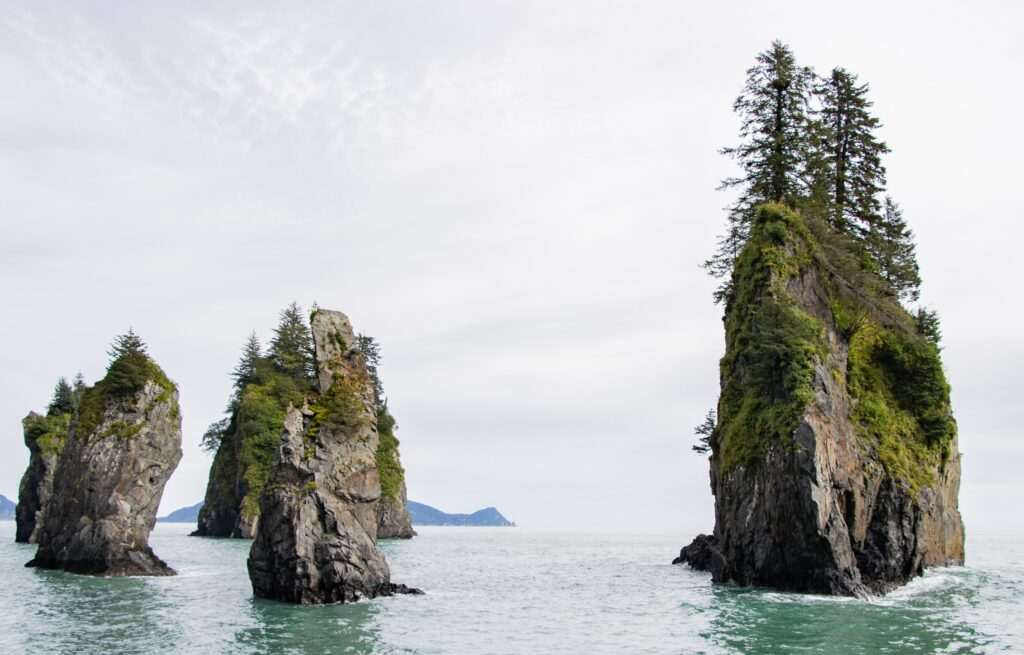
Seward sits at the head of Resurrection Bay, 127 miles south of Anchorage on the Kenai Peninsula. The town itself is small — around 3,000 residents — but the geography surrounding it is exceptional: Kenai Fjords National Park begins at the city limits, Exit Glacier is accessible by road just outside town, and the bay opens onto some of the most productive marine waters in Alaska. As a day trip from Anchorage, Seward is manageable; as an overnight destination, it rewards the extra time with better access to the park and a more complete experience of the town. This guide covers everything worth doing, when to go, and how to plan the trip.
Getting to Seward
The drive from Anchorage to Seward takes approximately 2.5 hours under normal summer conditions. The route follows the Seward Highway south from Anchorage along Turnagain Arm, then through the Kenai Peninsula interior. The highway is one of the most scenic in Alaska — Dall sheep visible on cliffsides above the arm, beluga whales in the inlet during salmon runs — but it is also two lanes through mountain terrain, with no opportunity to pass slow traffic in the steeper sections. Leave Anchorage early on summer weekends to avoid the tourist traffic that concentrates on the highway by mid-morning.
The alternative to driving is the Alaska Railroad Coastal Classic, a seasonal train service that runs between Anchorage and Seward with stunning views of the Kenai Peninsula backcountry. The train travels sections of terrain inaccessible by road, including creek canyons and mountain passes that most visitors never see. For day trips by train, the narrow timing window — the train arrives in Seward around noon and departs in the evening — limits your time, but it works for visitors who want to skip the driving. The train departs from downtown Anchorage and is a legitimate alternative for visitors who find the Seward Highway’s two-lane mountain driving stressful.
Kenai Fjords National Park: Boat Tours
Kenai Fjords National Park covers more than 669,000 acres of coastline, glaciers, and the Harding Icefield — one of the largest ice fields in the United States. Almost all of it is accessible only by boat or floatplane. The standard approach for day visitors is a boat tour departing from Seward’s Small Boat Harbor into Resurrection Bay and the outer park coastline.
Major Marine Tours is the principal operator serving the Kenai Fjords National Park from Seward. Their full-day tours cover the outer fjords, Northwestern Glacier, and the wildlife-rich waters near Chiswell Island, while their half-day options focus on Resurrection Bay and the inner park. The full-day tour is significantly more expensive but reaches the tidewater glaciers and the seabird colonies that the half-day does not. The Chiswell Islands are a National Wildlife Refuge supporting one of the largest Steller sea lion rookeries in Alaska, tens of thousands of seabirds including tufted puffins, horned puffins, common murres, kittiwakes, and cormorants, and reliable humpback whale activity. If you are only going to Seward once, the full-day tour is worth the cost.
Wildlife on Kenai Fjords boat tours is exceptionally diverse. Sea otters are present throughout Resurrection Bay and the outer fjords. Orca pods — both resident fish-eating and transient mammal-hunting populations — move through the outer coast regularly, and sightings are frequent enough in July and August that most full-day tours encounter orcas at least once. Humpback whales feed in the productive offshore waters and produce bubble-net feeding behavior during salmon season. Dall’s porpoise ride bow waves. Mountain goats are visible on the cliff faces at the fjords’ heads, and Steller sea lions haul out on exposed rocks throughout the outer coast.
Exit Glacier
Exit Glacier is the only part of Kenai Fjords National Park accessible by road. The Resurrection River Road leaves the Seward Highway just before town and follows the river valley to the Exit Glacier parking area, approximately nine miles from the highway junction. Admission to the parking area costs $10 per vehicle per day (annual America the Beautiful pass valid).
The base area trail system allows visitors to walk directly to the glacier’s current terminus — a flat, paved trail covers the quarter mile from the visitor center to the ice margin, and signs along the route mark where the glacier extended in previous decades. The recession is visually striking: markers placed at the 1950, 1980, and 2000 positions show hundreds of yards of valley floor that was under ice within recent memory. The ice margin itself is an active calving face with visible crevasses and blue-green ice visible in the interior of the glacier body.
The Harding Icefield Trail is the serious hiking option at Exit Glacier. The trail climbs steeply from the valley floor through alder and spruce forest, past the upper viewpoints at Marmot Meadows, and continues to the edge of the Harding Icefield at approximately 3,200 feet elevation. The total round-trip distance is roughly 8.2 miles with 3,000 feet of elevation gain. The icefield view from the upper trail is one of the most dramatic accessible by foot in Alaska — a white expanse extending to the horizon with nunataks (rocky peaks) protruding from the ice surface. The trail is strenuous and weather-dependent; the upper portion is frequently socked in with cloud even when the valley below is clear. Starting by 7am is practical for day hikers who want to summit and return before the afternoon tour rush.
Alaska SeaLife Center
The Alaska SeaLife Center on Seward’s waterfront operates as both a public aquarium and a marine wildlife research and rehabilitation facility. The center houses Steller sea lions, harbor seals, seabirds, and a range of cold-water fish and invertebrates native to Alaska waters. Exhibits cover the Kenai Fjords ecosystem, North Pacific food webs, and the biology of the keystone species that define Gulf of Alaska marine environments. The facility also takes in injured and orphaned marine wildlife and runs active research programs on species population dynamics and ocean health.
For visitors who want close-range observation of animals they might glimpse from a distance on a boat tour, the SeaLife Center is a strong complement to the Kenai Fjords cruise experience. Watching Steller sea lions from an underwater viewing window at six feet gives a physical sense of their scale — males can exceed 2,400 pounds — that is impossible to appreciate from a boat deck. The seabird exhibits include puffin tanks where tufted and horned puffins swim through observation areas. Plan 2 to 3 hours for a full walkthrough. Admission runs approximately $30 per adult. The center is open year-round.
Seward Small Boat Harbor and Town
Seward’s harbor is the commercial and social center of town. Charter fishing boats, tour vessels, water taxis, and private sport fishing boats share the dock space, and the harborside area has restaurants, outfitter shops, and the ticket offices for the major tour operators. The harborside walkway is a practical orientation point — it faces the bay with the mountains directly behind, and the scale of the terrain from this vantage makes it clear why the area was designated a national park. Halibut charters and salmon fishing trips depart from the harbor throughout the summer and are a separate industry from the Kenai Fjords wildlife tours.
Fourth Avenue in downtown Seward is a four-block commercial district with a concentrated selection of restaurants and bars. For food, Seward’s options skew toward seafood: fresh halibut, king crab, and salmon feature prominently on most menus. The Seward Brewing Company operates a restaurant and brewery on Fourth Avenue that serves Kenai Peninsula seafood alongside their own beers. Ray’s Waterfront on the harbor side offers a comparable menu with water views and is consistently popular with boat tour visitors returning to the harbor in the afternoon. Reservations are advisable on summer weekends, particularly at dinner service, since the same population of visitors from multiple day tours tends to converge on the available restaurants within the same two-hour window.
Day Trip vs. Overnight
A single day from Anchorage works for Seward but requires a genuine commitment to the schedule. To fit both a full-day Kenai Fjords boat tour and the Exit Glacier base trail, you need to leave Anchorage by 6:30am, get to the harbor for the morning boat departure (typically 8 or 9am), return to Seward around 5pm, and drive back to Anchorage by 8pm or later. That leaves no time for Exit Glacier unless you go there first at highway speed — which means skipping the Harding Icefield Trail entirely.
Overnight stays solve the timing problem. A single night in Seward allows an early morning Exit Glacier hike before the crowds, a full-day boat tour, dinner at a harbor restaurant, and a morning in town the next day before the return drive. Several lodging options operate in Seward, from harbor-side hotels to bed-and-breakfasts in the residential neighborhoods above downtown. Book lodging months in advance for July weekends — Seward fills reliably during peak season and availability at the last minute is scarce.
Best Time to Visit
May through September is the Seward season. June and July offer the longest daylight and peak wildlife activity on the boat tours — humpback whale concentrations build through June as the salmon runs begin, and orca activity peaks in July and August. The weather in Seward is characteristically gray and wet; the outer coast of the Kenai Peninsula receives 60–70 inches of precipitation annually, and rain gear is practical on any date regardless of forecast. Clear days do occur and produce extraordinary conditions for boat tours and glacier hiking, but plan for overcast and occasional rain without treating it as a disappointment — the fjords are dramatic in all weather.
September is underrated. The coho salmon run in September brings feeding activity from humpbacks, sea lions, and bears that differ from the July sockeye season, and the shoulder-season crowds are substantially lower. Exit Glacier is still accessible and the upper trail trail conditions are often better than July, when lingering snow can cover the upper sections. Seward’s restaurants and hotels remain open through September and prices are lower than peak season. For visitors with schedule flexibility, mid-September is a strong pick.
No comments yet.