
Northern Lights Near Anchorage 2026 — When, Where & How to See the Aurora Borealis
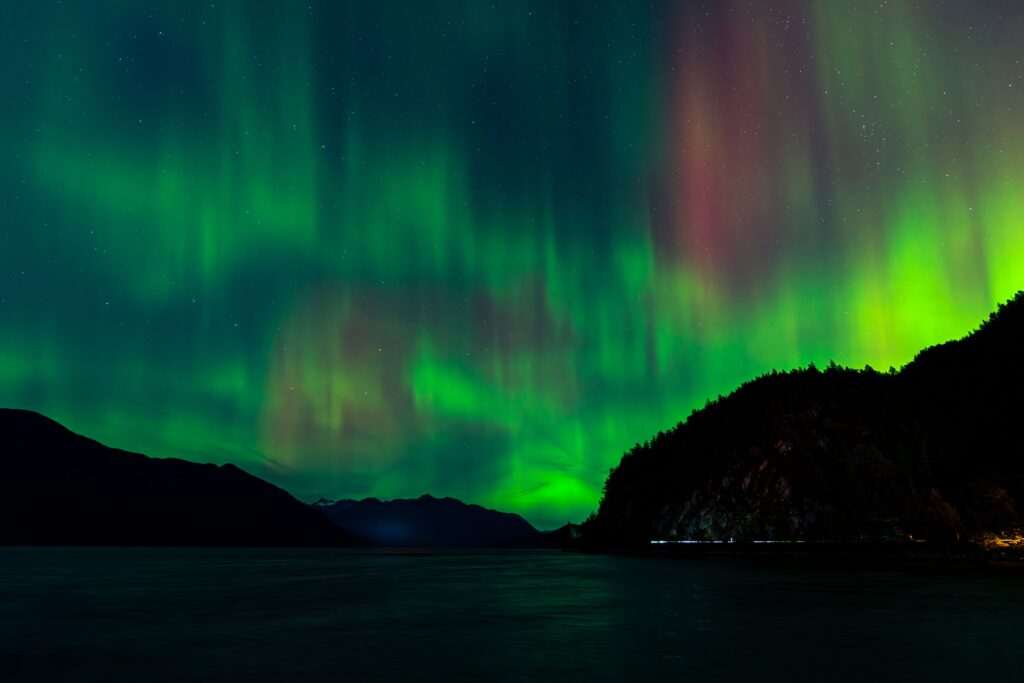
The aurora borealis is the reason many people add Alaska to their bucket list, and Anchorage puts you closer to the action than almost any other accessible city in North America. On a clear winter night, green ribbons can light up the sky directly overhead — no long drive to a remote cabin required, though getting away from the city lights always helps. Here’s what you need to know to maximize your chances of seeing the northern lights near Anchorage in 2026.
When to See the Northern Lights Near Anchorage
Aurora season near Anchorage runs roughly September through April — any time darkness returns after the near-endless summer daylight. The peak window is December through February, when nights run 16–18 hours and clear, cold high-pressure systems settle over Southcentral Alaska for days at a stretch. Shorter nights in September and October still produce strong displays, and the shoulder months have the advantage of less extreme cold. March is a personal favorite among aurora hunters: longer nights than summer, historically active solar cycles around the equinox, and the added spectacle of snow on the ground catching and reflecting the aurora’s colors.
A full moon works against you — moonlight washes out faint green bands just like city light pollution does. Check the lunar calendar alongside the aurora forecast and aim for new moon or waning crescent windows for the clearest skies and darkest backgrounds.
How the Aurora Works: KP Index and Forecasting
The aurora borealis is produced by charged particles from the sun interacting with Earth’s magnetic field, exciting atmospheric gases to emit light. How active the display is depends on solar wind intensity, measured by the KP index (0–9 scale). In the Anchorage area, KP 3 or higher typically produces visible aurora at dark-sky locations; KP 5+ brings the display into the southern sky and makes city viewing viable. KP 6 and above produces full-overhead curtains, coronas, and rapid movement that even casual observers find jaw-dropping.
The best free aurora forecast tool is the UAF Geophysical Institute Aurora Forecast (gi.alaska.edu), which publishes a 27-day outlook updated nightly. Download the SpaceWeatherLive or Aurora Forecast apps on your phone for real-time KP alerts. Set a push notification for KP 4 or higher and you’ll never miss a sudden eruption on a clear night.
Best Viewing Spots Near Anchorage
Getting away from Anchorage’s light dome significantly improves your aurora experience. A 20–30 minute drive in almost any direction puts you in much darker territory:
- Knik River / Palmer Hay Flats — about 45 miles northeast of Anchorage via the Glenn Highway, the flats around Palmer and the Knik River bridge offer wide-open skies with the Chugach Mountains as a backdrop. The Glenn Highway Scenic Drive corridor is one of the best aurora-chasing routes from the city — pull off at any dark shoulder with a clear northern horizon and you’re set.
- Knik Glacier Road — further up the Glenn Highway past Palmer, the Knik Glacier access road leads to dark skies with glacier and mountain reflections in the river when conditions cooperate.
- Talkeetna — about 2.5 hours north, Talkeetna sits under particularly dark skies with Denali on the horizon on clear nights. Not a quick drive, but ideal for a dedicated overnight aurora trip.
- Point Woronzof / Earthquake Park — Anchorage’s own Cook Inlet waterfront offers a dark northern horizon, decent for KP 5+ events, and requires no driving at all. Best for spontaneous displays on high-KP nights.
Hatcher Pass: The Go-To Aurora Destination
Hatcher Pass, about an hour north of Anchorage near Palmer, is the most beloved aurora destination for Anchorage locals. The access road climbs above the treeline into an open alpine zone with 360-degree sky views and no nearby light pollution. At the upper parking areas near the Independence Mine State Historical Park, you’re sitting at 3,000+ feet with a vast dark bowl of sky overhead. Driving up in winter requires an AWD or 4WD vehicle with good snow tires — the road can be icy and narrow. Check road conditions with 511.alaska.gov before heading up. Many aurora tours from Anchorage use Hatcher Pass as their primary destination for exactly these reasons.
Guided Aurora Tours
If you’d rather not drive unfamiliar winter roads in the dark, guided aurora tours are a popular option. Several Anchorage-based operators run evening tours departing around 9–11 p.m. when aurora activity typically peaks. Tours usually include transportation to a dark-sky location (often Hatcher Pass or the Knik River area), hot beverages, aurora forecast interpretation, and photography assistance. Group tours run $80–$150 per person; private tours range $200–$400. Some operators offer guarantees — if the aurora isn’t visible due to clouds or low activity, you can rebook for another night. Book in advance for January and February, when winter tourism is at its peak.
Aurora Photography Tips
Capturing the aurora on a phone camera is increasingly possible with modern night mode processing, but a DSLR or mirrorless camera on a tripod gives you full control and much better results. The basic manual settings for aurora photography:
- Aperture: as wide as your lens goes — f/1.8 to f/2.8 is ideal
- ISO: start at 1600–3200; adjust based on how bright the display is
- Shutter speed: 5–15 seconds for a calm aurora; drop to 2–4 seconds if the curtains are moving fast to avoid blur
- Focus: set to manual and focus on a bright star or distant light — autofocus struggles in the dark
- White balance: daylight or tungsten (3200K) tends to render the greens and purples most accurately
Shoot in RAW if your camera supports it — editing latitude is enormous and you’ll be able to recover highlights and lift shadows from a single frame. Use a remote shutter release or the camera’s 2-second timer to avoid camera shake. Cold batteries drain fast; carry a warm spare in your coat pocket.
What to Wear for Cold-Weather Aurora Chasing
Standing outside for 1–3 hours in January at Hatcher Pass means temperatures can sit at -10°F to -20°F (-23°C to -29°C) with wind chill. This isn’t a situation where a heavy coat is enough. The full cold-weather kit:
- Base layer: merino wool or synthetic moisture-wicking long underwear (top and bottom)
- Mid layer: heavy fleece or down sweater
- Outer layer: wind-blocking and waterproof insulated parka and snow pants
- Feet: insulated winter boots rated to -20°F or colder; wool socks, never cotton
- Hands: liner gloves inside insulated mittens — you’ll need dexterity for the camera but warm hands for standing around
- Head: balaclava under a hat; a neck gaiter for the gap between your coat collar and your face
- Hand warmers: chemical warmers in your boots and pockets make a real difference on long waits
Planning Your Aurora Trip
Aurora viewing is inherently unpredictable — even on a high-KP forecast night, clouds can roll in and block everything. Build flexibility into your itinerary by planning 3–5 consecutive nights in the Anchorage area during aurora season, which gives you multiple chances. Stay somewhere with a dark-sky location nearby or a clear northern view from the property. If you’re combining aurora chasing with other Southcentral Alaska experiences, winter is also a great time to visit the region’s other dramatic natural spectacles — like the powerful tidal bore in Turnagain Arm, covered in our Turnagain Arm Bore Tide guide. A one-week itinerary can pair daytime outdoor activities with nightly aurora hunts for a deeply immersive Alaska winter trip. Winter sled dog kennel tours are a natural complement — our dog mushing near Anchorage guide covers the best kennels and what to expect. For the full range of Southcentral Alaska day excursions that pair with an aurora trip, see our day trips from Anchorage guide.
For the best aurora views away from city light pollution, Kincaid Park on the western edge of Anchorage offers open sky and low horizons — free to access and only 15 minutes from downtown. 907 Tours Alaska runs guided winter excursions that combine aurora hunting with local expertise on the best viewing windows. To plan a full winter itinerary around the lights, Chugach Adventures offers a range of cold-season activities to fill your days before the night show begins.
No comments yet.