
Stargazing in Anchorage: Northern Lights, Night Sky Viewing, and Where to See the Milky Way 2026
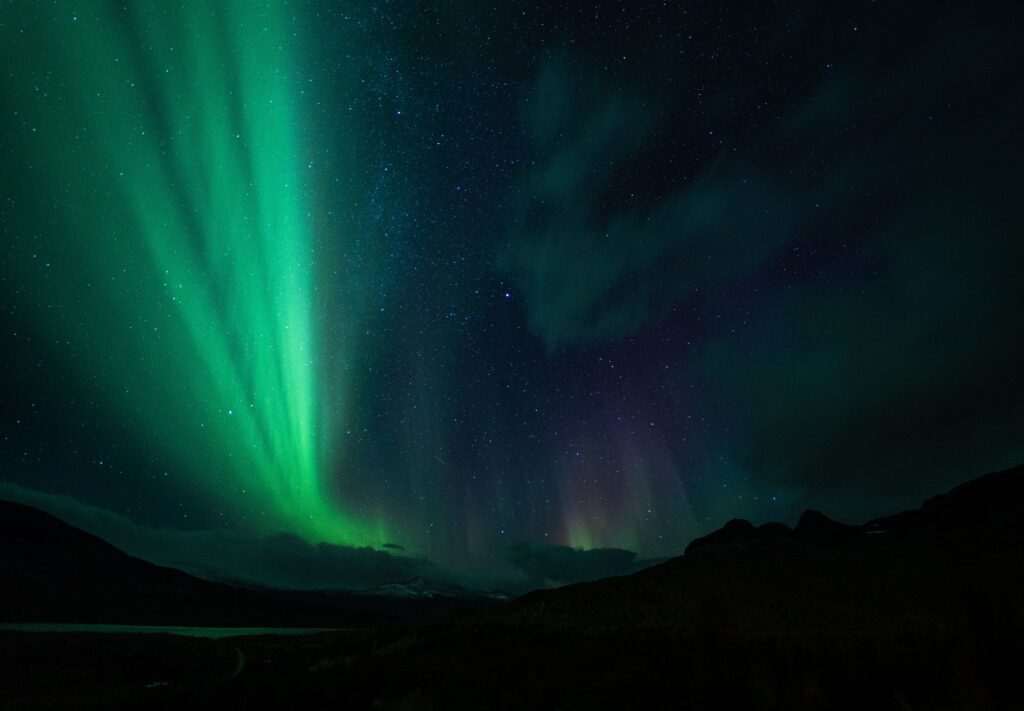
Stargazing in Anchorage operates on a different calendar than almost anywhere else in North America. In summer, the midnight sun makes stellar observation impossible from late May through mid-July — the sky simply doesn’t get dark enough. But from late summer through early spring, the same geography that produces those endless summer days delivers some of the most spectacular night sky viewing on the continent: the aurora borealis dancing across the horizon, the Milky Way arching over the Chugach Mountains, and a darkness that urban dwellers rarely encounter. This guide covers when to go, where to look, and what to bring.
The Aurora Borealis: What to Expect
Anchorage sits at roughly 61 degrees north latitude — solidly inside the auroral oval, the band around the globe where northern lights activity is most frequent and intense. Aurora is caused by charged solar particles interacting with Earth’s magnetic field, which means the displays are inherently variable: a calm evening can yield nothing, while an active solar event can produce curtains of green, purple, and white visible even from city parks.
The practical viewing season runs from late August through March, when Anchorage nights are long enough and dark enough for meaningful observation. Peak months are September through October and February through March — darkness is reliable, temperatures are still manageable by Alaska standards, and the equinoxes tend to coincide with increased geomagnetic activity. Midwinter (December–January) offers the longest dark windows but often brings cloud cover and extreme cold that can make extended outdoor viewing uncomfortable.
For real-time aurora forecasting, check the NOAA Space Weather Prediction Center’s Kp index. A Kp of 3 or above is generally visible from Anchorage; Kp 5 or higher can produce strong activity visible even with some light pollution. The Geophysical Institute at UAF publishes a weekly Alaska aurora forecast that local viewers rely on. Clear skies are as important as solar activity — cloud cover is the primary limiter most nights, and checking hourly weather forecasts is as essential as checking the Kp index.
Best Dark Sky Spots Near Anchorage
Flattop Mountain Trail is the most accessible high-elevation dark sky option in the Anchorage Bowl. The trailhead sits at the Glen Alps parking area and the mountain rises to just under 3,500 feet, elevating you above the worst of the city’s light pollution and opening up a 360-degree horizon. On clear nights with aurora activity, Flattop provides one of the best vantage points accessible without a vehicle shuttle or overnight camping. The trail is steep and involves some scrambling near the summit — wear boots with traction and carry a headlamp. In winter, crampons or microspikes are required.
Glen Alps Trailhead — the staging area for Flattop — also works as a stargazing destination in its own right without summiting. The parking area at roughly 2,200 feet sits above the low-lying light dome from downtown, and the broad open views to the east over the Chugach Mountains make it an excellent location for watching the aurora horizon-to-horizon. It’s a 30-minute drive from midtown Anchorage and the parking lot is plowed in winter.
The backcountry areas of Chugach State Park, which begins at the edge of Anchorage’s East Side and extends into nearly 500,000 acres of wilderness, offer genuine dark sky conditions for those willing to hike or ski in. The further you travel from the trailheads, the darker the sky — even a mile into the backcountry eliminates most of Anchorage’s ambient glow from direct view. Eklutna Lake, Eagle River Nature Center, and the Bird Ridge area are all within the park and provide excellent aurora and Milky Way conditions from early fall through late spring.
Kincaid Park on Anchorage’s southwest corner is a reliable option for visitors who don’t want to drive into the mountains. The park sits near the coast, away from the brightest city lights, and its northern-facing meadows and bluff overlooks give clear sightlines toward the northern horizon where aurora most often appears. The park is lit along main paths but its outer edges are legitimately dark, and it’s accessible year-round for skiing, snowshoeing, or walking in winter.
Indoor Astronomy: UAA Planetarium
For a guided introduction to Alaska’s night sky — or an option when clouds close in — the UAA Planetarium and Visualization Theater on the University of Alaska Anchorage campus runs public shows on Alaska’s celestial highlights. The planetarium’s dome and projection system can simulate the aurora, demonstrate the difference in sky conditions between summer and winter, and introduce viewers to the constellations visible from Alaska’s latitude. Public programming schedules vary by semester; check UAA’s website for current show times. The facility also hosts special astronomy events tied to significant sky events — meteor showers, eclipses, and planetary alignments.
Night Sky Photography
Photographing the aurora and Milky Way from Anchorage requires a few adjustments from standard outdoor photography. A wide-angle lens (24mm or wider) with a fast aperture (f/2.8 or better) captures the most sky. For aurora photography, start with a 10–15 second exposure at ISO 1600–3200; faster aurora movement calls for shorter exposures to avoid blurring the curtains. For Milky Way shots, 20–25 seconds at ISO 3200 works well from darker locations like Glen Alps or Flattop.
Practical tips: bring extra batteries — cold temperatures drain them rapidly, and an hour outside at 0°F will kill a battery that works fine at room temperature. Keep a spare inside your jacket. A sturdy tripod is non-negotiable for any exposure over a second. Apps like PhotoPills, Stellarium, and My Aurora Forecast are widely used by Alaska night sky photographers for planning shots and tracking aurora probability in real time.
The Midnight Sun: Summer’s Trade-Off
From late May through mid-July, Anchorage trades night sky viewing for something equally spectacular: the midnight sun. The sun doesn’t fully set during this window, and twilight conditions persist around the clock. There are no stars to see and no aurora visible — the sky is simply too bright. This isn’t a drawback so much as a feature: the long light enables hiking, paddling, cycling, and outdoor activity at midnight with no headlamp required.
The transition windows — late July through August in the fall direction and March through May in the spring direction — are the most interesting times for sky watchers. As darkness returns in August, the first stars reappear and the aurora season begins. Some of the most dramatic Milky Way views of the year happen in August and September, when the galactic core is still well-positioned and the nights are dark but not yet brutally cold.
Stargazing Calendar
- August–September: First dark nights return; Milky Way core is well-positioned in the southern sky; early aurora season begins. Temperatures are mild and conditions are excellent for first-time aurora viewers.
- October–November: Reliable aurora season; nights lengthen significantly; early snowfall improves reflectivity and makes the aurora more visible. This is the sweet spot for most visitors.
- December–January: Maximum darkness; aurora possible every clear night; temperatures routinely -10°F to -20°F — plan for cold accordingly. Dress in layers and limit exposure to 45-minute windows.
- February–March: Aurora season continues; temperatures moderate; equinox-related geomagnetic activity often produces strong aurora events. Many locals consider this the best aurora month.
- April–May: Aurora season winds down as nights shorten; Milky Way season begins again in late April.
What to Bring
Night sky viewing in Alaska requires more preparation than a casual outdoor outing. Temperatures drop quickly after sunset, especially at elevation, and standing still for an hour of aurora watching is considerably colder than hiking. A base layer, insulating mid-layer, and waterproof outer shell are the minimum for fall; add insulated pants and a balaclava for winter viewing. Hot drinks in a thermos, hand warmers, and insulated boots rated to at least -20°F are practical additions for December and January sessions.
No comments yet.