
Flying Drones in Alaska 2026: Rules, Restrictions & the Best Legal Spots
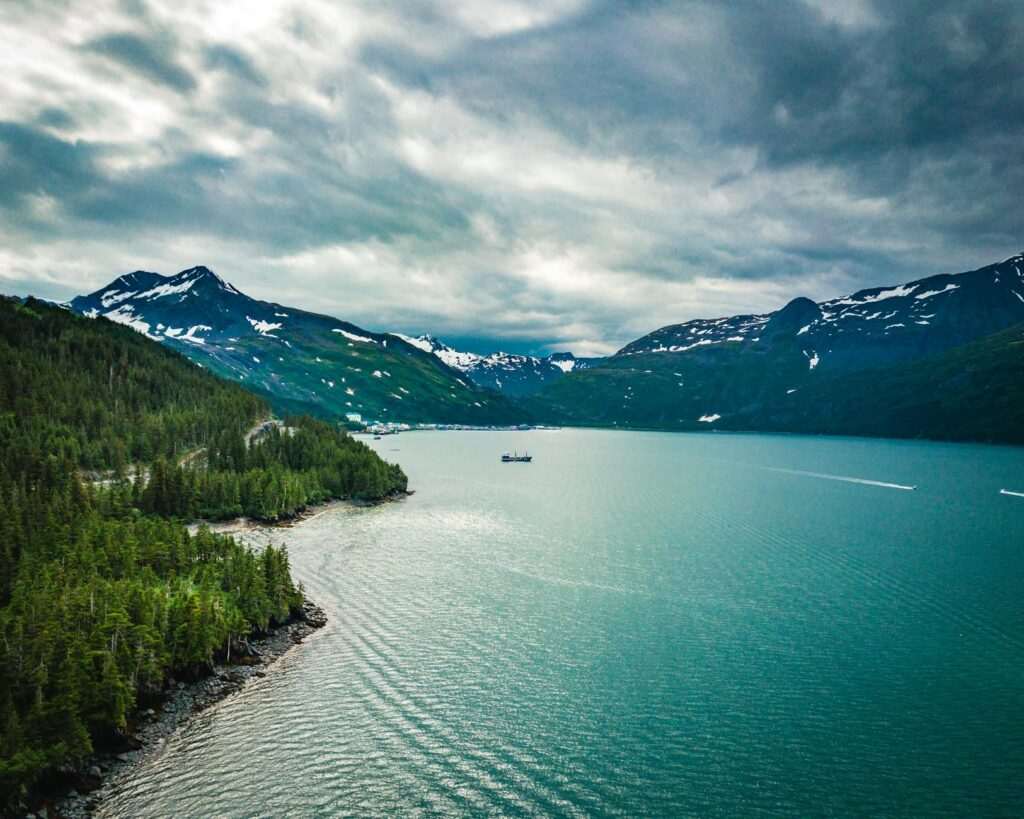
Alaska offers some of the most extraordinary aerial photography subjects in the world: glaciers, fjords, braided rivers, tundra, and coastal ranges with almost no development between them. It also has some of the most complicated drone regulations in the country — a patchwork of federal, state, and municipal rules that catches visitors unprepared more often than anywhere else. The short version is that a drone that is perfectly legal to fly in a state park in the contiguous 48 may be flatly prohibited in Denali, Kenai Fjords, or Wrangell-St. Elias. This guide covers the rules that apply in Alaska, where you can legally fly near Anchorage, and how to get the most from legal locations.
FAA Rules: The Federal Baseline Everywhere
The Federal Aviation Administration governs all drone operation in the United States regardless of location. These rules apply everywhere in Alaska:
- Registration: Any drone weighing more than 0.55 lbs (250g) must be registered with the FAA (faa.gov/uas). Registration costs $5 and is valid for 3 years. The registration number must be displayed on the aircraft.
- Recreational vs. commercial use: Recreational (hobby) flying follows the FAA recreational rules — fly below 400 feet AGL, keep the drone within visual line of sight, never fly over people or moving vehicles, yield right of way to all crewed aircraft. Commercial use — any flight where you receive compensation, including posting footage to monetized channels — requires an FAA Part 107 Remote Pilot Certificate.
- Altitude limit: 400 feet above ground level (AGL) for recreational operators. Part 107 pilots may request waivers for higher operations.
- Airspace: Check the FAA’s B4UFLY app or airspace.faa.gov before every flight. Anchorage’s Ted Stevens International Airport creates a Class B airspace restriction extending outward from the airport that prohibits drone flight in much of the central Anchorage bowl without authorization. The FAA’s LAANC system (Low Altitude Authorization and Notification Capability) provides near-instant authorization in some controlled airspace — check the app.
- No flying over active wildfires or emergency operations.
The National Park Prohibition: Alaska’s Biggest Surprise
This is where many visitors run into trouble: drones are prohibited in all National Park Service units without a permit or written authorization from the superintendent. NPS Management Policy prohibits drone launch, landing, or operation in all national parks, monuments, recreation areas, and other NPS-managed lands. In Alaska, this means:
- Denali National Park and Preserve: No drones. Period.
- Kenai Fjords National Park: No drones.
- Glacier Bay National Park: No drones.
- Wrangell-St. Elias National Park: No drones.
- Katmai National Park: No drones.
- Lake Clark National Park: No drones.
- All other NPS units in Alaska: No drones without written superintendent authorization.
Special use permits for commercial film and photography are theoretically available from individual parks but are difficult to obtain, expensive, and require advance planning measured in months. For a visitor arriving with a drone and expecting to fly it over Exit Glacier or the Denali tundra, the answer is no.
The prohibition also extends to most federally designated wilderness areas, which prohibit motorized equipment including drones as a matter of the Wilderness Act. This covers large sections of the Tongass and Chugach National Forests.
State Parks: Different Rules, More Flexibility
Alaska State Parks are managed by the Alaska Department of Natural Resources, not the NPS, and have different (generally more permissive) rules. Alaska state park regulations do not uniformly prohibit recreational drone use, though individual parks may have specific restrictions. As of 2026:
- Chugach State Park: Recreational drone use is generally permitted outside of developed campgrounds and heavily trafficked trailhead areas. Check current park notices — restrictions can be added seasonally or in response to wildlife activity (e.g., nesting eagles).
- Kachemak Bay State Park: Permitted with restrictions near wildlife congregation areas.
- State park campgrounds: Drone launch and landing from developed campgrounds is often restricted; launch from adjacent open land is generally permissible if FAA rules are met.
Verify current rules with the Alaska State Parks office (dnr.alaska.gov/parks) before flying at any specific state park location — rules are updated and the park office will give you the definitive answer for your planned location and date.
Wildlife Disturbance: A Separate Federal Offense
Flying a drone near wildlife in Alaska can violate federal law independently of where you are flying. The Migratory Bird Treaty Act, the Marine Mammal Protection Act, and the Bald and Golden Eagle Protection Act all prohibit harassing, disturbing, or pursuing protected animals. A drone buzzing near a bald eagle nest, approaching a bear with cubs, or flying low over a haul-out of sea lions constitutes a federal violation regardless of whether you are in a national park or on open public land.
In practice, wildlife disturbance with drones is an active enforcement priority in Alaska. Maintain at minimum 500 feet distance from marine mammals, do not hover near eagle nests, and do not approach bears or caribou with an aircraft. The fine for disturbing a bald eagle can reach $10,000 per offense. Beyond the legal risk, drone harassment of wildlife is bad practice — the animals in Alaska are genuinely wild, and a drone is experienced as a predator by most species.
Best Legal Drone Spots Near Anchorage
Knik Arm viewpoints from public land along Point MacKenzie Road offer unobstructed water and mountain views without the airspace restrictions of central Anchorage. Check LAANC authorization status before flying — portions of the approach to Merrill Field affect this area.
Turnagain Arm pullouts along the Seward Highway south of Anchorage provide dramatic fjord compositions. The highway corridor is outside primary airport airspace; verify the specific pullout location against the FAA airspace map. Wildlife caution applies — beluga whales use the Arm and are federally protected.
Palmer Hay Flats State Game Refuge east of Anchorage is open public land with wetland and mountain compositions, outside controlled airspace. Wildlife is abundant; maintain legal distances from waterfowl and shorebirds.
Mat-Su Valley open areas — agricultural land with owner permission, gravel bars along the Matanuska River accessed from public road pullouts — offer wide-open compositions without the airspace complications of the Anchorage bowl. The Matanuska Glacier area is state land, not NPS, and permits recreational drone use with normal FAA compliance.
Alaska Gear Considerations
Cold temperatures reduce LiPo battery performance significantly — a battery that delivers 25 minutes of flight at room temperature may deliver 12 to 15 minutes at 20°F. Keep batteries warm in an inner jacket pocket until just before flight, use battery warmers in very cold conditions, and land with more reserve than you would at home. Rain and mist are constant in coastal Alaska; DJI Mavic and Air series drones are not rated for wet operation. Fly in drizzle at your own risk and dry the aircraft thoroughly before storage. Wind is more variable and stronger than in lower latitudes — Alaska’s mountain terrain creates rotor wash and downdrafts that are not apparent from the surface.
The landscapes that make you want to bring a drone to Alaska are, in most cases, inside national parks where you cannot legally fly. The legal spots are genuinely worth flying — the Matanuska Glacier area, the Mat-Su Valley, Turnagain Arm — and knowing the rules before you arrive lets you plan around them rather than discovering them on the ground. Fly legally, stay away from wildlife, and the images you capture will be real Alaska.
Featured photo by Andrew Hanson on Pexels.

No comments yet.