
Standup Paddleboarding Near Anchorage, Alaska 2026
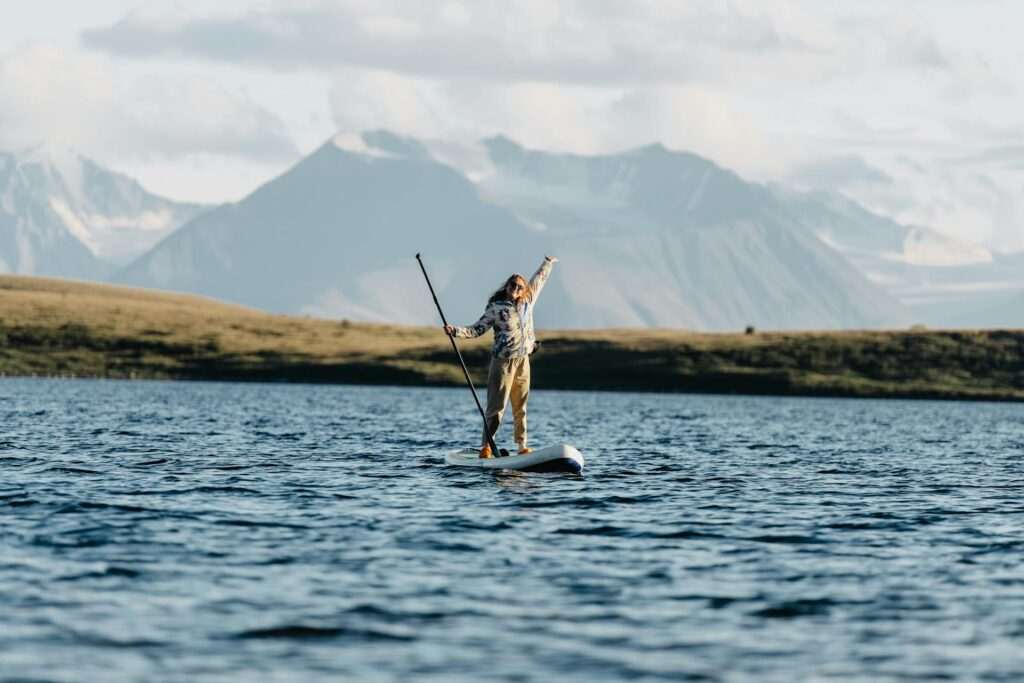
Standup paddleboarding near Anchorage, Alaska is one of the most underrated ways to spend a summer day in the region. With calm glacial lakes, floatplane-dotted seaplane bases, and mountain backdrops that don’t look real, the Anchorage area offers SUP settings you won’t find anywhere else in North America. Here’s where to go, what to know about the water, and how to get on the water without hauling a board from home.
Why SUP Near Anchorage?
Most visitors don’t think of Anchorage as a paddleboarding destination — and that’s exactly why it’s worth doing. The summer window from June through August brings long daylight hours (up to 19+ hours in late June), calm mornings on sheltered lakes, and wildlife you’re unlikely to encounter anywhere else from a board: bald eagles overhead, moose wading along shorelines, and loons calling across still water. The mountains rise directly from the water’s edge on some of these lakes. The Instagram potential is absurd. The crowds are nonexistent.
Eklutna Lake — Best for Beginners
Eklutna Lake is the starting point for most first-time SUP paddlers near Anchorage, and for good reason. Located about 35 miles northeast of downtown off the Glenn Highway, it’s the largest lake in Chugach State Park — a broad, calm glacial body of water with a striking turquoise-blue color from glacial silt. The lake sits in a mountain valley with peaks rising on three sides, making every angle photogenic.
The water is calm enough for beginners in typical summer conditions, and the campground store near the trailhead rents stand-up paddleboards seasonally. Paddle out toward the far end of the lake for the best views of the hanging glaciers above the valley. Watch the weather: afternoon winds can pick up quickly in the valley corridor and make the paddle back a workout even on an otherwise easy day.
Key info: Park entrance fee applies. No boat launch ramp needed — carry-in access. The lake road is paved; parking fills on summer weekends by mid-morning.
Lake Hood — SUP Under the Flight Path
Lake Hood is the largest floatplane base in the world — and one of Anchorage’s most unusual places to paddle. Located immediately adjacent to Ted Stevens Anchorage International Airport, it’s a two-connected-lake system where floatplanes land and take off continuously throughout the day in summer. Paddleboarding here means sharing the water with de Havilland Beavers and Cessna 185s taxiing for takeoff — an experience that’s genuinely unlike anything else in the world.
The water is calm and sheltered, access is easy from the Lake Hood seaplane base parking areas, and the aviation spectacle around you is free entertainment for the whole session. Visit the Lake Hood Seaplane Base listing for current access details and viewing tips. Bring your own board or rent from a shop in town — there’s no on-site rental operation.
Best time: Early morning for calm water and active flight traffic. The backdrop of the Chugach Mountains to the east catches the morning light beautifully.
Reflections Lake — Quiet and Wildlife-Rich
Near the Potter Marsh Wildlife Viewing Area south of Anchorage on the Seward Highway, Reflections Lake is a small, shallow, extremely calm body of water that’s exceptional for relaxed paddling and wildlife watching. Trumpeter swans, Arctic terns, and various shorebirds use the marsh heavily from May through August. The lake is small — you can lap it in 20 minutes — but the wildlife density makes it worth the stop, especially in the morning.
This isn’t a destination for a full paddling day; it’s best combined with a drive along Turnagain Arm or as a warm-up before a longer hike. Carry-in access from the roadside pullout. No facilities on-site.
Knik Arm — Advanced Paddlers Only
Knik Arm, the tidal inlet immediately west and north of Anchorage, is technically accessible for SUP, but it’s not a recreational paddling destination — it’s a serious hazard for anyone unfamiliar with tidal hydrology. The arm has some of the most extreme tidal fluctuations in North America (up to 38 feet in the upper reaches), powerful currents, cold water, and no rescue infrastructure. Experienced sea kayakers and expedition paddlers venture here; SUP beginners and intermediates should stay on the lakes. Mention it because people ask — but the answer is: not for casual paddling.
Gear, Rentals & What to Bring
The most important thing to understand about paddling near Anchorage is the water temperature: 45–55°F in summer on most lakes. That’s cold enough to trigger cold shock if you fall in unexpectedly. A wetsuit or drysuit is strongly recommended for beginners and anyone paddling solo on open water. At minimum, wear a personal flotation device and carry a paddle leash.
For rentals and gear in Anchorage:
- Alaska Outdoor Gear Rental — board and paddle rentals for daily use, wetsuit options available
- REI Anchorage — sells or rents paddleboarding gear, expert staff who know local water conditions, and a good source for dry bags, leashes, and PFDs
A dry bag for your phone and valuables is non-negotiable. Glacier-fed lakes look pristine but submersion of electronics ends badly. Bring water and snacks — there’re no services at most launch spots.
Best Months & Conditions
June through August is the prime SUP window near Anchorage. Water temperatures peak in late July and early August on shallower lakes like Reflections. Eklutna Lake stays colder year-round due to glacial input. Morning sessions offer the calmest conditions on all lakes — afternoon winds are common and can significantly affect paddling difficulty.
September is possible on calm days but water temps drop fast and the weather becomes less predictable. Ice can appear on smaller lakes by late October.
Frequently Asked Questions
Do I need experience to paddleboard at Eklutna Lake?
No prior SUP experience is needed for Eklutna Lake on a calm morning. Stay close to shore while you find your balance, wear a PFD, and avoid paddling out if afternoon winds have already arrived. The cold water temperature means falling in is unpleasant and potentially dangerous without a wetsuit.
Can I rent a paddleboard near Eklutna Lake?
The campground store at Eklutna Lake offers seasonal rentals. Availability varies — call ahead or check in early, as they sell out on busy summer days. Alternatively, rent in Anchorage and car-top or strap the board to your vehicle for the 35-mile drive.
Is Lake Hood open to the public for paddleboarding?
Yes — Lake Hood is public water and paddlers are welcome. Stay clear of active floatplane taxiways and be aware that pilots have the right of way. Check current access norms at the seaplane base before launching, as operations vary seasonally.
Featured photo by Kirill Lazarev on Pexels.


No comments yet.