
Stand-Up Paddleboarding Near Anchorage 2026: Best SUP Spots & Rental Guide
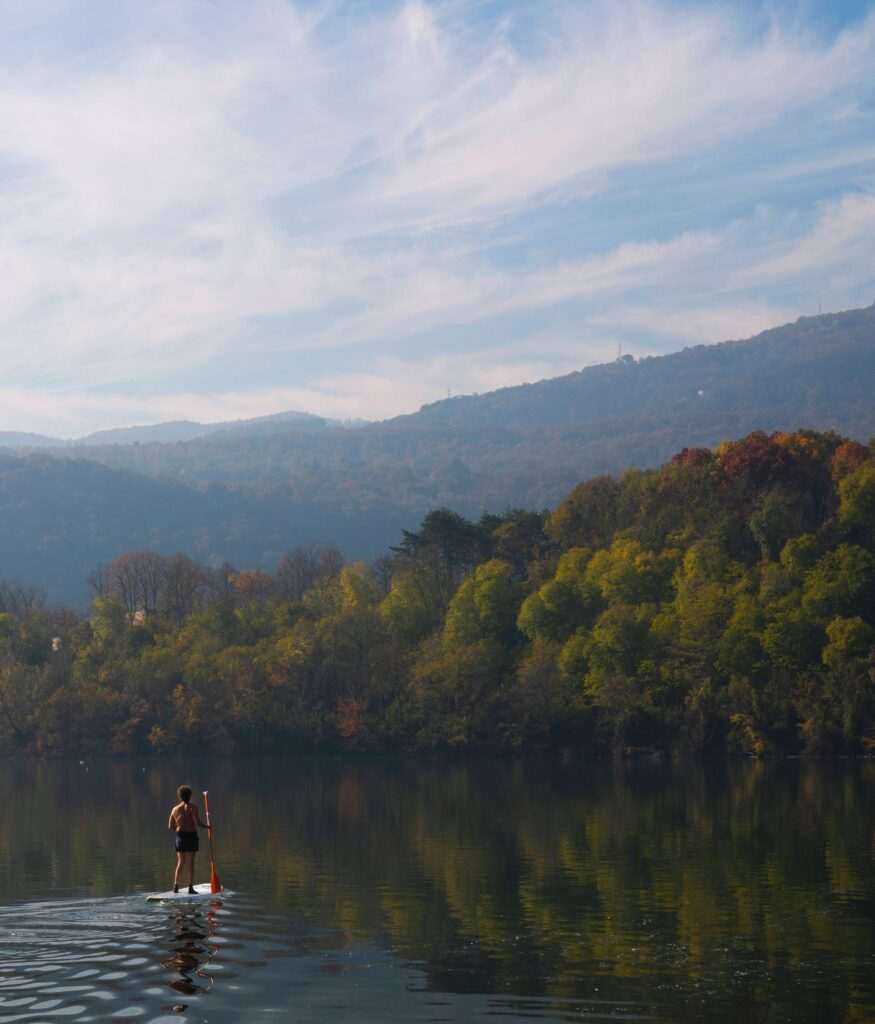
Stand-up paddleboarding near Anchorage requires a mindset adjustment if you’re arriving from a warmer climate. The lakes are glacially cold even in July, the wind on larger water bodies can build quickly, and the Alaska weather window for a calm-water morning can close by noon. But the scenery — Chugach peaks rising directly from the shore, moose feeding in lakeside shallows, bald eagles overhead — makes SUP near Anchorage some of the most visually rewarding flatwater paddling in North America. This guide covers the best SUP locations, rental options, and cold-water safety protocols for paddleboarding near Anchorage in 2026.
Cold Water Reality: What Makes Alaska SUP Different
Even in mid-summer, most lakes within driving range of Anchorage maintain water temperatures between 45°F and 58°F. Falling in — even briefly — carries real risk of cold shock and impaired swimming ability. The mandatory baseline for Anchorage-area SUP: always wear a leash (keeps the board close if you fall), always wear a personal flotation device, and for extended sessions on larger water, dress for immersion rather than air temperature. A wetsuit (3mm minimum for summer) or drysuit dramatically extends your margin for error if you go in. This isn’t a tourism liability disclaimer — it’s the difference between an embarrassing swim and a genuine emergency on remote water.
The good news: calm lake conditions in Anchorage’s urban area mean the risk profile is lower than it sounds. Westchester Lagoon and Goose Lake are supervised areas with other people present. Eklutna Lake has ranger presence in summer. Beginners who stay close to shore on calm mornings are operating within a manageable risk envelope — just not one that forgives going out in a t-shirt on a cold water lake.
Eklutna Lake: Best Flatwater SUP Near Anchorage
Eklutna Lake is the premier SUP destination in the Anchorage area. Located roughly 26 miles northeast of downtown (about 45 minutes via the Glenn Highway and Eklutna Lake Road), the lake stretches 7 miles through a valley flanked by Chugach peaks. The water is calm in the mornings before valley winds develop, and the alpine backdrop — glaciers visible at the valley head, spruce forest reaching to the shoreline — is among the most spectacular SUP settings accessible by road in southcentral Alaska.
Beginner and intermediate paddlers should stay in the lower mile of the lake near the day-use area and boat launch, where the wind exposure is lowest. Experienced paddlers can push up-valley in the morning calm, timing the return for before afternoon thermals build from the southwest. The Eklutna Lake campground allows for overnight stays that enable early morning paddling before day-trippers arrive — the first two hours after dawn are typically the best conditions on the lake, with glassy water and moose frequently visible in the shallows near the shoreline.
Westchester Lagoon: Urban SUP in the Heart of Anchorage
Westchester Lagoon is the most accessible flatwater location in Anchorage — a tidal lagoon connected to Cook Inlet by a waterway, sheltered from wind, and surrounded by the Coastal Trail and residential neighborhoods. The lagoon sits within city limits, is easily reached by bike from downtown, and offers calm conditions on most summer mornings. It’s supervised, heavily used by cyclists and walkers, and appropriate for beginners who want a forgiving environment for their first Alaska SUP session.
Access is straightforward via the W Northern Lights Blvd parking area or the Coastal Trail. No launch fee. Expect other watercraft — kayakers, canoeists, and recreational paddlers share the lagoon freely. Conditions are typically best from 7–10 AM before any coastal wind develops. Avoid afternoons when southwesterly wind across Cook Inlet can push into the lagoon and chop the water surface.
Goose Lake: A Quiet Urban Option
Goose Lake sits within Anchorage’s eastern residential neighborhoods and offers a calm, small-lake SUP experience convenient to midtown and the University area. The lake is small enough that it remains sheltered from wind even when the lagoon gets choppy, making it a viable fallback option when afternoon conditions rule out Westchester. The water is cleaner than it appears — the lake has been the subject of municipal water quality improvement efforts — and swimming is permitted alongside paddle sports. Arrive early; parking is limited and the trail around the lake draws heavy foot traffic on sunny summer afternoons.
Mirror Lake: Mat-Su Valley Flatwater
Mirror Lake, located in the Matanuska-Susitna Valley roughly an hour north of Anchorage via the Glenn Highway, is popular for SUP, swimming, and non-motorized boating in summer. The lake name is accurate — on calm mornings, the Chugach and Talkeetna foothills reflect perfectly off the glassy surface. This is a Mat-Su Borough recreation area with a day-use fee, beach access, and a boat launch. The surrounding birch and alder forest makes it feel genuinely removed from the road system even though it’s right off the Parks Highway. Water temperatures here warm slightly faster than Eklutna Lake due to the shallower depth — still cold, but more manageable for summer recreational paddling.
SUP Rental and Guided Options Near Anchorage
AK Paddlesports is the primary Anchorage-area operator for stand-up paddleboard rentals and guided paddling experiences. They operate inflatable SUP rentals suitable for transport to Eklutna Lake and other area water bodies, along with guided kayak and paddleboard tours on area waterways. Booking in advance is recommended for peak summer weekends; walk-in rentals are available on weekdays but inventory is limited.
Some outdoor recreation retailers in Anchorage (REI, Sportsman’s Warehouse) also rent inflatable SUPs by the day. For visitors planning multiple paddle days, a rental from an outdoor retailer combined with transport to different lakes is often more economical than booking guided sessions for each outing.
SUP Yoga and Fitness Classes
Stand-up paddleboard yoga has a foothold in Anchorage’s outdoor fitness community. Sessions typically run on Westchester Lagoon during the calm morning window in July and August. Yoga in the Park and similar pop-up fitness programs occasionally incorporate SUP sessions; check current event listings in summer as schedules change year to year. The balance demands of an Alaskan lake — colder, slightly choppier than pool conditions — make SUP yoga here a legitimately more challenging experience than warm-climate versions of the practice.
Inflatable vs. Hard Board: What to Bring or Rent
For visitors flying into Anchorage, inflatable SUPs solve the transport problem. Modern inflatable boards (iSUP) deflate to a backpack-sized package that can be checked as airline luggage or stowed in a car trunk. Quality inflatables (at least 6-inch thickness, reinforced rails) perform well on flat lake water — the performance gap versus hard boards only becomes meaningful in surf or wind conditions that you’ll want to avoid in Alaska anyway.
Hard boards offer better glide and tracking for longer lake crossings but require roof rack transport. If you’re renting from Eagle River-area outfitters or similar local operators, hard boards may be available at the launch site. Hard boards also handle wind-chop better on Eklutna Lake’s open water stretches — worth asking about if you’re planning a full lake crossing.
Wind and Weather Windows
The consistent pattern on Anchorage-area lakes: mornings are calm, afternoons are not. The thermal cycle driven by the Chugach Mountain slopes means valley winds develop predictably from late morning onward. For SUP, this means launching between 6–10 AM is optimal for glassy conditions. By 1–2 PM on sunny days, most of the area lakes see enough surface wind to make SUP uncomfortable for beginners and inefficient even for experienced paddlers.
Check wind forecasts via Windy.com or Weather.gov the night before for the specific lake you’re visiting. Eklutna Lake, channeled through a mountain valley, can see localized wind acceleration that the general Anchorage forecast won’t capture. If the forecast shows sustained winds above 10 mph by mid-morning, plan for Westchester Lagoon (more sheltered) rather than Eklutna.
What Not to Do: Turnagain Arm and Bore Tides
Turnagain Arm is not a SUP venue. The Arm’s extreme tidal range (up to 38 feet) creates bore tides — walls of incoming water that travel up the Arm at 10–15 mph — along with powerful tidal currents, mudflats that trap people (the glacial silt acts like quicksand), and rapidly shifting conditions. Every few years a visitor ignores the warning signs and attempts to use the Arm’s shoreline for recreation; the outcomes range from rescued to fatal. Stay on designated lake water. The Arm is spectacular to observe from the Seward Highway pullouts — it is not a place to paddle anything.
Similarly, Cook Inlet proper is not a SUP location. The Inlet’s currents, bore tides, and cold temperatures make it appropriate for motorized vessels with experienced operators only. All SUP activity near Anchorage should be confined to designated lakes and protected lagoons.
Combining SUP with Camping at Eklutna Lake
An overnight at the Eklutna Lake campground is the most immersive version of the Anchorage SUP experience. Arrive in the afternoon, set up camp, and have the lake largely to yourself by 6 PM when day visitors leave. Early the next morning — before any other paddlers arrive — the lake can be genuinely private, glassy calm, and surrounded by the Chugach peaks in the morning light. The campground has bear boxes and basic facilities; bring your own water filter as treated water may not be available at all sites. This combination of camping and SUP is one of the low-cost, high-quality outdoor experiences the Anchorage area does exceptionally well.

No comments yet.