
Snowshoeing Near Anchorage 2026: Best Trails, Gear & Winter Route Guide
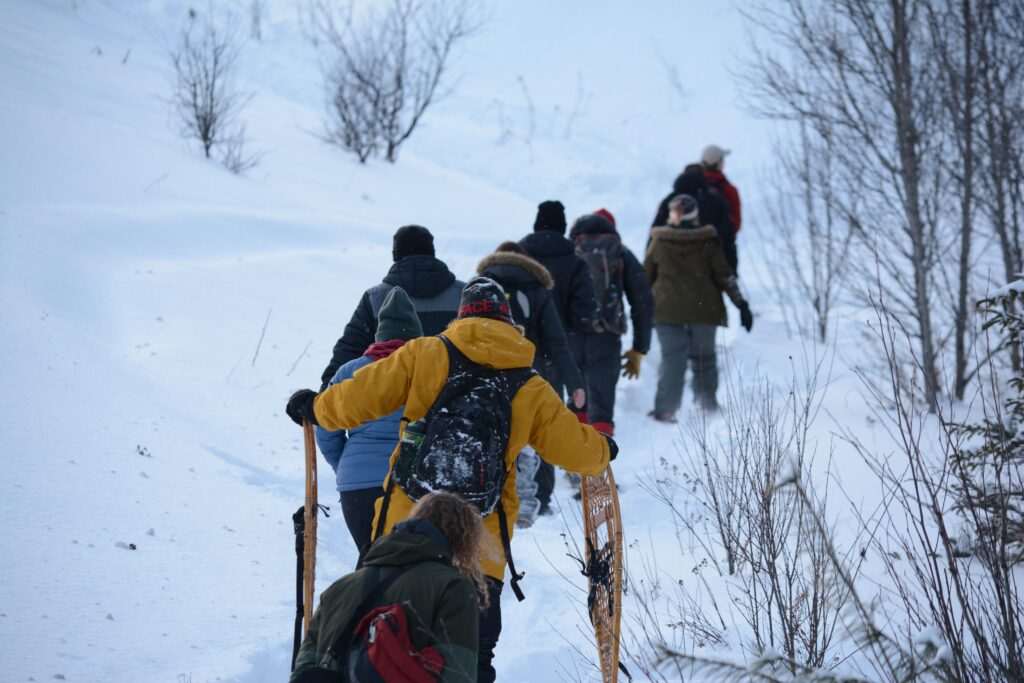
Snowshoeing near Anchorage is as straightforward as winter outdoor recreation gets: strap on the snowshoes, walk into the Chugach Mountains that rise directly behind the city, and you’re in terrain that most visitors travel thousands of miles to reach. The trail network accessible from Anchorage city limits covers everything from flat, groomed urban paths to exposed alpine ridges above treeline — a range of difficulty that accommodates first-timers and experienced winter hikers on the same day in the same park system. This guide covers the best routes, the gear, and everything else needed to get on the snow in 2026.
Why Snowshoeing in Anchorage: Terrain and Access
Chugach State Park — nearly 500,000 acres of the Chugach Mountains directly adjacent to the city — is the core of Anchorage snowshoeing. The park begins at trailheads accessible from neighborhoods across the east side of the city, and the transition from pavement to genuine mountain terrain happens within minutes of the parking area at most entry points. Anchorage typically receives 50-75 inches of snowfall per season, with reliable snowpack from late November through late March. The city’s elevation at sea level and the rapid gain to alpine terrain at 3,500-5,000 feet creates a compressed winter experience — you can start at sea level and reach open snowfields within two to three hours of a trailhead departure.
Flattop Mountain: Anchorage’s Signature Snowshoe Route
The Flattop Mountain Trail from the Glen Alps Trailhead is the most-hiked route in Alaska by some counts, and in winter it converts to a classic snowshoe objective with dramatic views payoff at the top. The trail gains roughly 1,300 feet over 1.5 miles to the summit plateau at 3,510 feet — moderate in summer conditions, more demanding in winter when the upper route involves significant snow travel and wind exposure. On clear days the summit views encompass Cook Inlet, the Alaska Range, and Denali in the distance. The trail is well-marked and heavily trafficked on weekends, which keeps a boot pack established through most of the winter. Crampons or microspikes are sometimes needed on icy sections; snowshoes with aggressive heel crampon plates handle most conditions. Start from the Glen Alps Trailhead at the end of Upper Huffman Road — parking fills by mid-morning on clear winter weekends.
Near Point: Moderate Ridge Snowshoeing
Near Point, accessible from the Glen Alps parking area via a branch of the Flattop Mountain trail system, is a less-crowded alternative for snowshoers who want a substantial ridge route without the full Flattop commitment. The route gains approximately 1,000 feet to a rounded summit at 3,050 feet with open views down the Hillside neighborhoods and across the inlet. The approach is through mixed spruce forest and open slopes that provide good wildlife-watching terrain — moose, ptarmigan, and occasional Dall sheep are encountered along this corridor in winter. The route is less defined than Flattop in winter and benefits from a topo map or GPS track for first-time visitors.
Powerline Pass: Flat Valley Snowshoeing for Distance
The Powerline Pass Trail runs through a broad valley behind the Glen Alps Trailhead — flat, sheltered by ridgelines on either side, and suitable for snowshoers who want distance rather than vertical gain. The trail follows a powerline corridor for approximately 8 miles to the pass itself, making it ideal for beginners who want to build time on snowshoes without committing to steep terrain. The valley is also a reliable moose habitat in winter and produces wildlife sightings at higher rates than the more exposed upper routes. Turn around at any point — the flat terrain makes route-finding simple and retreat easy even in deteriorating weather.
Kincaid Park: Groomed Trails and Flat Forest Snowshoeing
Kincaid Park on the west side of Anchorage maintains an extensive groomed trail network primarily for cross-country skiing, but snowshoers are welcome on designated non-ski-track sections. The park’s terrain is gentle — forested loops through birch and spruce with modest elevation change — making it the most accessible snowshoeing option for families or visitors who want low-commitment winter forest walking. The park’s proximity to the coastal bluffs adds Cook Inlet views on clear days. Check the Kincaid Park trail map for current snowshoe-permitted routes, as the designated areas shift slightly year to year based on grooming priorities.
Far North Bicentennial Park: Urban Forest Loops
Far North Bicentennial Park in East Anchorage offers the most urban snowshoeing experience in the city — wooded trails through old-growth boreal forest, accessible from multiple trailheads off Abbott Road and surrounding neighborhoods. The park sees less crowding than the Hillside trailheads and provides a quiet, forest-immersive experience that the more exposed routes above treeline don’t offer. Wildlife sightings in Far North Bicentennial lean toward the forest species: moose, snowshoe hare, and occasionally lynx in years when the population cycles favor them. The trail network is less formally marked than the Chugach State Park trails — a basic trail map is worth downloading before your first visit.
Avalanche Awareness and Safe Terrain Choices
Anchorage snowshoers don’t need avalanche training for the flat or forested routes — Powerline Pass valley, Kincaid Park, and Far North Bicentennial Park are all below avalanche terrain thresholds. However, Flattop Mountain, Near Point, and any route that takes you above treeline on the Chugach front range involves slopes that can avalanche in certain snow conditions. The Alaska Avalanche Information Center publishes daily forecasts for the Chugach at alaskasnow.org — checking this before any above-treeline excursion is standard practice for Anchorage outdoor recreationists. The primary avalanche terrain to avoid is steep slopes between 30-45 degrees on the lee side of ridges after wind events or warm-cold cycles. Sticking to ridgelines and convex terrain rather than crossing avalanche runout zones eliminates most risk on the popular Anchorage routes.
Snowshoe Rental in Anchorage
Alaska Outdoor Gear Rental provides snowshoe rentals for visitors who don’t want to travel with their own equipment. Rental snowshoes typically include poles and are available in sizes appropriate for adults and children. REI Anchorage also offers a gear rental program that includes snowshoes, and the staff can advise on current trail conditions and appropriate sizing for the routes you’re planning. Book rentals in advance for winter weekend visits — demand peaks during holiday periods and clear-weather weekends when the trails are at their best.
Gear Recommendations
Frame-style snowshoes — the traditional oblong oval design — work well for trail snowshoeing in Anchorage’s packed snow conditions. MSR-style technical snowshoes with aggressive crampons are better suited for the steeper terrain on Flattop Mountain and above-treeline routes. Most rental fleets lean toward the more versatile MSR-style. Telescoping trekking poles are strongly recommended: they assist balance on uneven terrain, reduce knee impact on descents, and improve stability when the snow surface crusts or ices over. A daypack with 2-3 liters of insulated water, emergency layers, a headlamp, and a snack covers the essentials for half-day routes. Hand warmers are worth carrying in January and February when temperatures can drop below 0°F at trailhead elevation.
What to Wear for Alaska Winter Snowshoeing
Alaska winter temperatures in the Anchorage area range from 20°F on mild winter days to -10°F or colder during cold snaps. The layering system for snowshoeing: a moisture-wicking base layer (merino wool or synthetic, never cotton), an insulating mid-layer (fleece or down), and a wind/waterproof shell. Snowshoeing generates significant body heat on the ascent — you’ll remove layers on the way up and add them back immediately at the summit or stopping point. Extremities are where cold catches most visitors: insulated waterproof mittens over thin liner gloves, wool socks with insulated waterproof boots, and a hat that covers the ears. Balaclava or neck gaiter for wind exposure above treeline. Frostbite risk is real on exposed skin below -10°F with any wind; cover all skin on the summit of Flattop in those conditions.
Trail Etiquette: Sharing Winter Trails
Groomed ski tracks — the set parallel tracks used by classic-technique cross-country skiers — should never be walked or snowshoed on. Destroying a set ski track by walking through it is the cardinal sin of Anchorage winter trail etiquette and generates genuine friction between user groups. At Kincaid Park and other groomed trail areas, snowshoers use the ungroomed shoulder of the trail or designated snowshoe routes rather than the ski track. On ungroomed backcountry routes like Powerline Pass and the Flattop trail, snowshoers and hikers share the boot pack and there’s no track to protect. Yield to downhill users on narrow trails; step to the side to let faster parties pass on the ascent.
Guided Snowshoe Tours
Go Hike Alaska runs guided winter hikes and snowshoe tours in the Chugach State Park and Alyeska area, offering local knowledge of current conditions and route-finding that’s particularly valuable for first-time visitors. Guided tours handle the navigation and route assessment that can be challenging without familiarity with the terrain, and guides carry group safety equipment including avalanche gear when routes require it.
Best Months and Seasonal Conditions
December through March provides the most reliable snowshoeing conditions near Anchorage. December and early January often bring the deepest fresh snow and the most dramatic winter forest conditions; February produces the most stable cold temperatures and typically the best sun angles for photography. March is the shoulder month — snowpack remains reliable but daytime warming begins to crust the surface, which benefits from early starts before solar softening begins. April snowshoeing is possible in the mountains but uncertain at lower elevations. The specific conditions vary year-to-year; the Chugach State Park trailhead webcams and the Alaska Avalanche Information Center forecast together give the best current picture of what to expect on any given day.
Featured photo by Zane Blacquier on Pexels.

No comments yet.