
Sitka Alaska 2026: Russian Heritage, Sea Otters & History
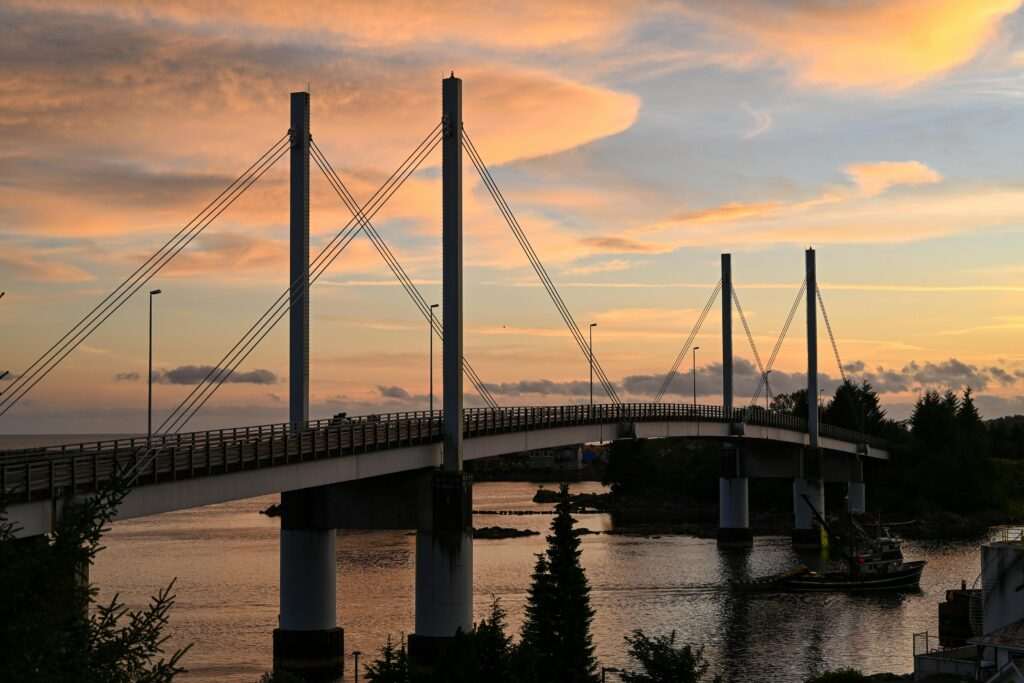
Sitka occupies a position unlike any other town in Alaska. Situated on the outer coast of Baranof Island in the Alexander Archipelago, it faces the open Pacific through a screen of island-dotted ocean and looks inland at volcanic peaks rising from dense Sitka spruce forest. The scenery alone would make it remarkable. What makes it singular is the history: Sitka was the capital of Russian America from 1808 until the Alaska Purchase in 1867, and the Russian Orthodox church, the onion-domed cathedral on Lincoln Street, the street grid, and the names layered through the landscape still carry that period in ways that no other Alaska community can match. Walking through downtown Sitka is the closest thing in the United States to walking through a 19th-century Russian colonial port — overlaid with Tlingit culture that long predated the Russians and that asserted itself decisively in 1804 in a battle whose site is now a national park. From Anchorage, Sitka is a 90-minute flight. The combination of history, wildlife, and landscape it delivers makes it one of the most rewarding two- or three-day extensions to an Anchorage-based Alaska trip.
Getting to Sitka from Anchorage
Alaska Airlines operates service between Anchorage and Sitka, typically connecting through Juneau, with a total travel time of roughly 90 minutes to two hours depending on the connection. Direct charter options exist but the Alaska Airlines routing is the most reliable and bookable option for independent travelers. The Alaska Marine Highway ferry also serves Sitka as part of the Southeast Alaska ferry system, connecting through Juneau and other ports — a scenic but time-intensive option better suited to extended Southeast itineraries than a short side trip from Anchorage.
Sitka does not have a road connection to the Alaska highway system. The town is accessible only by air or sea, which keeps the tourist traffic lower than Juneau and Ketchikan despite Sitka’s historical and natural depth. Rental cars are available in limited numbers; most of Sitka’s main attractions are walkable from downtown or reachable by cab from the airport or ferry terminal.
Sitka National Historical Park
The Sitka National Historical Park is the oldest federally designated park in Alaska, established in 1910, and the most historically layered experience in a town full of layered history. The park preserves the site of the 1804 Battle of Sitka — the final major armed conflict between the Tlingit and Russian colonial forces — and the totem poles that line the coastal rainforest trail leading to the battle site create one of the most quietly dramatic park experiences in the national system.
The trail runs through old-growth Sitka spruce and hemlock forest along the banks of the Indian River, with the poles standing in the understory at intervals that allow each one to be seen individually and in context. The poles are a combination of originals brought from villages across Southeast Alaska for a 1904 exhibition and others carved more recently; interpretive signs explain the cultural significance of the figures and their clan associations. The battle site at the trail’s end is marked simply — the forest has reclaimed the terrain — but the interpretive signs give enough detail to make the history present rather than abstract.
Inside the park’s visitor center, the Southeast Alaska Indian Cultural Center operates with working Native artists demonstrating traditional Tlingit crafts: weaving on traditional looms, argillite and silver carving, and regalia work. The artists are working, not performing — the center is a functioning studio — and the conversations available with them about the craft and its cultural context are the most direct engagement with living Tlingit culture accessible in a single Sitka visit. Admission to the park and cultural center is free. Allow two hours minimum; the trail and the cultural center together warrant more. For visitors who have experienced the Alaska Native Heritage Center in Anchorage, the cultural center at Sitka NHP offers a complementary view focused specifically on Southeast Tlingit traditions.
St. Michael Cathedral
The Cathedral of St. Michael the Archangel on Lincoln Street is the most photographed building in Sitka and the architectural symbol of the Russian period. The original cathedral was built in 1848, making it the oldest Russian Orthodox cathedral in North America in its original location. A fire destroyed the building in 1966; the current structure, completed in 1976, is an accurate reconstruction, and the congregation salvaged the most important contents before the fire consumed the building — icons, vestments, and religious objects that survived and now hang inside as they did in the 19th century.
The icons themselves are the point. Several date to the 18th century and were brought from Russia for the original cathedral; others were painted in Alaska by Russian missionaries. They represent some of the finest examples of Russian Orthodox religious art in North America, in a working church that holds regular services. The cathedral is open for visitor tours during summer hours for a small donation. The exterior — white walls, octagonal tower, gleaming green onion dome — is stunning against both clear sky and the grey light that characterizes many Sitka days.
Sea Otters and Wildlife in Sitka Sound
Sitka Sound has one of the densest sea otter populations on Earth, and the otters are visible without effort. They float on their backs in the harbor, among the kelp beds visible from the ferry dock, and in the protected waters along the coast road. Sea otters in Alaska were nearly extirpated by the fur trade and have recovered in Southeast Alaska to the point where they’re as common as wildlife encounters get — visible on a casual harbor walk, not a guided tour. Watching a group of otters in a kelp raft, floating on their backs with their paws folded and their heads barely above water, is the specific wildlife experience that Sitka delivers more reliably than any other Alaska community.
Sitka Sound is also a productive feeding ground for humpback whales, particularly in fall when herring congregate in the sound and whales follow. Guided whale-watching boat tours operate through the summer season and into October; the combination of humpback whales and sea otters in the same protected water, framed by volcanic peaks and island forests, produces wildlife photography that requires no particular skill to capture. Steller sea lions haul out at offshore rookeries visible from whale-watching vessels. The marine wildlife density of Sitka Sound is comparable to what visitors find at the Alaska SeaLife Center in Seward — but wild, in the animals’ own environment.
Fortress of the Bear
The Fortress of the Bear is a small rescue facility on the edge of Sitka that cares for orphaned brown bear cubs whose mothers have been killed — by vehicles, by hunters, or by conflicts with humans in Southeast Alaska’s logging and fishing communities. The bears, which cannot be released once they’ve had extended human contact, live in large enclosures that allow close viewing. The facility operates year-round; summer visits allow seeing bears that arrived as cubs and have grown into young adults, with staff who explain each bear’s history and the circumstances that brought it there.
The experience has something in common with the Alaska Wildlife Conservation Center outside Anchorage — resident animals that can’t be returned to the wild, educational framing, and the specific emotional weight of knowing you’re looking at an animal whose wildness was interrupted by human activity. The Fortress of the Bear is smaller and more intimate, with fewer species but more direct access to the bears themselves. It’s a half-hour visit that adds unexpected emotional depth to a Sitka day.
Hiking: Mount Verstovia and Gavan Hill
Mount Verstovia, rising to 3,350 feet above the town, offers one of the best ridge hikes in Southeast Alaska. The trail — 5 miles round-trip with 2,550 feet of elevation gain — climbs through old-growth forest before breaking into open alpine terrain with views across Sitka Sound’s island labyrinth and, on clear days, the volcanic cone of Mount Edgecumbe on Kruzof Island to the west. The trail is steep and requires decent fitness; the payoff at the shoulder — a flat rocky promontory with 270-degree views — is proportionate to the effort. Allow four to five hours round-trip.
The Gavan Hill Trail offers a less demanding alternative that still reaches the ridge above the spruce line. The trail connects to the Harbor Mountain trail system for longer ridge walks; the upper terrain provides views over the town and sound without the technical demands of Verstovia’s upper sections. Both trailheads are within walking distance of downtown.
Old Sitka State Historical Site
Three miles north of downtown on Halibut Point Road, the Old Sitka State Historical Site marks the location of the original Russian settlement established in 1799 — the first attempt at a permanent Russian presence in Alaska. The Tlingit clan whose territory this was destroyed the settlement in 1802, killing most of the garrison; the Russian return in 1804 and the Battle of Sitka followed two years later. The site today is a small oceanfront park with interpretive signage explaining these events in the sequence that produced the Sitka that exists today. It’s a 20-minute stop that gives the Sitka National Historical Park visit meaningful context.
Sitka Sound Science Center
The Sitka Sound Science Center, adjacent to the harbor downtown, is a working marine research institute that offers public access to its education programs and a touch tank featuring the invertebrates of the North Pacific — sea stars, urchins, anemones, and the other organisms that define the nearshore ecology of Southeast Alaska. The center’s position in a working hatchery adds context: the salmon returning to Sitka’s streams are partly products of hatchery programs like this one, and the center explains the relationship between wild and hatchery salmon populations that shapes commercial and sport fishing throughout the region. It’s a 30-minute addition to a Sitka day that fills in the ecological picture the outdoor wildlife encounters don’t provide.
Practical Notes
Sitka averages 90 inches of annual precipitation, most of it as rain. Summer temperatures run 50 to 65°F; the outer-coast maritime climate is milder than Anchorage but wetter. Pack waterproof layers for every outdoor activity; the difference between a good Sitka day and a wet one is what you’re wearing. Two nights is the minimum to cover Sitka National Historical Park, St. Michael Cathedral, the Fortress of the Bear, and a wildlife boat tour without rushing; three nights allows Mount Verstovia and more time in the cultural center.
Sitka receives cruise ships, but far fewer than Juneau and Ketchikan — the outer-coast approach makes it inaccessible to larger ships that can’t navigate the shallower inside passages. The cruise ship presence, when it occurs, is confined to the morning; by early afternoon the town returns to itself. Independent travelers visiting by air encounter Sitka at its least crowded and most genuine, which is the version worth seeking.

No comments yet.