
Printmaking and Linocut Workshops in Anchorage 2026
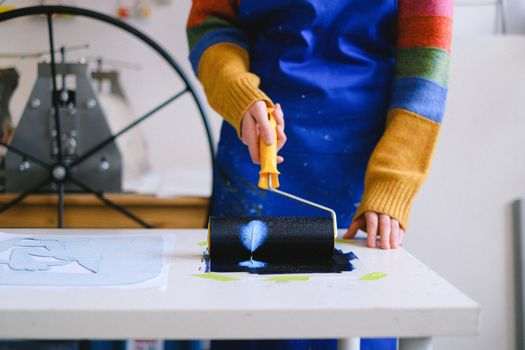
Printmaking is the art of transferring an image from a prepared surface to paper, fabric, or another substrate — a process that multiplies the image across editions while producing each individual print with the particular warmth and variation that handmade processes carry. Linocut, the most accessible printmaking discipline, uses a linoleum block as the image-bearing surface: the artist carves away material with gouges and V-tools, leaving a raised surface that holds ink and transfers it to paper under pressure. The result is a bold, graphic image with a characteristic quality — the slight texture of the inked surface, the white of carved-away areas, the crisp edge of a well-cut line — that’s impossible to replicate digitally. Alaska’s imagery translates particularly well into linocut’s graphic vocabulary: the silhouettes of mountain ranges, the forms of ravens and bears, the patterns of Native art traditions, and the textures of forest and ice all produce strong linocut work. This guide covers printmaking and linocut workshops in Anchorage in 2026.
Linocut: The Beginner’s Entry Point
Linocut’s appeal for beginners comes from its accessibility. The materials are inexpensive — a linoleum block, a set of carving gouges, a brayer (ink roller), and a tube of water-based ink costs $30–$60 for a starter setup. The technique is learnable in a single workshop session. And the results are immediate: within a few hours of starting, most beginners have a finished print they’re genuinely pleased with.
The fundamental linocut technique is reduction printing — “white is where you cut, black is where you don’t.” Beginning students draw or transfer their image onto the block, then carve away the areas that should appear white in the final print, leaving the raised surfaces that will hold ink. A brayer rolls ink evenly across the raised surface; paper is pressed onto the inked block (either by hand burnishing or through a press) and peeled away to reveal the print. Multiple colors are possible through either separate blocks for each color or reduction printing (progressive carving with ink added at each stage).
The carving tools matter significantly. Cheap gouge sets resist cutting cleanly and increase the risk of slipping and cutting yourself rather than the block; a set of quality Japanese or Swiss-made gouges cuts smoothly and safely. Most Anchorage workshops provide quality tools for the session — if you’re continuing the practice at home, investing in better tools (a set of Pfeil Swiss Made gouges, for example) is worth the $40–$80 cost.
Relief Printing Beyond Linocut
Linocut is the most beginner-accessible relief printing form, but the broader category includes woodcut (carving the image into plank-grain or end-grain wood blocks, which produces a different textural quality than linoleum), wood engraving (an end-grain wood technique requiring more specialized tools and producing fine-line detail), and relief printing from found objects, foam sheets, or cardboard. Most Anchorage printmaking workshops introduce linocut specifically before progressing to other relief forms.
Letterpress printing — using movable type and relief-printed plates to print text and imagery — is a separate tradition from artist printmaking but shares the same ink-on-raised-surface mechanics. Interest in letterpress has grown alongside the broader handmade printing revival, and while Anchorage’s letterpress infrastructure is limited, periodic workshops in the medium appear through the print arts community.
Printmaking Workshops and Studios in Anchorage
The University of Alaska Anchorage’s Art Department maintains printmaking facilities including relief, intaglio, and screenprinting equipment used for student coursework. The department periodically extends community access through continuing education workshops and open studio programs — these are the most fully equipped printmaking facilities in the city and the most appropriate venue for students who want to progress beyond linocut into etching, mezzotint, or screenprinting.
Independent printmaking instructors offer workshop sessions through community centers, arts organizations, and private studio spaces. The Anchorage Museum’s Studio programming has included printmaking workshops as part of its community arts calendar. Check the museum’s current programming, Anchorage Eventbrite listings, and local arts Facebook groups for current workshop availability — the printmaking workshop calendar in Anchorage isn’t as dense as the craft workshop market for macrame or candle making, so advance planning helps.
Workshop prices for linocut sessions typically run $45–$80, including block, tools for the session, ink, and paper. Workshops that cover multiple print editions (making 5–10 prints from a single carved block) rather than just one test print give a more complete understanding of how edition printing works and what variables affect print quality.
Alaska Imagery and Printmaking
The graphic clarity that linocut demands — working in bold, simplified shapes rather than tonal gradation — suits Alaska’s most iconic imagery unusually well. A mountain silhouette with aurora borealis above it, a standing brown bear in a river, a raven on a spruce branch, a close-up of birch bark texture — all of these translate into strong linocut compositions because their forms are inherently readable in black-and-white, reduced to shape rather than color or detail.
Alaska Native visual traditions — particularly the Northwest Coast formline style used in Tlingit, Haida, and related art — have deep historical connections to printmaking. Silk-screen printing and linocut have been used by Northwest Coast artists since the mid-twentieth century to produce editions of traditional designs for commercial and community distribution, and contemporary Indigenous printmakers work in these media alongside traditional media. This is a living tradition, not a historical reference — contemporary Alaska Native printmakers are producing significant work that engages both traditional visual vocabularies and contemporary printmaking practice.
Anchorage craft workshop participants can show and sell their finished work at year-round events including the Anchorage Market & Festival, the Anchorage Native Arts & Culture Festival, and the Alaska State Fair. Our free things to do in Anchorage guide covers the Anchorage Museum and other cultural venues where printmaking is most visible in the city’s arts landscape. Our Anchorage hiking guide covers the outdoor environments that provide the subject matter Alaska printmakers return to repeatedly — the mountains, forests, and coastal terrain that define the visual identity of place this art explores.
Photo by Anete Lusina on Pexels.

No comments yet.