
Kenai Fjords National Park Day Trip 2026 — Glacier Cruises & Wildlife from Anchorage
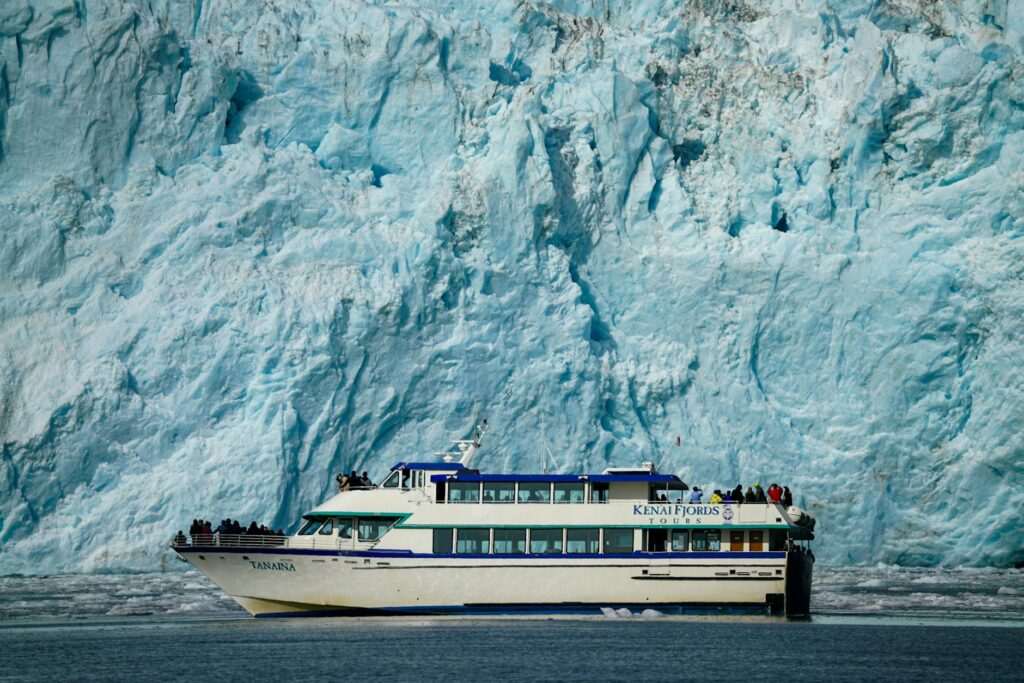
Most visitors to Anchorage don’t realize that one of the great wilderness boat trips in North America departs from a small harbor 127 miles away. Kenai Fjords National Park — 670,000 acres of glaciers, tidewater ice, and some of the most productive marine habitat on the Pacific coast — puts orcas, humpback whales, tufted puffins, and calving glaciers into a single day on the water. The drive from Anchorage takes two and a half hours. The experience stays with you considerably longer.
Here’s how to do it right.
Getting to Seward: Drive or Train
The Seward Highway south from Anchorage is one of the most scenic drives in Alaska — Turnagain Arm to your right, the Chugach peaks rising above, and the highway threading through dramatic mountain passes before dropping into the Kenai Peninsula. Plan the drive for the morning and keep an eye on the mudflats along the Arm, particularly near Beluga Point, where beluga whales appear during salmon runs from late July through September. A quick stop at the Alaska Wildlife Conservation Center near Portage adds a wildlife element before you even reach the boat — bears, moose, musk ox, and wood bison in open habitat beside the highway.
For the most relaxed approach, the Alaska Railroad Coastal Classic departs Anchorage at 6:45 a.m. and arrives in Seward at 11:25 a.m. — just in time for most cruise departures. The scenery through the Kenai Mountains is spectacular in ways the highway doesn’t fully capture, and arriving without a car simplifies the day considerably. One-way tickets start at $129; the return train leaves Seward in the evening and arrives back in Anchorage around 10 p.m. The Alaska Railroad Depot in Anchorage handles ticketing and boarding.
If driving, leave Anchorage no later than 7 a.m. for an 11 a.m. boat departure. Book parking at the Seward Small Boat Harbor in advance during peak summer weeks.
Choosing a Glacier Cruise
Major Marine Tours is the largest and most established operator out of Seward. Their six-hour Northwestern Fjords cruise covers Holgate Glacier, Harris Bay, and the park’s primary wildlife corridors for $175 per adult, including a hot buffet lunch served aboard. The eight-and-a-half-hour full-day Northwestern Fjords version extends deeper into the park for $219 and adds dinner to the buffet. Vessels are large, stable, and heated — a meaningful consideration when fjord weather turns cold and wet, which it frequently does regardless of the air temperature in Seward.
Seward Ocean Excursions offers a more intimate glacier and wildlife cruise experience with smaller vessel options. Smaller boats access narrower channels and position closer to wildlife without the crowds of a larger tour. If watching a raft of sea otters from fifty feet rather than two hundred feet matters to you, the premium for a smaller-boat experience is well spent.
Both operators offer Fox Island add-ons — an overnight wilderness lodge experience with salmon bake, kayaking, and glacier views at sunrise. At $400 or more per person, it transforms the day trip into a true wilderness stay and ranks among the most memorable experiences available from Anchorage.
Book cruises four to eight weeks ahead for July and August departures. The most popular sailing times sell out, particularly on weekends and around the Fourth of July week.
What You’ll See on the Water
The centerpiece of any full-day cruise is Holgate Glacier — an active tidewater glacier that calves directly into the sea. The sound of calving, a deep crack followed by a sustained rumble, carries across the water before the ice even moves. Watching a house-sized block detach and crash into the fjord is the kind of thing people describe for the rest of their lives.
Behind the fjord system, the Harding Icefield covers more than 700 square miles — one of the largest icefields in the United States — and feeds 40 named glaciers descending into the surrounding valleys and coast. From the water, the scale of this ice system becomes real in a way that photographs never quite convey.
The marine wildlife shifts by season but the density is consistently extraordinary. Horned and tufted puffins nest in cliff colonies and dive from the water’s surface in front of the boat through the summer months. Steller sea lions haul out on rocky outcroppings in large noisy groups. Harbor seals rest on ice floes near the glacier face. Sea otters float on their backs in protected coves, cracking shellfish on their chests. From July through September, orca pods work the fjords and humpback whales surface along the outer coast — full-day cruises into the Northwestern Fjords offer the best exposure to both.
Exit Glacier: The Land Option
Three and a half miles from Seward on Exit Glacier Road, Exit Glacier offers a completely different entry into Kenai Fjords National Park — free, accessible on foot, and requiring no advance booking. A paved 0.8-mile trail leads directly to the glacier’s toe, where interpretive markers show how far the ice has retreated decade by decade since the 1800s. You walk right up to a living glacier without a boat or guide.
The Harding Icefield Trail departs from the same trailhead and climbs 3,000 feet over 4.1 miles to views across the icefield itself — one of the most dramatic day hikes accessible from Anchorage. Plan five to seven hours round trip and pack all layers; conditions at the top bear no relation to what the Seward valley looks like from below.
Ranger programs run daily at Exit Glacier through summer. The visitor center provides context on glaciology and the park’s ecology before you head up the trail.
What to Pack
Rain gear isn’t optional — fjord weather changes fast and the boat deck in open water gets cold regardless of the air temperature onshore. Bring a waterproof jacket and pants, thermal layers underneath, and waterproof footwear. Seasickness medication taken the night before departure makes a meaningful difference for anyone prone to motion discomfort. A quality pair of binoculars extends every wildlife encounter on the water. Leave extra battery capacity for your camera — cold air drains batteries quickly and you’ll be shooting constantly.
Kenai Fjords rewards the visitor who plans ahead and dresses for the conditions. The rest takes care of itself.
Featured photo by Yuanpang Wa on Pexels.

No comments yet.