
Free Things to Do in Anchorage 2026
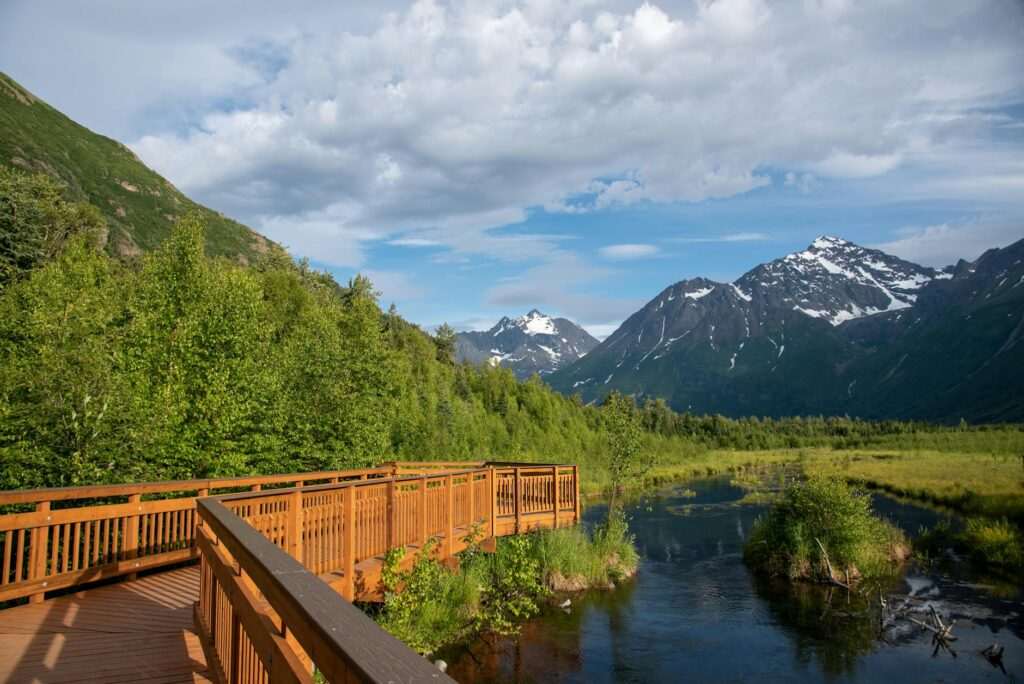
The best free things to do in Anchorage range from tidal trails to wildlife refuges and First Friday gallery walks, all at no cost. The city’s primary draw — wild Alaska — shows up on free trails, from free viewpoints, and at no-cost fishing platforms within walking distance of the downtown hotel corridor. Paid attractions like the Anchorage Museum and Alaska Native Heritage Center are worth the admission, but a full day of genuine Anchorage experiences can cost nothing. Here’s a guide to the best free things to do in Anchorage in 2026.
Tony Knowles Coastal Trail
The eleven-mile Tony Knowles Coastal Trail is the backbone of free Anchorage recreation — a paved, flat path from downtown to Kincaid Park along the Cook Inlet shoreline. No permit, no fee, no car required from the downtown trailhead at 5th Avenue and L Street. The trail delivers moose sightings in the wooded sections south of Westchester Lagoon, beluga whale views from the Earthquake Park section at Mile 3.5, and Denali on the horizon on clear days. Walking 3–4 miles out from downtown and back covers the most scenic section and takes 1.5–2 hours at a comfortable pace. The full 11 miles one-way (22-mile round trip) is a full-day commitment; most visitors find a 5–7 mile segment entirely satisfying.
Earthquake Park
Earthquake Park at Mile 3.5 of the Coastal Trail is a free open-air memorial to the 1964 Good Friday Earthquake — the most powerful earthquake ever recorded in North America (9.2 magnitude). Interpretive signage explains how the ground in this section dropped and slid into the inlet during the quake. The park overlooks Cook Inlet and provides one of the best open-sky views of the inlet accessible on foot from the city. A free parking lot off Northern Lights Boulevard makes it accessible without the full trail walk. Budget 30 minutes for the interpretive circuit and views.
Ship Creek Salmon Viewing
Ship Creek flows directly through downtown Anchorage and supports one of the most urban salmon runs in Alaska. King salmon arrive in late June and run through July; coho salmon follow in August and September. The Ship Creek viewing platform at the end of 3rd Avenue gives free, unobstructed views into the creek at fish during peak runs — often close enough to watch individual salmon holding in the current below. The platform is within walking distance of every downtown hotel and takes under 10 minutes to reach on foot. No charge, no equipment, no planning required. Check our moose watching Anchorage guide for how to add wildlife spotting along the creek corridor to the same outing.
Anchorage Market and Festival
The Anchorage Market and Festival runs Saturday mornings (and some Sundays) from late May through mid-September in the parking lot at 3rd Avenue and E Street — a two-block open-air market with Alaska produce, food vendors, arts and crafts, and live music. Admission is free; spending is optional. Summer Saturday mornings bring out a genuinely local crowd alongside tourists, and the market’s Alaska Native art section includes both affordable small pieces and the kind of significant carvings that rarely appear in retail settings. It’s a better free morning than most museums, and the people-watching is distinctly Alaskan. The market runs roughly 10 a.m. to 6 p.m.
Lake Hood Floatplane Base
Lake Hood adjacent to Anchorage International Airport is the world’s busiest seaplane base, and the viewing costs nothing. The Millennium Hotel on the lake’s north shore provides public access to the lakefront, where floatplanes taxi past continuously during good weather. A bench or picnic area at the lakeshore puts you 100 feet from Cessna 185s and de Havilland Beavers landing on glassy water with the Chugach peaks behind them. No charge, no reservation. The best viewing windows are calm mornings (fewer wind disturbances) and late evenings in summer, when lower light turns the lake surface gold. Drive or walk from the airport area; parking in the hotel lot is generally available for short visits.
Westchester Lagoon Loop
Westchester Lagoon sits at Mile 1.5 of the Tony Knowles Coastal Trail — a short detour loop around the lagoon adds waterfowl viewing (geese, ducks, Arctic terns, occasional trumpeter swans) to the Coastal Trail walk. The lagoon loop is entirely flat, takes about 30 minutes at a casual pace, and connects back to the main trail heading south. A free parking lot off West 15th Avenue makes it accessible independently of the downtown trailhead. Children enjoy the waterfowl viewing from the trail edge — the lagoon birds are accustomed to people and approach closely.
Moose Spotting in Midtown
Anchorage has an estimated 250–300 moose within city limits, and they show up in neighborhood parks, backyards, and trail corridors throughout the year. No cost, no transport required — moose spotting in Anchorage is simply a matter of being outside with peripheral awareness. The most reliable free moose locations are the wooded greenbelt sections of the Coastal Trail between Westchester Lagoon and Kincaid Park, the Campbell Creek corridor through South Anchorage, and the Chugach foothills trailheads on the east side of the city. Moose are most active at dawn and dusk. Maintain 50 feet of distance always — moose in Anchorage are habituated to humans but remain wild and unpredictable, especially cows with calves in spring and summer.
Point Woronzof Beach Access
The Point Woronzof area at Mile 7 of the Coastal Trail includes a gravel beach at the base of the inlet bluff — accessible via a short scramble from the parking area. The beach gives a ground-level view of Cook Inlet, with the Alaska Range across the water and the Anchorage skyline visible to the east. Mudflats extend far at low tide; the incoming tide covers them rapidly, so note the tide timing before exploring. No fee; free parking lot on the Point Woronzof access road off Minnesota Drive.
What About Museums: Free vs. Paid
Most of Anchorage’s indoor cultural institutions charge admission. The Anchorage Museum ($20 adults), Alaska Native Heritage Center (~$24.95), and Alaska Aviation Museum ($10) all have entry fees — worth paying, but not free. The exception is the Alaska Public Lands Information Center on 4th Avenue downtown, which is completely free and stocks current maps, trail conditions, and wildlife information for visitors planning outdoor activity. It’s worth 30 minutes even if you’re only heading to the Coastal Trail — staff expertise is unusually practical. The Oscar Anderson House charges a small admission for guided tours of Anchorage’s oldest house.
Free Anchorage in Winter
Most of the above translates to winter with the right preparation. The Coastal Trail is groomed for skiing and fat biking through most winters at no charge. Earthquake Park, Ship Creek (for winter ice fishing), and Westchester Lagoon all remain free year-round. The Anchorage Market closes for winter; Ship Creek salmon viewing closes with the runs in September. Our Anchorage hiking guide covers year-round trail access and seasonal conditions for the Chugach State Park trailheads, most of which also cost nothing beyond the Glen Alps parking fee. For the full picture of what Anchorage summer offers, our Anchorage in summer guide covers the seasonal schedule and best months for each activity above.
The Alaska Public Lands Information Center on 4th Avenue is free to enter and serves as the best single resource for planning a free day in Anchorage — current trail reports, wildlife sighting logs, and staff who know the current conditions firsthand. Downtown Bicycle Rental near the Coastal Trail trailhead covers the paid option when you’ve used up the free trail and want to cover more ground faster.
One of the best free activities in Anchorage is the Tony Knowles Coastal Trail — an 11-mile paved path along Cook Inlet with panoramic mountain views, accessible year-round at no cost.
No comments yet.