
Flightseeing & Scenic Flights from Anchorage 2026: Denali, Glaciers & Beyond
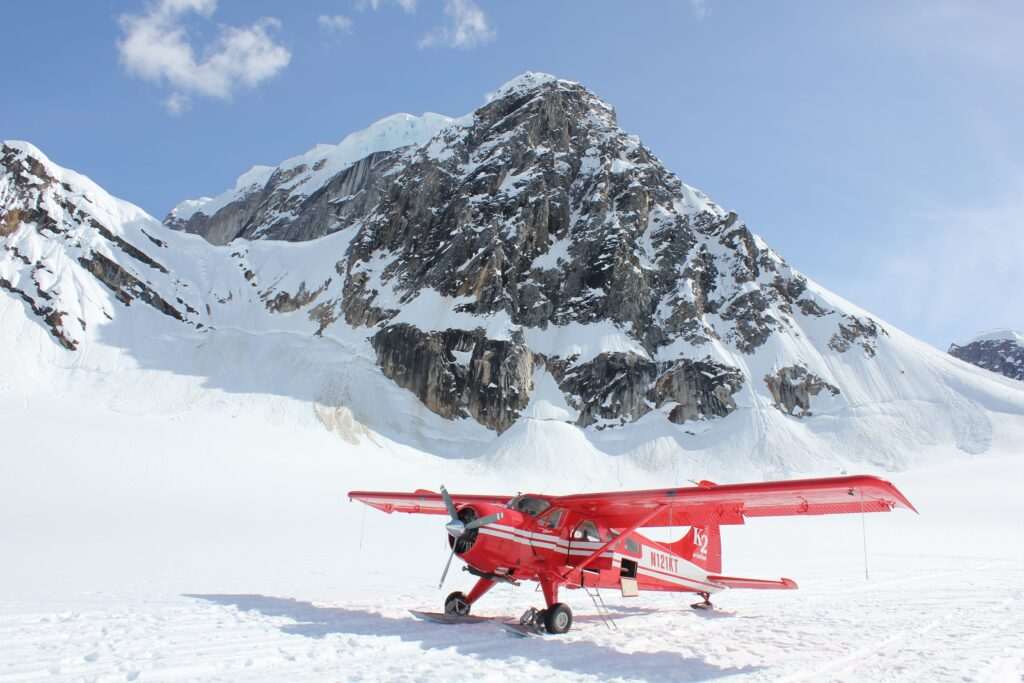
Alaska is too big to see from the ground. The state’s most spectacular landforms — Denali’s 20,310-foot summit, the Kahiltna and Ruth Glaciers sprawling across the Alaska Range, the braided rivers of the Susitna Valley — exist at a scale that roads and trails can only hint at. A flightseeing tour changes that completely. From the window of a small plane at 8,000 feet, the landscape resolves into something comprehensible: the glaciers are clearly enormous, the peaks are unmistakably higher than anything in the lower 48, and the distances between everything reset your sense of what the word “remote” actually means. Anchorage is one of the best bases for flightseeing in the country, with direct access to multiple operators, multiple route options, and departures from multiple airports.
Why Flightseeing Is an Alaska Essential
Many visitors arrive in Alaska expecting the landscape to feel like a larger version of Rocky Mountain scenery. It doesn’t. The Alaska Range contains more vertical relief than the Alps, the glaciers are the remnants of ice sheets that covered the region entirely 10,000 years ago, and the wilderness between communities is genuinely trackless — no roads, no trails, no human infrastructure of any kind. Ground-level access captures a fraction of this. A two-hour flightseeing tour captures the rest.
Beyond scale, the aerial perspective reveals geological features invisible from the ground: medial moraines running like dark rivers through the ice, crevasse fields stretching for miles, the blue-white interior of ice columns visible from directly above. For many visitors, a flightseeing tour becomes the visual anchor of an Alaska trip — the image that contextualizes everything else they saw at ground level.
Denali Overflight Tours from Anchorage
Denali — at 20,310 feet, the highest peak in North America — is the primary destination for serious flightseeing from Anchorage. Two approaches are available depending on how much time you have.
The most immersive option is to fly from Anchorage to Talkeetna (about 115 miles north), then board a dedicated glacier and Denali overflight from Talkeetna’s small airstrip. Talkeetna-based operators fly the Alaska Range up close, circling the summit in good conditions and skirting the glacier systems at low altitude. This involves a 2-hour drive from Anchorage to Talkeetna, then a 60 to 90-minute flight tour, making it a full day commitment — but the proximity to the mountain is exceptional. Several Anchorage operators run combination packages that include the transfer north.
The second option is a direct Denali overflight departing from Anchorage, which covers more distance at higher altitude. These tours typically fly northwest from Anchorage across the Susitna Valley, approach the Alaska Range from the south, and circle the Denali massif at cruising altitude before returning. Flight time is approximately 90 minutes to 2 hours. The views are more distant than Talkeetna departures, but the overall experience — covering the breadth of Southcentral Alaska’s terrain — is spectacular in its own right.
Glacier Landings: Ruth Glacier and Kahiltna
Glacier landings represent the premium flightseeing experience. Instead of viewing the glaciers from above, the plane sets down on the ice itself — typically on skis on a ski-equipped Cessna or Otter — and passengers step out onto the glacier surface. The silence, scale, and cold are immediate and profound.
Ruth Glacier, in the Alaska Range south of Denali, is the most accessible glacier landing destination from Talkeetna. The glacier’s amphitheater — a circular bowl surrounded by towering granite walls known as the Great Gorge — is one of the most dramatic natural settings in North America and is frequently included in glacier landing packages. Kahiltna Glacier, on Denali’s west side, is the staging area for mountaineering expeditions and can be visited on extended glacier tour packages.
Glacier landings typically add 30 to 60 minutes to a standard overflight tour. Weather must be suitable for safe landing on the ice surface — these tours are more frequently cancelled or rescheduled than straight overflights. Plan for flexibility if a glacier landing is a priority.
Knik Glacier Flightseeing — Closest to Anchorage
For visitors who want a glacier flightseeing experience without the full commitment of a Talkeetna trip, Knik Glacier is the closest option to Anchorage. Located about 50 miles east in the Matanuska-Susitna Valley, Knik Glacier is one of the largest glaciers in Southcentral Alaska and is accessible by a 30 to 40-minute flight from Anchorage-area airports.
Knik Glacier tours are typically shorter (60 to 90 minutes total) and less expensive than Denali packages, making them an attractive option for travelers with limited time or budget. The glacier’s calving face, ice caves visible from the air, and the Knik River outwash plain below provide striking scenery even without the Alaska Range context. Some Knik Glacier tours also include a pass over the Matanuska Glacier for comparison — two completely different glacial systems in one flight.
Lake Hood Seaplane Base: The World’s Largest Floatplane Base
Lake Hood and Lake Spenard, connected by a channel dug in 1940, form the world’s largest and busiest seaplane base — right within Anchorage city limits, adjacent to Ted Stevens Anchorage International Airport. On a busy summer day, up to 800 floatplane operations occur here, and watching the takeoffs and landings from the lake’s edge is a compelling activity in itself regardless of whether you’re flying.
Floatplane tours departing from Lake Hood offer a different experience from wheel-plane operations: takeoff from the water, the distinctive pitch of a floatplane engine, and the ability to land directly on remote lakes inaccessible to wheeled aircraft. Lake Hood operators run tours to glacier-adjacent lakes, wilderness fishing lodges, and remote coastal areas that have no road access. The floatplane is the quintessential Alaska transportation mode, and flying out of Lake Hood connects visitors to a genuinely working piece of Alaska aviation infrastructure, not a tourist attraction built for the purpose.
Floatplane Tours to Remote Alaska
For visitors interested in extending the experience beyond a single sightseeing loop, floatplane tours from Lake Hood include access to remote wilderness areas and lodges throughout Southcentral Alaska. These trips typically involve a 30 to 90-minute floatplane flight to a lake or coastal area, followed by guided activities — fishing, bear viewing, kayaking — then a return flight to Anchorage.
Redoubt Bay, Crescent Lake in Lake Clark National Park, and the Kenai Fjords coastal areas are among the destinations accessible as day trips from Anchorage by floatplane. Bear viewing at remote bays during the summer salmon run — combining a floatplane flight with close-range grizzly bear observation — is one of the most popular premium Alaska experiences and typically requires advance booking of several weeks in summer season.
Tour Operators and Departure Points
Flightseeing operators in the Anchorage area depart from three locations: Lake Hood Seaplane Base (floatplane operations), Merrill Field (a small general aviation airport 4 miles east of downtown), and Ted Stevens Anchorage International Airport (some larger charter and tour operators). Most tour operators are clustered at Lake Hood, which is the most accessible for visitors staying downtown or midtown.
Get Up and Go Tours and Alaska’s Finest Tours handle multi-activity bookings that incorporate flightseeing alongside ground transportation and other experiences — useful if you’re planning a full-day itinerary that combines a flight with other activities. For visitors who prefer to contact air operators directly, Rust’s Flying Service (based at Lake Hood) and K2 Aviation (based in Talkeetna) are among the most established Denali and glacier flight specialists in the region.
Escaping Anchorage runs guided outdoor experiences including day trips and expeditions to remote areas, and can advise on combining flightseeing with wilderness activities for visitors who want a more structured guided approach to Alaska’s backcountry.
What to Expect: The Flight Experience
Most flightseeing tours use 4 to 8-passenger aircraft: Cessna 206 or 207 for smaller groups, de Havilland Beavers or Otters for larger parties. These are genuine working bush planes, not purpose-built tourist aircraft. The cabins are small, the seats close, and the noise from propeller and engine is significant — earplugs or aviation headsets (provided by most operators) are standard.
Flight altitudes vary by route and weather: glacier approaches may fly as low as 500 feet above the ice surface, while Denali overflights from Anchorage cruise at 8,000 to 10,000 feet. Turbulence is common over mountain terrain, particularly in the afternoon. The views through small plane windows are partially obstructed by wing struts — window seat assignments vary by aircraft, and some operators allow passengers to specify preferred seating side.
Cost ranges: Knik Glacier tours run approximately $200 to $300 per person. Denali overflights from Anchorage range from $350 to $500. Glacier landings add $100 to $200 to the base tour price. Full-day floatplane excursions with activities typically start at $500 per person and up. These prices vary by operator and are subject to fuel surcharges.
Weather Windows and Cancellations
Small plane flightseeing is entirely weather-dependent. Mountain weather near Denali and the Alaska Range is notoriously variable — a perfectly clear morning can cloud over within two hours. Most operators monitor conditions closely and will cancel or reschedule if visibility or cloud bases don’t meet minimums. Same-day cancellations are common, particularly in June when coastal fog patterns frequently obscure the Range.
The clearest conditions statistically occur in late May, early September, and during high-pressure systems that move through the region. The Alaska Range is often clearest from the south in the morning; afternoon heating builds cumulus clouds that can obscure peaks by early afternoon. Many operators prefer morning departures for Denali routes for exactly this reason.
Always book with the understanding that weather may require rescheduling. Book early in a multi-day visit so there’s time to reschedule if the first attempt is cancelled. Most operators have flexible rescheduling policies for weather cancellations — confirm this before booking.
Air Sickness Considerations
Small plane turbulence affects visitors differently. If you’re prone to motion sickness on boats or winding roads, take it seriously before a flightseeing tour. Over-the-counter medications like dimenhydrinate (Dramamine) or meclizine (Bonine) are effective if taken 30 to 60 minutes before the flight. Ginger candies are a milder alternative. Avoid heavy meals before flying; eat lightly at least two hours before departure. Keep your gaze on the horizon or on fixed features rather than looking down at the glacier continuously — the latter exacerbates nausea in turbulent air.
If symptoms develop during the flight, tell the pilot. Most experienced bush pilots have managed affected passengers before — shallow turns, reduced maneuvers, and adjusting altitude can all help. The majority of visitors who take precautions beforehand have no significant issues.
Photography Tips from Small Planes
Window glare is the primary challenge. A circular polarizing filter helps significantly. If no filter is available, press the lens gently against the window to eliminate the air gap that causes internal reflections — but avoid pressing hard enough to transmit vibration to the camera. Fast shutter speeds (1/1000th or higher) counteract propeller vibration and wing buffeting. Burst mode allows selecting the sharpest frame from a series.
Zoom range: a 24–70mm equivalent covers most situations — wide for landscape orientation, mid-range for glacier detail shots. Carry a charged spare battery; cold temperatures at altitude drain them faster than expected at ground level. Remove unused lens filters — UV filters add a reflection surface without benefit.
Morning flights align with low-angle sunlight that casts long shadows across glacier features and mountain relief, producing more dramatic images than flat midday light. If you have a choice of departure time, take the earliest slot available.
Combining Flightseeing with Ground Activities
Flightseeing pairs well with ground-level activities on the same day. The Alaska Wildlife Conservation Center on the Seward Highway, about 50 miles south of Anchorage, pairs naturally with a morning glacier overflight — large Alaska wildlife at ground level after the aerial perspective on the same landscape. For those heading toward Portage Valley, Portage Glacier boat tours offer a water-level glacier experience that complements the aerial view — seeing the same ice from two radically different vantage points in a single day is a particularly complete Alaska experience.
When to Book
Summer season (June through August) fills quickly. Book your preferred date at least two weeks in advance for Denali and glacier packages; some popular operators sell out 4 to 6 weeks ahead for peak summer weekends. Many operators maintain a standby list for cancelled slots — this can work in your favor if you’re flexible on date and time.
Give the operator your hotel name and contact number so they can reach you early on the morning of your tour if conditions require adjustment. Most operators assess conditions by 6 or 7 AM and can give an early read on whether the day will fly. Weather windows sometimes open and close quickly — morning flexibility often means the difference between flying and not flying.
No comments yet.