
Alaska Road Trip from Anchorage 2026 — Best Routes, Stops & Scenic Drives
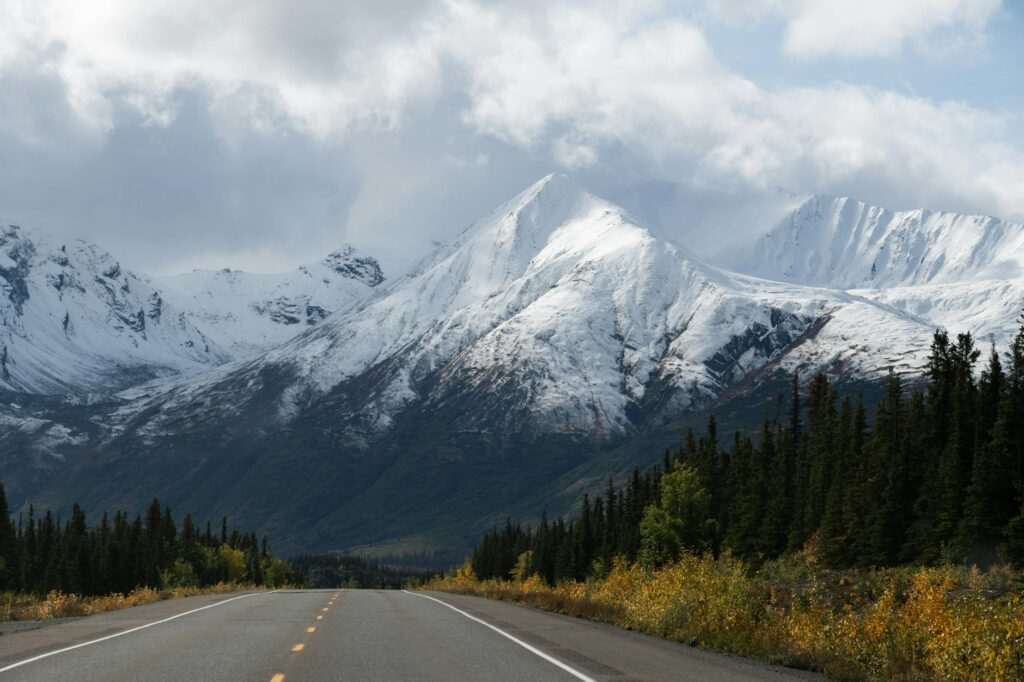
Anchorage is one of the best road trip hubs in North America. From the city, four major highways radiate into different ecosystems — south to glaciers and fjords, east to the Alaska Range and Wrangell volcanoes, north to Denali, and looping through the Kenai Peninsula to the fishing and wildlife capital of southcentral Alaska. Most visitors who come to Anchorage by air rent a car and use the city as a base. That’s exactly the right instinct. Here’s how to use it.
Route 1: Seward Highway South — The Most Scenic Drive in Alaska
Distance from Anchorage: 127 miles to Seward | Drive time: 2.5 hours
The Seward Highway is designated a National Scenic Byway and routinely appears on lists of the most spectacular drives in the country. It leaves Anchorage running along the base of the Chugach Mountains with Turnagain Arm immediately to the right — tidal flats that shift between glassy and turbulent with the 35-foot tidal range, backed by peaks that hold snow into July.
Stop at Beluga Point (Mile 110) and Bird Point (Mile 96) for wildlife scanning — beluga whales appear in the Arm during salmon runs from late July through September, often visible from the highway pullouts. Turnagain Arm Tide Pool Discovery exposes remarkable tide pools at low water. The highway passes through Girdwood (Alyeska ski resort, Double Musky Inn) and swings east at Portage.
A side trip to Portage Glacier adds 30 minutes — the blue glacier face is visible from the visitor center and boat tours reach it directly. The Alaska Wildlife Conservation Center sits at Mile 79, with bears, moose, musk ox, and bison viewable from your car window on the way through.
The highway terminates in Seward, gateway to Kenai Fjords National Park. Plan a full day to include the drive, a glacier cruise, and dinner in Seward before returning. Or stay overnight and take the morning cruise before heading back.
Best season: May–September. July brings beluga whale sightings and maximum wildlife activity; September brings fall color and quieter roads.
Route 2: Glenn Highway East — Glaciers, Volcanoes & Valdez
Distance from Anchorage: 189 miles to Valdez | Drive time: 4–5 hours
The Glenn Highway heads northeast from Anchorage through the Matanuska-Susitna Valley before climbing into the Alaska Range through some of the most dramatic mountain scenery accessible by road. The highway passes Palmer (45 minutes from Anchorage), a pleasant agricultural town with the state’s best farmers market, then continues east toward the Chugach peaks.
Matanuska Glacier appears at Mile 102 — Alaska’s largest road-accessible glacier, 27 miles long and visible from the highway. A turn at the Glenn Allen junction takes you onto the Richardson Highway south through the Copper River Valley and Keystone Canyon to Valdez. The canyon holds thundering waterfalls visible from the road. Worthington Glacier, a short walk from a highway pullout, puts you at the ice’s edge without a guide.
Valdez is a destination in its own right: a deep-water port surrounded by mountains on three sides, with fishing, kayaking in Prince William Sound, and some of Alaska’s most dramatic mountain scenery. Tying Valdez to the Glenn Highway makes a logical 2–3 day loop if you return to Anchorage via the same route or via Glennallen and the Parks Highway north.
Best season: June–September. The Glenn Highway passes through avalanche country — call 511 before winter travel. Summer driving is straightforward on fully paved highway.
Route 3: Parks Highway North — Talkeetna & Denali
Distance from Anchorage: 237 miles to Denali National Park entrance | Drive time: 4 hours
The Parks Highway (Hwy 3) heads north from Anchorage through the Matanuska-Susitna Valley and into the Alaska Range. The first major stop is Talkeetna, reached via a short spur at Mile 98 — a small mountain town that functions as base camp for Denali expeditions and has spectacular views of the Alaska Range from its waterfront on clear days. The Talkeetna spur adds an hour round trip but delivers an experience of Denali’s scale that the highway itself doesn’t match.
Continuing north, the Parks Highway enters the Denali Borough and the landscape opens into rolling boreal forest and tundra. Denali National Park’s entrance sits at Mile 237 — a 4-hour drive from Anchorage. The park road extends 92 miles into the wilderness, with private vehicles permitted only to Mile 15; all further access requires park buses. Stopping at the park entrance for a Savage River day visit and returning the same evening is feasible as a long day trip. Staying overnight near the park entrance and taking a full park bus tour the following day is the better approach.
Best season: June–September for Denali visibility and park road access. July has the highest bear and wildlife activity along the park road; August brings fall tundra color.
Route 4: The Kenai Peninsula Loop — 3–4 Days
Total loop distance: ~550 miles | Recommended time: 3–4 days
The most complete road trip from Anchorage combines the Seward Highway south to Seward, then picks up the Sterling Highway west through the heart of the Kenai Peninsula. The Sterling runs through Soldotna (world-class king salmon fishing on the Kenai River) and continues south to Homer — a small arts community at the tip of a spit extending into Kachemak Bay, with spectacular views of the Kenai Mountains across the water.
Homer deserves at least a day: the Spit’s restaurants and fishing operations, sea kayaking in Kachemak Bay, day trips to Halibut Cove, and bear viewing day flights to Katmai or Lake Clark. The return north to Anchorage runs up the Sterling and reconnects with the Seward Highway at Tern Lake Junction — a full loop of the peninsula.
Key stops on the Kenai loop: Moose Pass (scenic), Cooper Landing (rafting on Kenai River), Soldotna (halibut and salmon), Captain Cook State Recreation Area, Homer. The Chugach National Forest covers the northern Kenai Peninsula and provides public camping at multiple points along the route.
Best season: June–September. King salmon runs peak in June–July on the Kenai River. Homer’s arts scene and halibut fishing peak in summer but the town stays active year-round.
Rental Cars, Logistics & Tips
All major rental car agencies operate from Ted Stevens Anchorage International Airport. Reserve well ahead for summer — July and August inventory tightens significantly as visitor volume peaks. Most Alaska driving is on fully paved two-lane highway; four-wheel drive is useful for gravel side roads to campgrounds but not required for the main routes.
Gas stations are frequent along the Seward and Parks highways but thin out on the Glenn toward Valdez and on the Sterling’s western reaches. Fill the tank in Soldotna before heading toward Homer. Phone coverage drops to zero on significant stretches of all routes — download offline maps before departing Anchorage.
Wildlife is present on every road in Alaska. Moose on the highway are a genuine hazard, particularly at dawn and dusk — slow down when you see tracks or recent crossings. Pull completely off the road at wildlife sightings; the shoulder is wide on most Alaska highways. Drive the pace the road dictates, not the speed limit if conditions argue for slower.



No comments yet.