
Fairbanks in Winter 2026: Ice Sculpting, Extreme Cold & the Best Aurora in Alaska
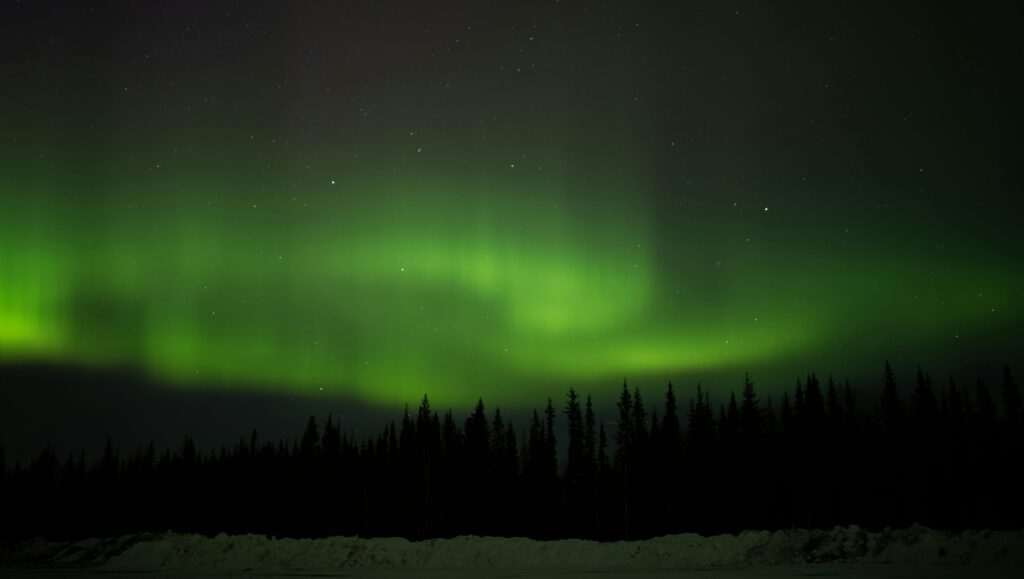
Fairbanks in winter is not a place that apologizes for its climate. At 64 degrees north, the city sits in the heart of Alaska’s interior where cold fronts arrive without coastal moderation, temperatures drop to -40°F and below, and the sky above is one of the most auroral on earth. What other winter destinations treat as a liability, Fairbanks has turned into a program: the World Ice Art Championships, the Yukon Quest sled dog race, aurora-watching culture, and a community infrastructure built entirely around operating in extreme cold. This guide covers the experiences that make a Fairbanks winter trip worth planning specifically for this city, and the practical knowledge required to enjoy it.
The World Ice Art Championships
Every late February and early March, Ice Park Fairbanks hosts the World Ice Art Championships — the largest ice sculpting competition in the world, drawing competitors from more than 30 countries to carve multi-ton blocks of crystal-clear ice harvested from a pond outside town. The competition runs in two formats: single-block (one block, two sculptors, 60 hours) and multi-block (up to 15 blocks, teams of four, extended time), producing finished sculptures that can stand 20 feet tall and weigh several tons.
The scale and technical ambition of the multi-block competition is genuinely hard to anticipate from photographs. Teams carve interconnected structures — arching bridges, interlocked animals, architectural forms with working internal cavities — and the finished park holds dozens of these simultaneously. The ice comes from a purpose-maintained pond and is chosen for its optical clarity; the best blocks are nearly transparent, and illuminated at night they emit blue-white light from within. Ice Park is open day and night, and the sculptures are lit after dark — evening visits, when the temperature has dropped and the ice is backlit against darkness, are the more memorable experience.
Kids Competition and realistic animal carving divisions run alongside the main event. Competition dates typically fall from late February through early March; check the World Ice Art Championships website for the specific calendar each year. Admission to Ice Park covers access to all sculptures and the competition floor where you can watch carvers at work.
The Yukon Quest International Sled Dog Race
The Yukon Quest is a 1,000-mile sled dog race between Fairbanks and Whitehorse, Yukon, run each February alternating start direction. Visitors driving north from Anchorage can stop at the Iditarod Trail Headquarters in Wasilla for year-round sled dog exhibits and demonstrations on the way. It is widely considered the most demanding sled dog race in the world — harder than the Iditarod in terms of terrain and checkpoints — and it moves through one of the most remote corridors in North America, crossing the Yukon River, climbing mountain passes, and passing through a handful of tiny communities between the two cities.
For visitors in Fairbanks, the race start (or finish, depending on the year) is a public event held on the Chena River in downtown Fairbanks. Teams leave at 2-minute intervals, their mushers and dogs visible up close in the staging area before the start line. The atmosphere is celebratory and cold — the race runs regardless of temperature — and the concentrated crowd of spectators, handlers, and press creates a genuine sense of occasion. The finish, when teams arrive after 9 to 14 days on the trail, draws smaller but emotionally charged crowds at any hour of day or night.
Check the Yukon Quest website for start/finish location and schedule each year, as route details and event logistics vary. The race typically runs in the first two weeks of February.
Aurora at Fairbanks Latitude
Fairbanks sits at 64.8 degrees north, directly under the auroral oval — the ring of maximum aurora activity that circles the magnetic pole. On clear nights with any meaningful geomagnetic activity, the aurora is visible overhead rather than on the horizon, and the displays above Fairbanks are frequently vertical curtains and overhead coronas rather than the distant arcs seen at lower latitudes. This is the best aurora location in the United States.
The aurora season runs from late August through mid-April, with the darkest, coldest months (November through February) offering the longest viewing windows. Fairbanks averages more than 200 clear nights per year — significantly more than Southeast Alaska or the coast — making it far more reliable than aurora-marketed destinations in Scandinavia. A three-night stay in midwinter gives very high odds of seeing a notable display. Visitors can also prep with an Anchorage aurora photography workshop before heading north.
The University of Alaska Fairbanks Geophysical Institute publishes a free nightly aurora forecast at gi.alaska.edu/monitors/aurora-forecast, updated daily. The forecast maps auroral activity on a 1-7 scale and projects the oval’s southern extent — in Fairbanks at Kp 1 or higher, auroras are typically visible overhead. The UAF forecast is more specific and more locally calibrated than the NOAA SWPC forecast for interior Alaska.
Viewing sites within 30-45 minutes of downtown include Chena Lakes Recreation Area, the University of Alaska Fairbanks campus (which has dark parking areas away from city lights), and the area along the Steese Highway north of town. Chena Hot Springs Resort, covered below, has infrastructure specifically built for aurora-watching.
Extreme Cold: The Reality and the Gear
Interior Alaska winters are not exaggerated. Temperatures below -40°F occur multiple times each winter; the coldest recorded temperature in Fairbanks history is -66°F. At these temperatures, exposed skin freezes in minutes, vehicle engines require block heaters to start, and the physics of everyday objects change — rubber tires go flat-spotted from sitting overnight, brake fluid moves sluggishly, and fog forms in the air from any heat source.
The city accommodates this without drama. Parking lots have electrical outlets for block heaters (bring an extension cord). Businesses have arctic entryways. Residents dress in non-negotiable layers: base layer, mid layer, down coat, outer shell; insulated boots rated to -40°F or colder; liner gloves under mittens; balaclava or face protection for any outdoor time over 15 minutes. The rule in Fairbanks is that no single layer is warm enough — the system is the warmth, and any gap exposes you.
Visitors from temperate climates routinely underestimate how much gear matters. The local recommendation is to purchase or rent serious cold-weather gear rather than bring what works in -10°F weather. REI Fairbanks, Big Ray’s (a local outfitter on Airport Way), and several rental operations near the university can outfit a visitor properly. The psychological adjustment is also real: at -40°F, outdoor air feels physically painful on exposed skin within seconds. After an hour of dressing correctly, this stops being a problem and becomes part of the experience.
Chena Hot Springs Resort
Located 60 miles northeast of Fairbanks via the Chena Hot Springs Road, Chena Hot Springs Resort is the standard base for aurora-watching visitors who want infrastructure around the experience. The resort offers hot spring pools (natural geothermal, outdoor, open year-round), an ice museum maintained at 25°F inside regardless of outside temperature (carved from the same type of crystal-clear ice used at the World Ice Art Championships), and dedicated aurora-viewing domes — heated, transparent-roofed pods that allow guests to watch the sky while lying in a warm bed.
The aurora domes book months in advance during peak winter season. Day visitors can use the hot springs and ice museum without a room reservation. The drive out on Chena Hot Springs Road runs through boreal forest and is itself an active aurora corridor — on a clear night with good geomagnetic activity, guests have pulled over to watch the display from the road well before reaching the resort.
University of Alaska Fairbanks in Winter
The UAF campus offers two experiences that are uniquely suited to winter. The Permafrost Tunnel, operated by the U.S. Army Cold Regions Research and Engineering Laboratory (CRREL), is a research tunnel bored into permanently frozen ground north of Fairbanks containing 40,000-year-old frozen sediments, ancient ice wedges, and the preserved remains of Pleistocene animals — mammoth tusks, bison bones, and plant matter that has not thawed since the last ice age. Tours are available by reservation and require advance planning; they run year-round but winter makes the tunnel’s context — frozen ground extending indefinitely downward — more viscerally comprehensible.
The UAF Geophysical Institute operates the world’s largest incoherent scatter radar system (HAARP and related infrastructure) and conducts the aurora research that underlies the public forecasts. The campus also has the University of Alaska Museum of the North, which has Alaska natural history collections including Pleistocene megafauna and extensive Alaska Native art holdings — a worthwhile afternoon in any weather.
Logistics
Fairbanks is served by Alaska Airlines, Delta, and United from Seattle, Anchorage, and occasionally direct mainland connections. Rent a vehicle from the airport; driving in Fairbanks in winter requires no special skills but the block heater outlet is not optional — use it. Visitors driving the Parks Highway from Anchorage can book a camper van through GoNorth Alaska for a self-contained road trip north. Most hotels provide outdoor outlets or covered parking.
Average high temperatures in January are around -10°F; the coldest stretches push -40°F to -50°F and typically last several days. Hotel rooms, restaurants, and public buildings are warm; the cold is an outdoor phenomenon. Plan outdoor activities in 2-3 hour blocks with a warm indoor return. A 5-day visit allows meaningful time at Ice Art Championships (if February/March), at least two to three aurora nights, Chena Hot Springs, and campus/museum time.
Fairbanks doesn’t moderate the winter. It uses it — as spectacle, as backdrop, as infrastructure. The people who visit and leave talking about it are the ones who came dressed for it.
Featured photo by John De Leon on Pexels.
No comments yet.